


Key Takeaways
- Bring your mandevilla indoors when nighttime temperatures are below 50°F.
- Prune it, inspect it for pests, and treat if necessary before bringing the plant inside.
- Place the plant in bright, indirect light and water moderately when the top inches of soil feel dry.
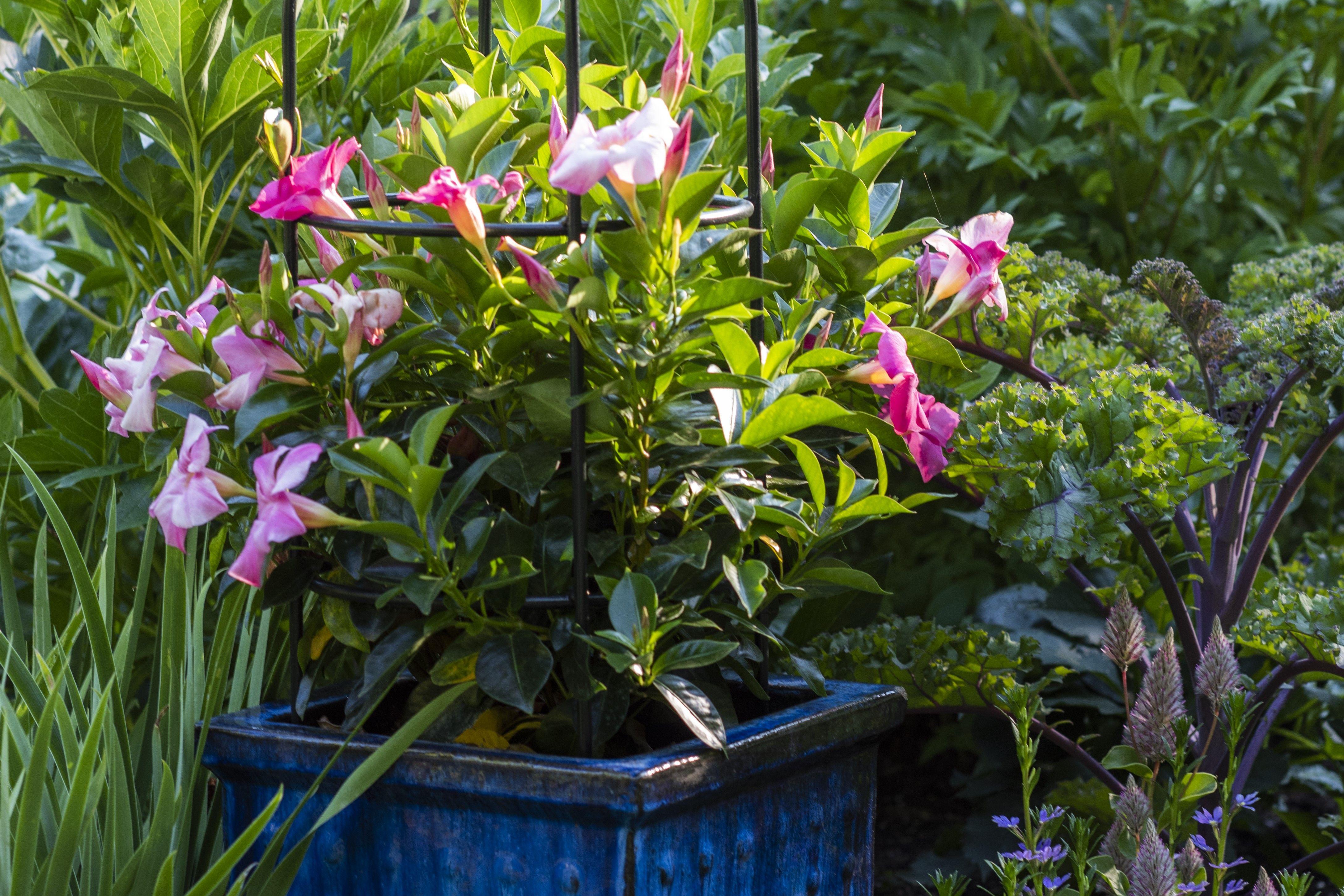
Mandevilla is a tropical vine that brings a touch of the Caribbean to your patio. With its pink, red, or white trumpet-shaped flowers, it's a summer star. However, a single freeze will kill this vine, so you need to take action if you want to overwinter it. Mandevillas can only live outdoors year-round in USDA Zones 9 to 11; that's why gardeners in colder climates typically grow them in a container.
That does not mean this tropical plant is a one-and-done annual. With a little planning and expertise, you can overwinter your mandevilla indoors so it comes back bigger and more gorgeous next year. Here’s how to do it successfully.
1. Monitor Nighttime Temperatures
Don’t wait until the first frost warning to get your mandevilla ready to come indoors. As soon as nighttime temperatures are consistently in the 50s, it’s time to prep your plant to come inside for the winter. Cold temperatures, even if not freezing temperatures, stress this tropical plant and make its transition indoors tougher.
2. Prune the Plant
Prune the plant back by one-third to one-half. This keeps it at a manageable size and reduces the number of leaves and stems the roots will have to support in the challenging lower light conditions indoors.
3. Check for Pests
Examine the vines, the undersides of the leaves, and any new growth for spider mites, aphids, and mealybugs. Pests can spread to the rest of your indoor plants. Left untreated, those pests will weaken and, in the worst case, kill the mandevilla.
Related
4. Apply Pest Treatment
If you find signs of an insect infestation, treat the plant before you bring it indoors. Spray the entire plant with horticultural oil such as neem oil or insecticidal soap. Be sure to spray the undersides of the leaves, where insect infestations often start. A few days later, spray the plant again before bringing it indoors for the season. The oil will protect the plant from pests during the winter; it’s like a vaccine for your plant.
5. Provide Enough Light
Place your mandevilla near a sunny window where it can get at least 6 hours a day of bright, indirect light. If you don't have a window where the plant gets sufficient light, install an LED grow light to supplement the sunshine.
6. Go Easy on the Water
This is where a lot of people fail on overwintering a mandevilla. Its growth will slow dramatically during the winter due to cooler temps and less light. This means it needs a lot less water than it did when it was outdoors in the summer. To make sure you don't overwater the plant and cause root rot, let the top 2 or 3 inches of soil dry out completely in between waterings.
7. Expect Leaf Drop
Once indoors, your mandevilla will likely go into shock, turn yellow, and drop a significant number of its leaves. Don’t panic, it’s the normal, expected reaction to the drastic change in light and humidity. Don’t water it more, and don’t fertilize it, as that will stress the plant even more. Just let it acclimate to its new environment, provide it with sufficient light, and water it only when the soil is dry. The mandevilla will adjust.
8. Prune Again in the Spring
In early spring, prune the plant again. Tidy it up, trimming off any leggy, weak winter growth.
9. Harden It Off
Once the last frost date has passed and nighttime temperatures remain consistently above 50°F, it’s time to move your mandevilla back outside. Do not move your plant from indoors directly into full sun outdoors. You’ll scorch the leaves. Get the plant used to the outdoors slowly.
Start by putting it in a shaded spot outside for a few days. Move it into dappled light or morning sun for about a week. Then move it to its final home, where it will be for the rest of the season: a spot where it will get at least 6 hours of direct sunlight each day. As soon as new growth appears, fertilize the plant with a water-soluble fertilizer.

 English
 Arabic
 French
 Spanish
 Portuguese
 Deutsch
 Turkish
 Dutch
Dutch
 Italiano
 Russian
 Romaian
 Greek
Greek