


Qubit That Lasts 3 Times As Long As The Record Is Major Step Toward Practical Quantum Computers
Qubit That Lasts 3 Times As Long As The Record Is Major Step Toward Practical Quantum Computers
Researchers at Princeton University have reported a new quantum computing breakthrough. They developed a quantum bit, or qubit – the fundamental processing unit of quantum computers – that can last for over 1 millisecond. This is three times longer than the best-ever qubit lifetime in a lab setting and almost 15 times longer than what’s found in large-scale processors in industry, a major step forward.
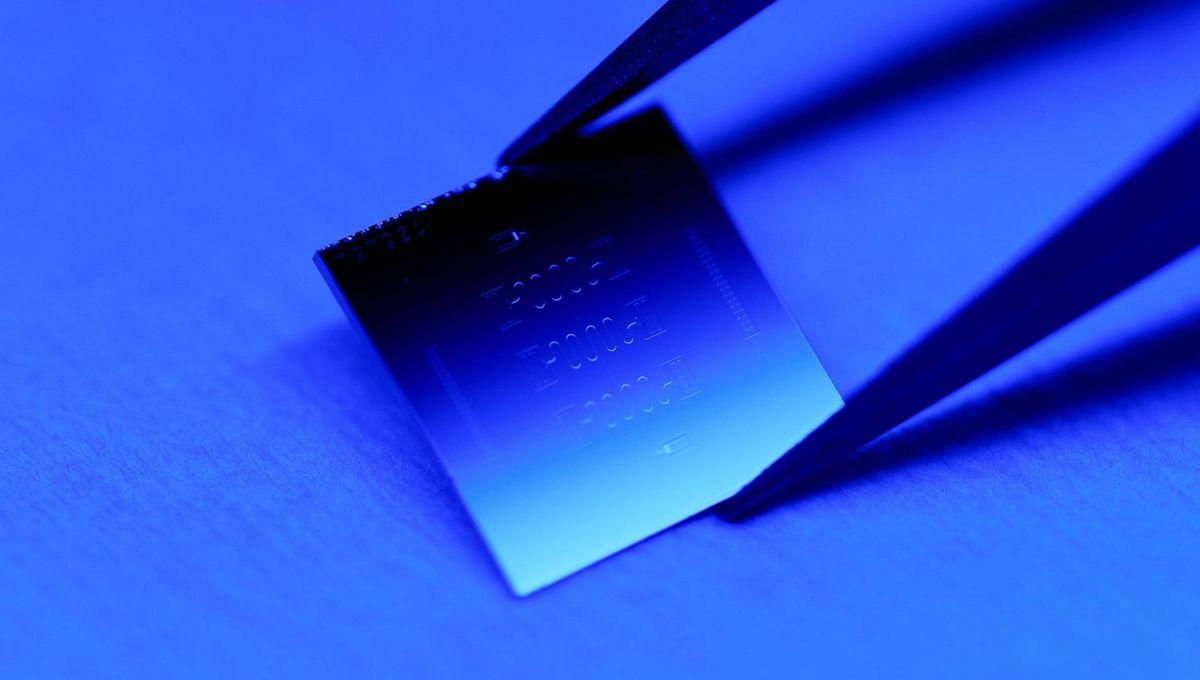
The rest of this article is behind a paywall. Please sign in or subscribe to access the full content. Regular computer bits can take two states: 0 or 1. By using many of them, it is possible to conduct all the operations that computers do. The advantage of qubits, and our interest in them, is that they are not just 1s or 0s like the regular bit, but a superposition of those two states. This is the quantum property made famous by the quantum cat experiment – the quantum cat is dead and alive, the qubit is 1 and 0! This property unlocks incredible processing power. For this reason, quantum computers are seen as the next revolution in computing. They can do things that not even the most advanced supercomputers can do – so where are all these revolutionary machines? Qubits are very fragile, and they need to be kept at very low temperatures for stability, usually close to absolute zero. Though a millisecond might seem short, it is a significant improvement. The exciting part is that it is not just better than existing designs; the team built a fully functioning tantalum-silicon superconducting quantum chip based on this qubit, and it is easy to mass-produce. "Our results are really pushing the state of the art," Nathalie de Leon, the co-director of Princeton's Quantum Initiative and co-principal investigator of the new qubit, said in a statement. "The real challenge, the thing that stops us from having useful quantum computers today, is that you build a qubit and the information just doesn't last very long," said Andrew Houck, Princeton's dean of engineering and co-principal investigator. "This is the next big jump forward." Crucial to this work has been the use of tantalum, a very hard transition metal. It is corrosion-resistant and can withstand the harsh cleaning process necessary to remove defects. It is those defects that create loss of coherence and break down the qubit. "You can put tantalum in acid, and still the properties don't change," said Faranak Bahrami, co-lead author on the new paper. Originally, the tantalum sat on a substrate of sapphire, but the rare metal was such an improvement that the sapphire became the problem. It was switched to silicon, a material that is cheap, common, and produced in high quantities. This makes it easier to scale its production. Quantum computers will require a million qubits working together to deliver their potential. At the moment, they are dealing with fewer than 100. A scalable and stable qubit is a major step forward. The study is published in Nature.

 English
 Arabic
 French
 Spanish
 Portuguese
 Turkish
 Dutch
Dutch
 Italiano
 Russian
 Romaian
 Portuguese (Brazil)
 Greek
Greek