


Bacteria That Can Come Back From The Dead May Have Gone To Space: "They Are Playing Hide And Seek"
Bacteria That Can Come Back From The Dead May Have Gone To Space: "They Are Playing Hide And Seek"
Before a spacecraft is sent to another world, it is thoroughly sterilized. Space agencies take planetary protection very seriously. We do not want to spread Earthly life elsewhere or think we have discovered a possible life signal on another world, when we've actually simply caught a stowaway. It is possible, though, that some bacteria can escape that sterilization process, and this has big implications, including for our health.
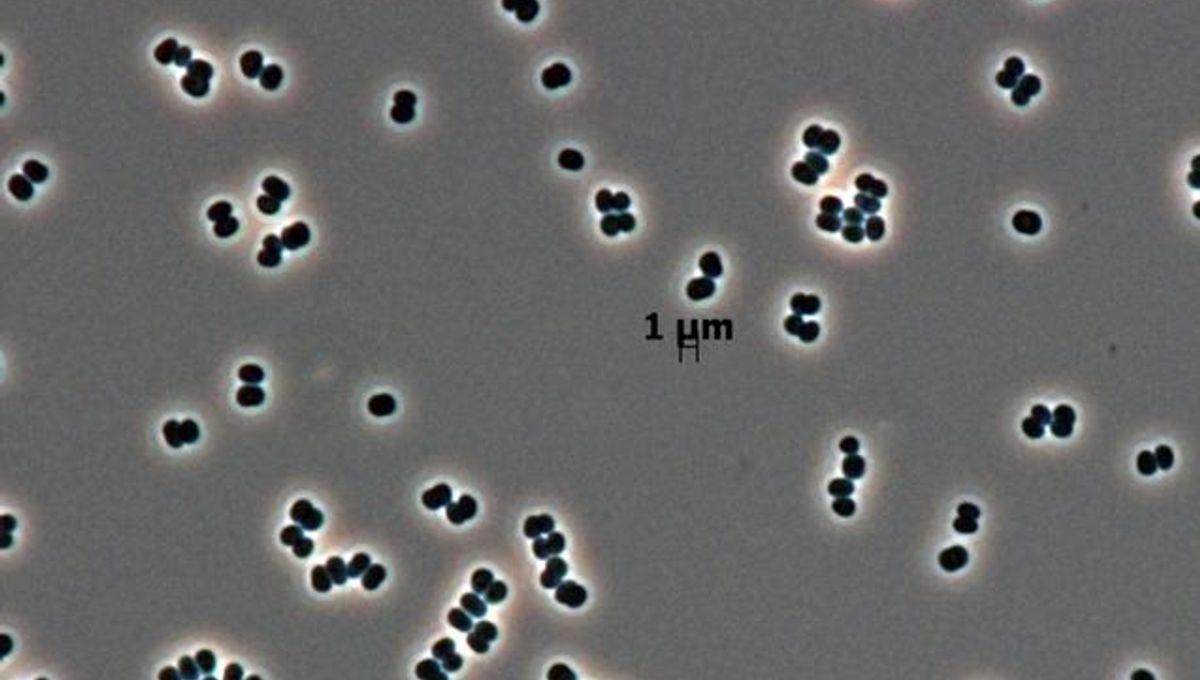
The rest of this article is behind a paywall. Please sign in or subscribe to access the full content. Bacteria have been found in some naturally extreme environments, from the geyser of Yellowstone to the lakes beneath the ice sheets of Antarctica. These are the extremophiles. Humans have created an artificial environment that is giving rise to new extremophiles: spacecraft clean rooms. Mission teams take the cleaning job very seriously, but bacteria are resourceful, and they have continued to evolve strategies to survive the cleaning process. Bacterium Tersicoccus phoenicis was discovered in a clean room that was hosting NASA’s Phoenix lander in 2007. It has only been found in one other location, in the Herschel Space Observatory's clean room at Europe's Spaceport. Researchers have found that one of those bacteria might be playing dead. News of its death might have been greatly exaggerated; it looks like it can survive sterilization. The bacteria enter a dormant state under nutrient starvation and desiccation. This ability allows it to survive the harsh conditions in the clean room. And what’s concerning is that once they enter that state, they are not easily detectable, and standard methods to check for bacterial presence might fail to spot them. “They are playing hide and seek, OK? They're playing hide and seek until they get the right conditions,” study author Assistant Professor Madhan Tirumalai, a microbiologist at the University of Houston, told IFLScience. “Could they survive [going to space and reaching another world] like that? It's a genuine concern from a planetary protection perspective that they can survive these conditions by going dormant.” In research funded by the University of Houston, the team demonstrated that they could bring this bacterium back to life by using the resuscitation-promoting factors (RPF) from related species known as Micrococcus luteus. Dormancy might be a common ability of the phylum Actinobacteria, which also includes tuberculosis, which kills 1 million people every year. “Our laboratory had been studying dormancy for several years,” co-author Professor William Widger told IFLScience. “This resuscitation factor has indeed been shown to resuscitate tuberculosis, besides Micrococcus luteus. And now it seems to be able to resuscitate Tersicoccus. So we believe that the RPF that we have here would be a good tool to look at resuscitation from any other dormant Actinobacter because I think they all have the same mechanism.” Understanding the ability of the tuberculosis-causing bacterium to go dormant and avoid antibiotics would be a game-changer when it comes to treatment. But dormancy might also be important in the health aspect of other industries beyond clean rooms. It depends on how common these bacteria are. “The bigger question is, is dormancy common in these clean room facilities? These lessons could also be applied to hospitals, pharma facilities, and the food industry,” Tirumalai told IFLScience. The two other authors of the paper are Sahr Ali and George Fox, who discovered – along with Carl Woese – that archaea are a separate life domain from bacteria. In our conversation, we asked the speculative question on the possibility of this bacterium being able to spread on Mars, or even Titan or Enceladus. The sincere answer from these experts is that we do not know. Part of this is about our ignorance of the detailed properties of those worlds, and part is the remaining uncertainties about the dormancy, behaviors, and needs of the actinobacteria. More research is needed to pinpoint both the implications here on Earth and far into the Solar System. The study is published in the journal Microbiology Spectrum.

 English
 Arabic
 French
 Portuguese
 Deutsch
 Turkish
 Dutch
Dutch
 Italiano
 Russian
 Romaian
 Portuguese (Brazil)
 Greek
Greek