


The Civil War’s 3 Most Feared and Ruthless Fighters
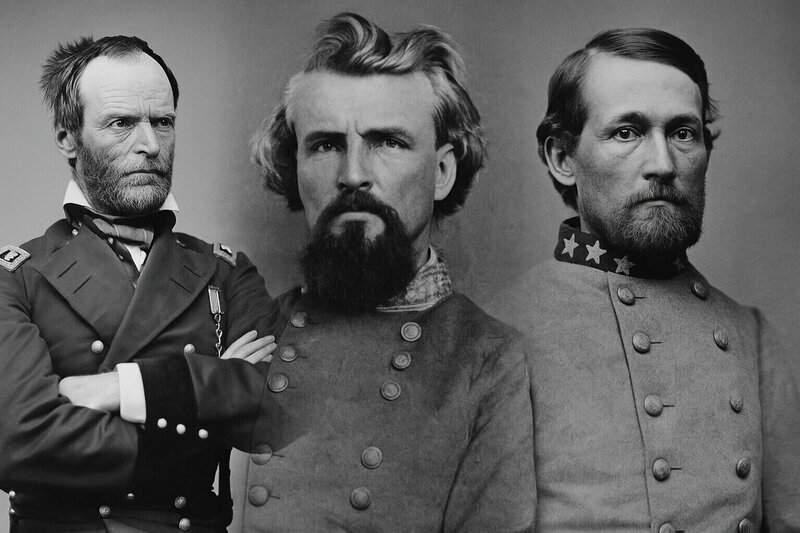
The Civil War’s 3 Most Feared and Ruthless Fighters
The American Civil War was a brutal and devastating conflict, pitting brother against brother in a bloody struggle that tested the very soul of a nation. From 1861 to 1865, the war claimed over 600,000 lives, reshaped American society, and left deep scars on the collective memory. Amidst the carnage and chaos emerged individuals whose ruthless tactics, fierce fighting spirit, and intimidating reputations struck fear into the hearts of their opponents. In this article, we delve into the stories of three of the most feared and relentless warriors—men whose mere presence on the battlefield altered strategies and inspired dread among even the bravest soldiers.
Few names evoke fear and controversy from the American Civil War quite like that of General William Tecumseh Sherman. A Union commander renowned—and reviled—for his fierce determination and ruthless tactics, Sherman believed unequivocally that war must be harsh and uncompromising to achieve decisive victory.
His most infamous strategy, known as the scorched earth policy, aimed not only to defeat enemy soldiers on the battlefield but also to demoralize the civilian population and cripple the South’s ability to wage war.
In late 1864, Sherman launched his notorious “March to the Sea”, a calculated campaign of destruction that would become legendary in military history. Departing from Atlanta, Georgia, which his forces captured after fierce fighting, Sherman led approximately 60,000 Union troops on a devastating 285-mile journey southeast toward Savannah. His explicit instructions were chillingly clear: destroy anything that could support Confederate forces, including railways, supply depots, farmland, livestock, and even civilian homes if deemed strategically necessary.
The burning of Atlanta served as a grim prelude to the horrors Sherman’s troops would unleash throughout Georgia. On November 15, 1864, Sherman’s forces systematically set fire to warehouses, railroads, ammunition depots, and factories, leaving Atlanta engulfed in flames and smoke visible from miles away. This destruction was not merely punitive; Sherman aimed to make a psychological statement, demonstrating to the Confederacy that continued resistance would mean utter devastation.
The march itself was equally destructive. Union soldiers tore up railroads, heating and twisting the rails around trees into grotesque shapes known as “Sherman’s neckties,” rendering them unusable. They looted farms, slaughtered livestock, destroyed cotton fields and grain stores, leaving a swath of devastation approximately 60 miles wide. Sherman’s troops spared few resources, deliberately undermining civilian morale and crippling the Confederacy’s economic backbone.
Yet Sherman’s actions were not driven by personal cruelty alone; he saw his strategy as a necessary, if harsh, expedient to shorten the war. By depriving Confederate soldiers of food, shelter, and supplies, he sought to accelerate their surrender and save lives in the long run.
Nevertheless, his tactics earned him lasting notoriety in the South, where generations would remember him as a merciless destroyer whose name became synonymous with terror.
The March to the Sea culminated successfully when Sherman captured Savannah in December 1864, famously offering the city to President Abraham Lincoln as a Christmas gift. However, Sherman’s brutal campaign did not end there; he turned northward into the Carolinas, continuing his strategy of relentless destruction. By the war’s end, Sherman’s scorched earth approach had decisively shortened the conflict, but at an enormous human and material cost that defined his legacy.
To this day, historians debate Sherman’s legacy: was he a brilliant military strategist who brought the war to a quicker end, or an unforgiving conqueror whose tactics blurred ethical lines in warfare? Regardless of perspective, one fact remains undeniable—General William Tecumseh Sherman was among the Civil War’s most feared and ruthless fighters, leaving an indelible mark on American history.

 English
 Arabic
 French
 Spanish
 Portuguese
 Deutsch
 Dutch
Dutch
 Italiano
 Russian
 Romaian
 Portuguese (Brazil)
 Greek
Greek