


The "Mind’s Eye" Doesn’t Focus Like Our Vision, Even For People Who Have One
The "Mind’s Eye" Doesn’t Focus Like Our Vision, Even For People Who Have One
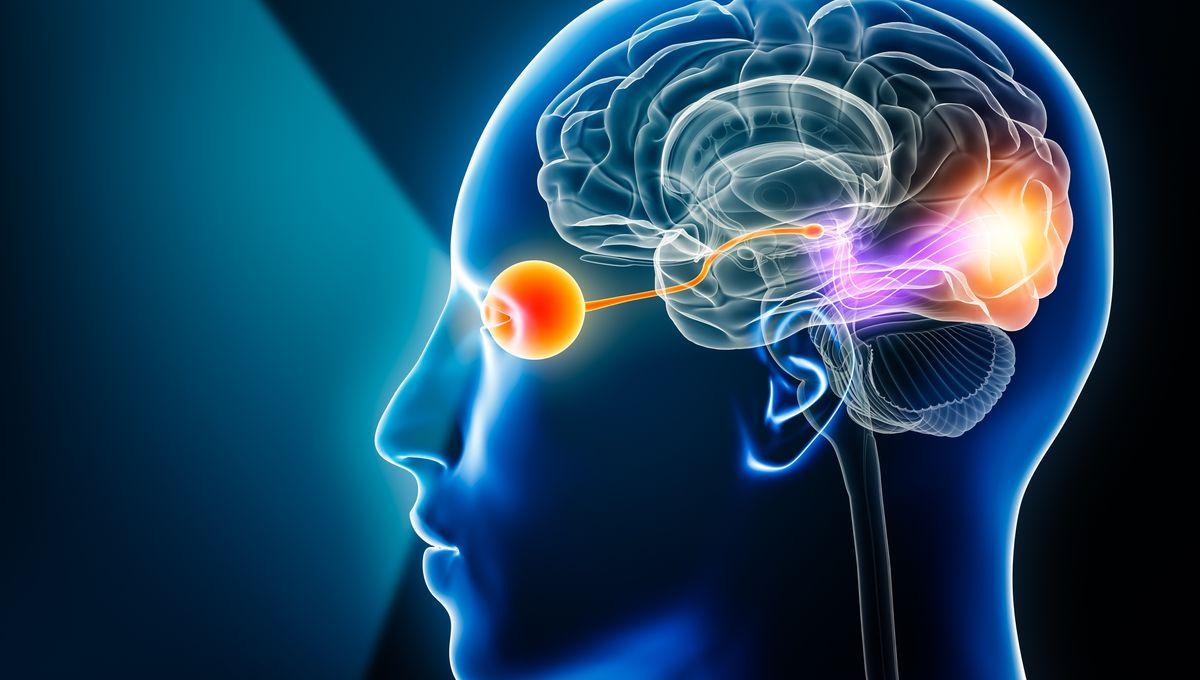
People recalling a familiar image use different brain mechanisms to focus on a component than those who are viewing the situation live, a new study indicates. The reasons why the brain has evolved a different process for this task are not known, but might hold the key to understanding why some people have this capacity and others do not.
The rest of this article is behind a paywall. Please sign in or subscribe to access the full content. A few years ago, many frequent Internet users were astonished to discover that some people have no “mind’s eye”, the capacity to visualize things that they cannot see at the time, also known as aphantasia. A smaller group were at least as amazed to learn that other people can, and that references to such capacities were not merely metaphorical. Possibly influenced by these exchanges, research into the working of the mind’s eye, where it exists, has picked up, for example finding that psychedelics may switch it on. The most recent example investigated how the brain responds when challenged to focus on part of a remembered map, in contrast to a scene laid out before it, revealing crucial differences. Anthony Clement and Dr Catherine Tallon-Baudry of the École Normale Supérieure, PSL University, asked 28 healthy Parisian volunteers to bring a map of their home country to mind, while wearing an electroencephalograph (EEG) machine, and then focus on either the eastern or the western half. The participants (most of them geography students who would know the map well) were then shown the names of two cities and asked to place them on their mental map and say which was closer to Paris. Participants alternated between this task and one that used two dots on a screen, and asked which was closest to a shape they had been told to focus on. As in the memory map, the timing of the responses was as important as getting it right. Before the map memory task, subjects were asked about their confidence that they could place each of a list of French cities on a map, with participants asked mostly about those they had expressed more confidence about. The process was repeated over 70 trials, a proportion of which involved an “invalid cue” where the city or dot was not on the side people were told to anticipate, and answers were slower in these cases. The EEGs indicated that different parts of the brain were being activated when participants focused on the relevant region of the map or screen. Focusing attention during mental imagery modulated alpha waves in more frontal parts of the brain compared to the more posterior changes in spatial attention. In particular, when performing the visualization test, alpha band activity was altered in the left inferior frontal gyrus in a way that did not occur when participants had the dots in front of them. Previous studies have shown this part of the brain to be very involved in language processing and internal attention. The study sought to test whether spatial attention in the mind’s eye “recruits the same neural mechanisms as visual perception,” the authors write. They concluded it does not, writing, “Overall our results challenge the assumption that spatial attention in mental imagery relies on the same mechanisms as visuospatial attention.” The study is published in the Journal of Neuroscience.

 English
 Arabic
 French
 Spanish
 Portuguese
 Deutsch
 Turkish
 Dutch
Dutch
 Italiano
 Russian
 Romaian
 Portuguese (Brazil)