


In 1997, A Zoo Chimp Amazed Scientists By Gathering Rocks To Throw At Visitors
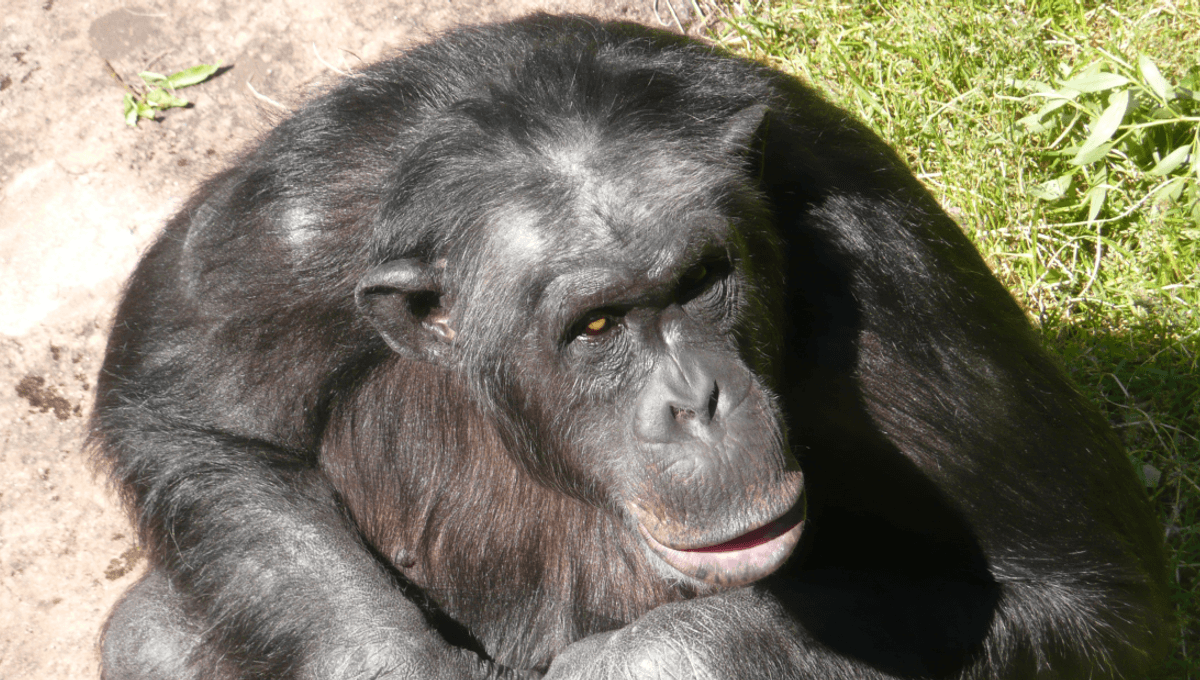
In 1997, A Zoo Chimp Amazed Scientists By Gathering Rocks To Throw At Visitors
If you’d swung by to see the chimps at Furuvik Zoo in Gävle, Sweden, back in 1997, there’s a good chance you might’ve received a rock to the head. It was around this time that a male chimpanzee called Santino had started exhibiting an impressive – albeit slightly problematic – behavior.
The rest of this article is behind a paywall. Please sign in or subscribe to access the full content. You see, Santino had developed a taste for hurling rocks at visitors. Primates throwing things isn’t unusual, but Santino wasn’t just picking up anything during these episodes. Oh no, he had planned for it. Zoo animals get used to seeing humans wandering around their enclosures. It’s the same reason why so many zoos tried to make up for the sudden dip in footfall during the COVID-19 lockdowns with chimp-to-chimp Zoom calls. That said, not all zoo animals are so fond of the stimulation of an audience, a bracket I think we can agree Santino fell into. Each morning, when the zoo was closed and the crowds were shut out, he would navigate the moat in his enclosure and gather rocks. These rocks would be left in small piles dotted around the enclosure, hidden away in secretive places. That’s because Santino wasn’t gathering them for immediate use. No, he had something else planned. When the visitors arrived, Santino would often get agitated. The change in state would see his rock stacks take on a new function, as he’d begin hurling them into the air – sometimes with such frequency that Science reports the keepers referred to them falling like a “hailstorm”. “Stone throwing toward a crowd of people has an instant and dramatic effect, and was a way to evoke reactions across the water moat that enclosed the chimpanzee,” wrote cognitive zoologist Mathias Osvath in a 2008 correspondence published in Current Biology. “During the first three years during which this male chimpanzee held the dominant position, stone hurling was infrequent. This was probably because the outdoor island compound rarely contained stones immediately attainable in a display.” “In early June 1997, however, stone throwing increased dramatically, including several throws per display. This prompted zoo personnel to take precautionary measures.” Come 1998, Santino was getting low on rocks, but then he developed another skill. He learned to exploit the concrete in the center of the island he lived on by whacking it with a rock until he heard a hollow sound. This indicates the presence of a crack, and would motivate Santino to start whacking harder until a chip came off that he could add to his arsenal. What makes this behavior so remarkable is the preparation that went into it. Santino was particular about his missiles, storing up stones and fracturing weak bits of cement. What was also remarkable about it was that the preparation was done in a calm state, while the execution was unleashed during a state of high agitation – a kind of pre-planning that wasn’t really considered a trait of non-human animals back in 1997. “In order for a behaviour to signal planning for a future state, the predominant mental state during the planning must deviate from the one experienced in the situation that is planned for,” added Osvath. “The above-described behaviour is clearly identifiable as planning for a future state.” A follow-up study from Osvath also revealed Santino's skills in deception. His rock tossing had become (in)famous, so to prevent visitors from having time to run away, he started concealing his caches of rocks under naturally occurring obstacles in his enclosure, or by gathering hay to cover them up. A crafty one, that Santino. In the decades that have passed since his antics, we’ve learned a lot about chimp tool use, cultural spread, and even found evidence for human-like warfare tactics. Suffice to say, they may be our close relatives, but you do not want to mess with chimpanzees.“Stone throwing toward a crowd of people has an instant and dramatic effect"
“The above-described behaviour is clearly identifiable as planning for a future state”

 English
 Arabic
 French
 Portuguese
 Deutsch
 Turkish
 Dutch
Dutch
 Italiano
 Russian
 Romaian
 Portuguese (Brazil)
 Greek
Greek