


4.4-Million-Year-Old Ankle Bone Suggests Humans Evolved From African Ape-Like Ancestor
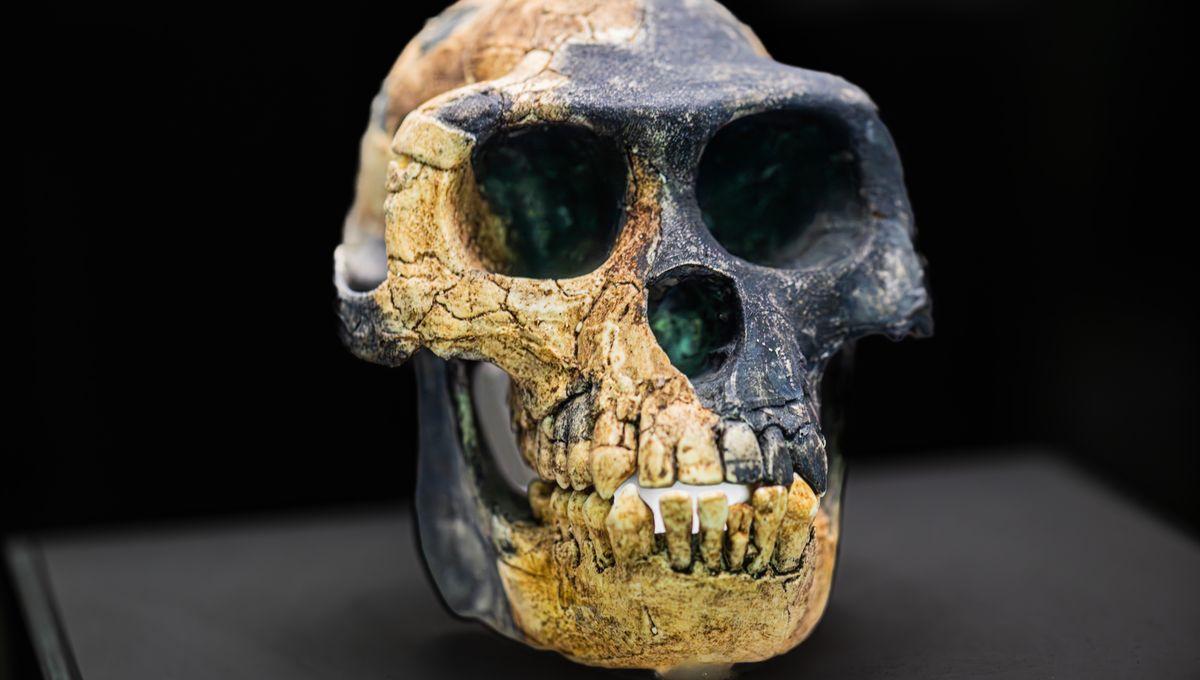
4.4-Million-Year-Old Ankle Bone Suggests Humans Evolved From African Ape-Like Ancestor
A prehistoric hominin that lived more than four million years ago in Ethiopia may have climbed like a chimp and walked a bit like a human. Known as Ardipithecus ramidus – or Ardi for short – this extinct primate may therefore have served as a transitional species between apes and humans, indicating that our ancestors were in fact similar to gorillas, chimpanzees, and bonobos.
The rest of this article is behind a paywall. Please sign in or subscribe to access the full content. If true, this could radically reshape our understanding of human evolution, according to the authors of a new analysis of Ardi’s ankle bones. Until now, it had been assumed that our last common ancestor with African apes had lived exclusively in the treetops, leading to the idea that Ardi was probably an arboreal species. However, the results of this study suggest that this wasn’t the case and that Ardi may also have been at home on the ground – just like modern chimps. Since being discovered in 1994, Ardi’s 4.4-million-year-old remains have been at the heart of an anthropological debate. To help settle the matter, the study authors compared the specimen’s talus – or ankle bone – with that of other primates spanning 40 million years of evolutionary history. Results showed that the angular tilt of Ardi’s ankle falls squarely in the range of modern African apes. This implies that the ancient hominin was capable of both vertical climbing and terrestrial plantigrade quadrupedalism, which involves walking an all-fours with the soles of the feet squarely on the ground. Yet Ardi also exhibits certain features that are associated with an “enhanced push-off mechanism in the foot”, and are therefore fundamental to bipedalism in humans. In other words, Ardi seems to possess a mosaic and African ape- and human-like characteristics. “One of the surprises in this discovery was that Ardi walked upright, yet retained a lot of ape-like characteristics, including a grasping foot,” said study author Thomas (Cody) Prang in a statement. Importantly, this finding contradicts the work of previous researchers who had distanced Ardi from African apes. “Based on their analysis, they concluded that living African apes – like chimpanzees and gorillas – are like dead ends or cul-de-sacs of evolution, rather than stages of human emergence,” says Prang. “Instead, they thought that Ardi provided evidence for a more generalized ancestor that wasn’t similar to chimps or gorillas.” However, this new examination of Ardi’s talus tells a very different story, suggesting that this human ancestor was similar to an African ape after all. And while this does not mean that humans evolved from chimpanzees, it does imply that our ancestors were more chimp-like than previously thought. “[T]his paper is a correction of that initial idea that distanced Ardi from chimpanzees and gorillas,” says Prang. The study is published in the journal Communications Biology.

 English
 Arabic
 French
 Spanish
 Portuguese
 Turkish
 Dutch
Dutch
 Italiano
 Russian
 Romaian
 Portuguese (Brazil)
 Greek
Greek