


Meat-Eating In US Cities Emits 329 Million Tons Of Carbon – But This Could Be Cut In Half

Meat-Eating In US Cities Emits 329 Million Tons Of Carbon – But This Could Be Cut In Half
A new study has quantified the carbon footprint of meat consumption across 3,531 cities across the United States. Each year, the cities consume 11 million tons of meat; the production, transport, and preparation of all that leads to 329 million tons of carbon emissions. This analysis is the first to systematically look at the details of these emissions and suggest how, at the very least, this could be halved without much trouble.
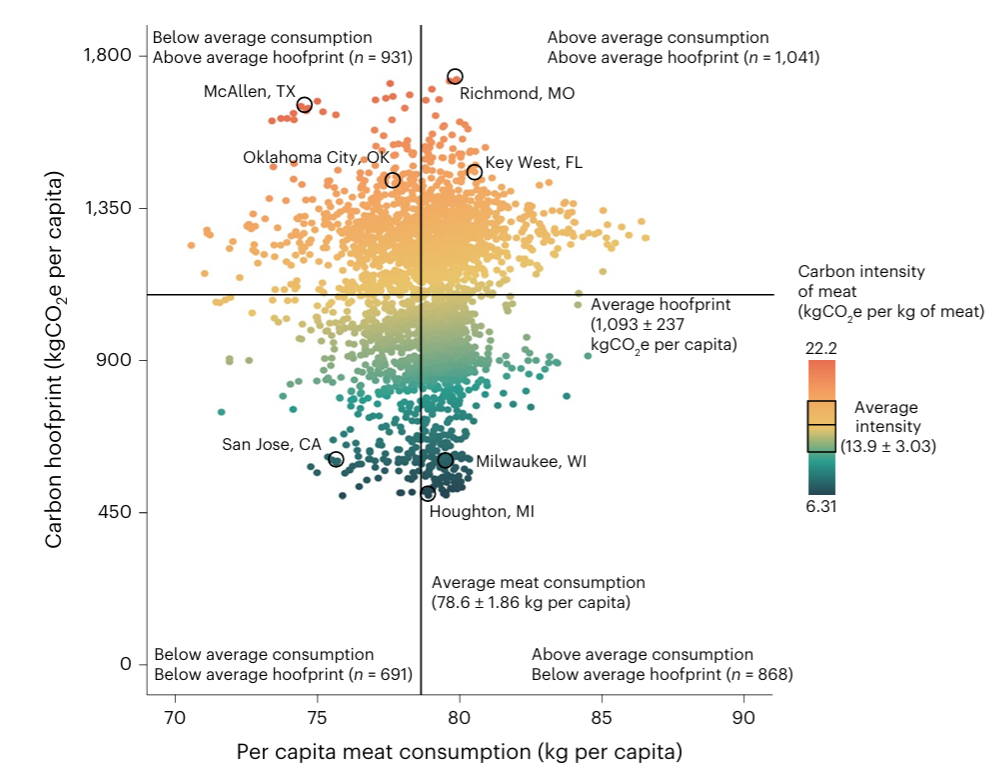
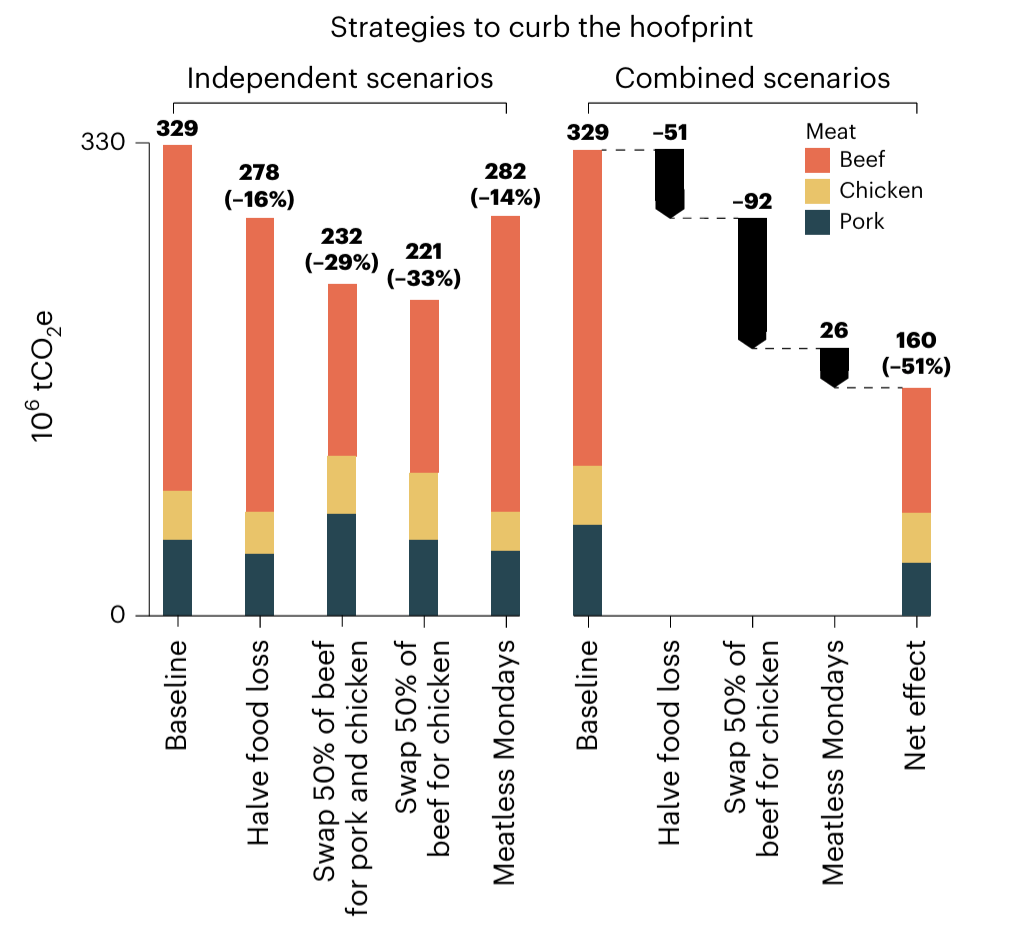
The rest of this article is behind a paywall. Please sign in or subscribe to access the full content. Meat and dairy consumption and production have contributed substantially to greenhouse gas emissions, though the exact contribution often cannot be determined due to the complexity of the supply chain network. National averages might cover those gaps, but doing so leads to a loss of insights at a smaller scale and how specific interventions can reduce the impact of meat consumption on the unfolding climate crisis. The greenhouse gas emissions associated with meat consumption per resident across over 3,000 US cities. Image credit: B. P. Goldstein et al. Nat. Clim. Change 2025 (CC BY) This new work showed that yearly consumption sees 4.6 million tons of chicken, 3.7 million tons of beef, and 2.7 million tons of pork consumed. Most of the carbon emissions come from where the meat is produced, with wild differences between cities. Referring to this value as a carbon "hoofprint", it shows that depending on where the meat comes from, the emissions per capita in different cities can be hugely different. "This is really the first systematic and analytical effort to map what we call urban-land teleconnections. It's understanding that cities have massive impacts beyond their borders," Joshua Newell, a senior investigator on the study from the University of Michigan, said in a statement. "It is our hope that this study provides an example of how we can foster better understanding between two different places: One largely urban and one distinctly rural where our food is produced." Per capita meat consumption is not a good predictor of per capita carbon hoofprint. For example, 868 cities – including Milwaukee, Wisconsin and Houghton, Michigan – have an above-average per capita meat consumption with a below-average per capita carbon hoofprint. Image credit: B. P. Goldstein et al. Nat. Clim. Change 2025 (CC BY) Taken together, the emissions are extremely significant; 329 million tons is larger than the total greenhouse gas emissions of European countries such as the United Kingdom and Italy, which are at 305 million and 313 million tons, respectively. It is also comparable to the greenhouse emissions from fossil fuel combustion in the US. "This has huge implications for how we gauge the environmental impact of cities, measure those impacts and ultimately develop policies to reduce those impacts," said Benjamin Goldstein, a leader of the study and assistant professor at Michigan's School for Environment and Sustainability. While cities like New York, Los Angeles, Chicago, Miami, and Dallas-Fort Worth have the highest meat consumption, the actual highest carbon hoofprint per capita sees the top five cities being McAllen (TX), Laredo (TX), Corpus Christi (TX), Oklahoma City (OK), and Fort Collins (CO). There are systemic issues that cannot be solved unless there is a restructuring of supply chains, but the researchers point out that easy dietary changes could dramatically cut emissions. Halving food loss would cut emissions by 16 percent. Having a meatless Monday would cut them by 14 percent. If you were to swap half of the beef for pork and chicken, the drop would be 29 percent; just chicken without pork would reach 33 percent. Combining the 50 percent switch to chicken, reducing food loss, and having a meatless Monday would cut 51 percent of the emissions. How to reduce emissions without structural changes. Image credit: B. P. Goldstein et al. Nat. Clim. Change 2025 (CC BY) "But if you just cut out half of your beef consumption and maybe switch to chicken, you can get similar amounts of greenhouse gas savings depending on where you live," Goldstein said. "If we can get people to use this type of study to think about how diets in cities impact their environmental impacts, this could have huge effects across the United States." The study is published in the journal Nature Climate Change.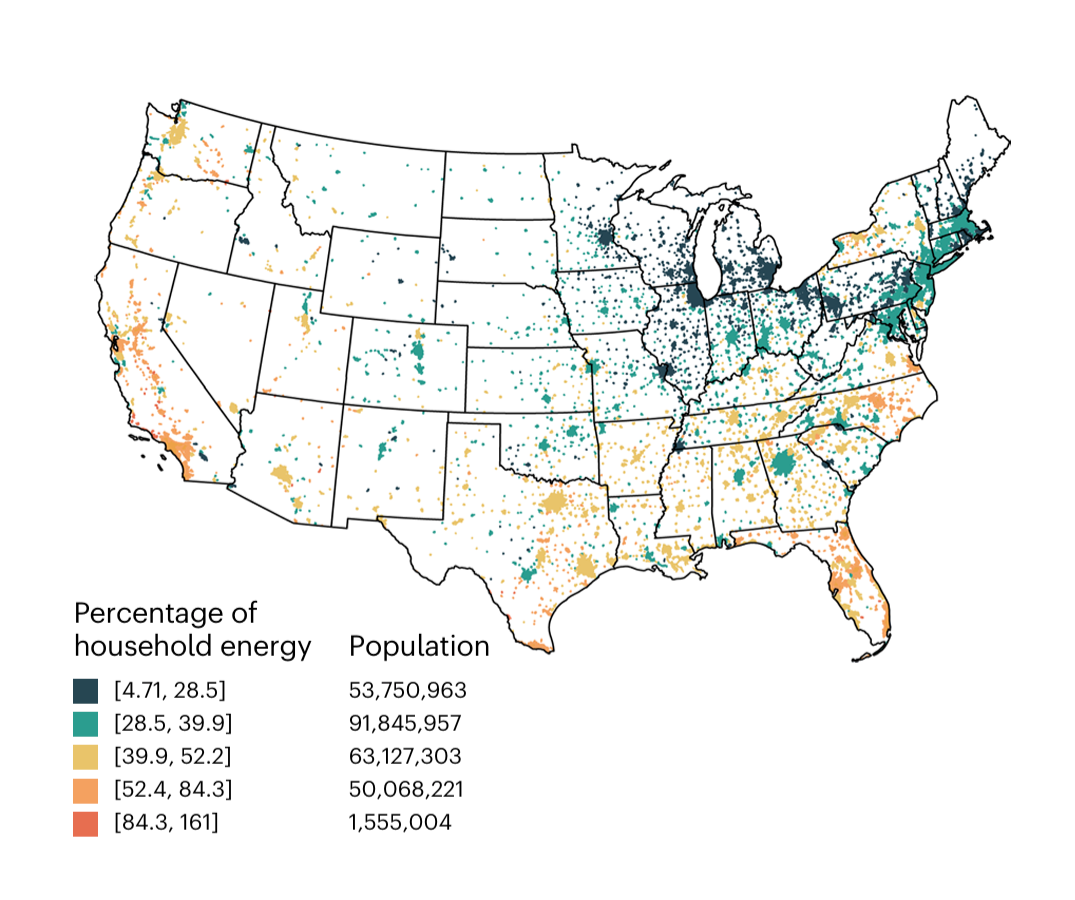

 English
 Arabic
 French
 Spanish
 Portuguese
 Deutsch
 Turkish
 Dutch
Dutch
 Italiano
 Russian
 Romaian
 Greek
Greek