


These Birds Self-Cannibalize Their Own Organs To Complete Their Non-Stop 11,000-Kilometer Migration
These Birds Self-Cannibalize Their Own Organs To Complete Their Non-Stop 11,000-Kilometer Migration
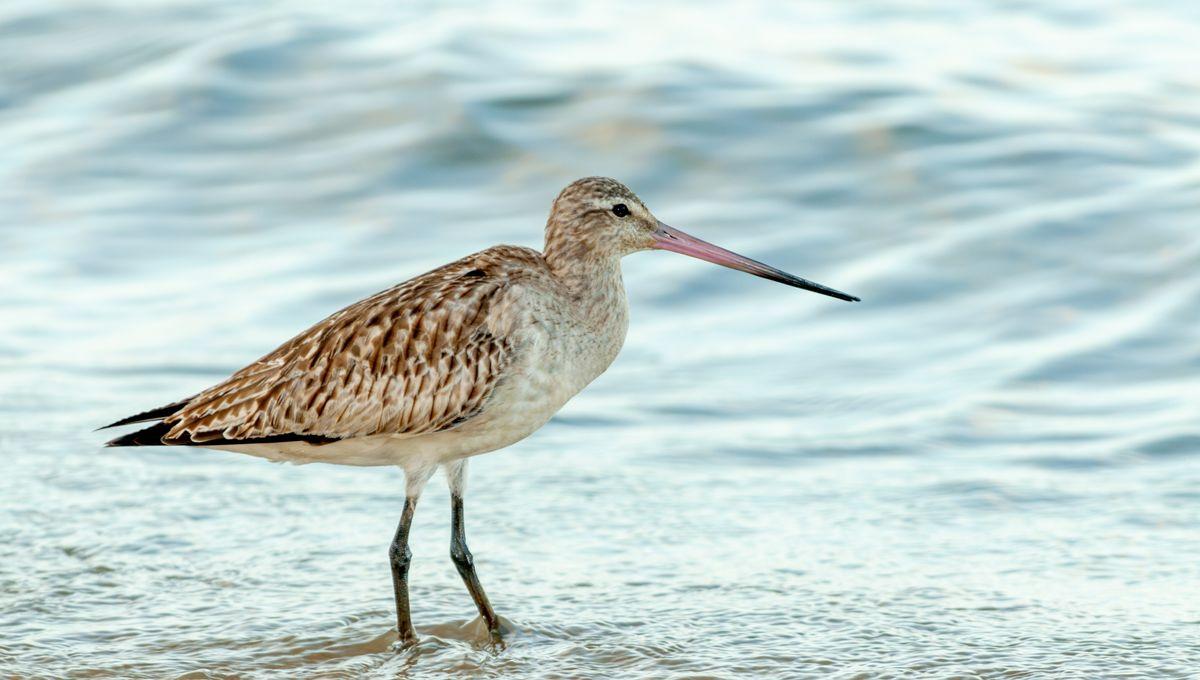
These plucky shorebirds undertake the longest non-stop flight of any animal, embarking on an odyssey for 11,000 kilometers (6,800 miles) up and down the globe. These ultra-endurance aviators stay airbound for more than a week without food, energy drinks, or in-flight entertainment. The journey is so extreme that the bird must literally consume parts of itself to complete it.
The rest of this article is behind a paywall. Please sign in or subscribe to access the full content. Bar-tailed godwits spend the Northern Hemisphere summer in the Arctic, where they breed and feast on a diet of bristle worms, snails, and small crustaceans. When temperatures start to drop in September, they head south – far, far south – migrating down the length of the ocean with no pit stops until they make landfall. To fuel the journey, they rely on immense reserves of fat. In 1998, scientists studied the bodies of bar-tailed godwits (Limosa lapponica baueri) that died after colliding with a radar dome on the Alaska Peninsula just after taking off for their trans-Pacific flight to Australasia. They compared these birds’ body composition and organ sizes with those of godwits from New Zealand just before their return northward migration, as well as with a related subspecies making a stopover in the Netherlands. The birds in Alaska, who had only just set off on their migration, possessed ludicrously high stores of fat. Over half of their body mass (up to 55 percent) was fat, among the highest ever recorded in birds. The same birds also had drastically shrunken organs – gizzards, livers, kidneys, and intestines – while their breast muscles and hearts remained strong and sturdy. It appears that before departure, the godwits had broken down parts of their internal “metabolic machinery” that wouldn't be needed in the air to make room for extra fat. They achieve this through a process known as autophagy (which means "self-eating" in Greek), a cellular process in which the body recycles its cells and tissues, often activated during times of stress like extreme hunger or intense exercise. Remarkably, the organs are able to grow back once they have reached their destination, allowing them to resume feeding and restore their physiology for the next migration cycle. Bar-tailed godwits hold the world record for the longest non-stop migratory flight ever recorded. In 2022, researchers recorded one bird flying 13,560 kilometers (8,435 miles) between Alaska and Tasmania in just 11 days. Evidently, though, this incredible feat comes at a high cost: half a liver and the bulk of their gizzards.

 English
 Arabic
 French
 Spanish
 Portuguese
 Deutsch
 Turkish
 Dutch
Dutch
 Russian
 Romaian
 Portuguese (Brazil)
 Greek
Greek