


"I've Never Seen This Happen Before": Space Junk Found In Western Australian Desert Reported To Have Landed On Fire
"I've Never Seen This Happen Before": Space Junk Found In Western Australian Desert Reported To Have Landed On Fire
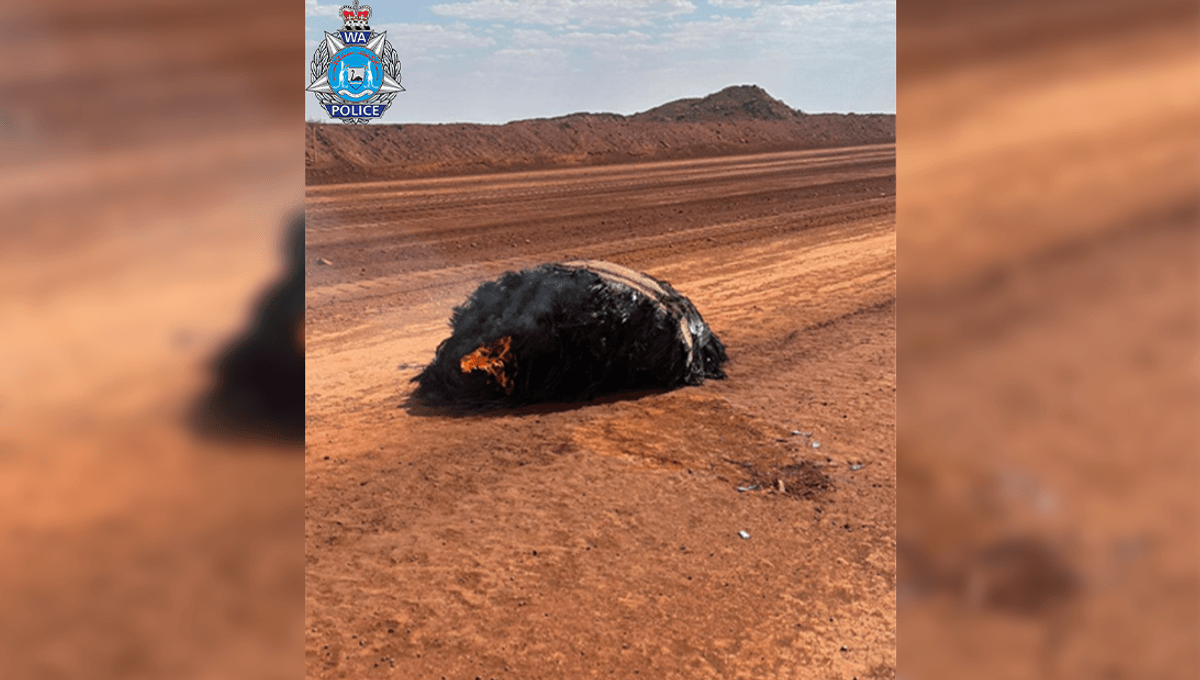
Western Australian police have announced the finding of an object on an access road to a mine in the Pilbara region. Their social media post describes the object as burning, and while space junk expert Professor Steven Tingay of Curtin University is cautious, he told IFLScience images certainly make it likely it was on fire when it landed.
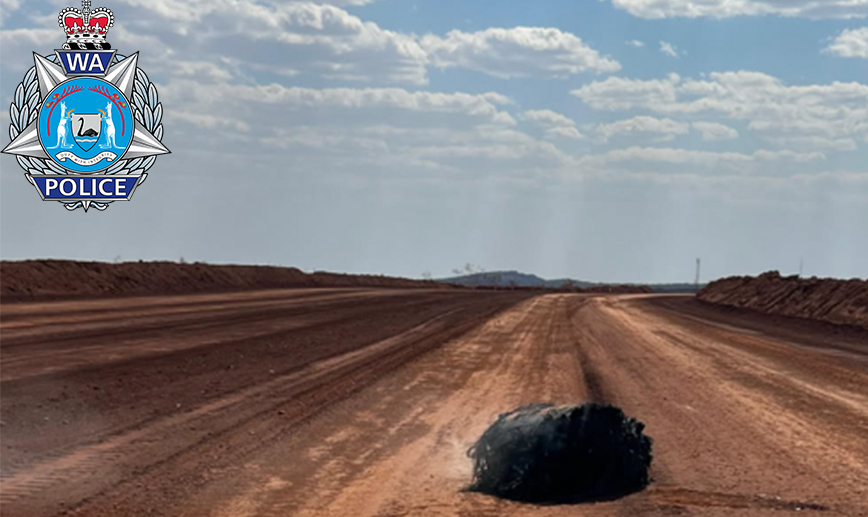
The rest of this article is behind a paywall. Please sign in or subscribe to access the full content. “I’ve never seen this happen before,” Tingay noted, but with the number of space launches increasing exponentially, he fears it could become more common. The risks from the sky might be larger than we thought. “Everyone worries about being hit,” when they think about space junk, Tingay said, “but the chance is tiny.” However, an object that reached ground level while still on fire could start a bushfire if it landed in a forest on a dry day, Tingay pointed out. Forests take up a lot more territory than human bodies, so the odds might need to be rethought. Moreover, Tingay noted, “There can be pretty nasty materials in some of these objects.” Normally, that just means that members of the public shouldn’t touch them when they find something that appears to be space junk. However, an object on fire could be releasing toxic fumes, making all the more reason to “give it a wide berth and call the police,” Tingay said. The source of the object is unknown. Dr Alice Gorman (“Dr Space Junk”) of Flinders University told the Guardian, “It seems to be the fourth stage of a Jielong rocket. There was one launched in late September.” But Tingay is reluctant to speculate without more information. “There was no re-entry warning, no signs of controlled re-entry,” Tingay said, and at time of writing no nation or company have taken responsibility. Tingay thinks the best approach is to try to identify the components and match them to a manufacturer, but admits, “That can be quite difficult,” and presumably doesn’t get easier if fire destroys the evidence. It might look like headwear of a science fiction character who reveals only their eyes, but this is what the junk looked like once the fire was put out. Image courtesy of Pilbara Division WA Police The situation might be different if anyone had spotted the object flaming its way through the sky. However, Tingay said, “It probably landed during the day. It might have been visible if you were looking in the right spot, but you would need to be lucky. It’s a low population area and near the coast, so it could have come in over water.” Dr Eleanor Sansom of the Desert Fireball Network is part of Tingay’s team, but he told IFLScience the network doesn’t reach that far north. Tingay’s job as the Deputy Director of International Centre for Radio Astronomy Research (ICRAR) predominantly involves studying objects across or outside the galaxy. However, he told IFLScience, “Ten years ago we discovered these telescopes were picking up signals much closer to home, and are very well suited to detecting and monitoring objects in orbit. So we’ve spun off into space situational awareness.” As such the team is working to predict and monitor events like this one, but as this example reveals, that’s quite a challenge. “It appears to have landed on fire in the middle of a road,” Tingay said. “That’s getting a bit close to home.” He’s concerned that too little attention is being paid to the potential consequences of the rapid expansion of space launches, including what the deposition of so much material in the upper atmosphere return might do. In the Pilbara, it's hard to hit much of substance, but the roads to mines can be pretty wide. Image courtesy of Pilbara Division - WA Police Force In 1979, the Western Australian Shire of Esperance famously sent NASA a bill for littering after Skylab landed in their territory, which was eventually paid by listeners to a Californian radio station. That was a joke, but the costs of the Skylab clean-up were small. Canada faced a larger bill the year before when a highly radioactive Russian satellite landed on them, and the eventual payment is not thought to have covered it. Tingay didn’t want to comment on the legal situation in such a scenario, but hopes people are thinking about it.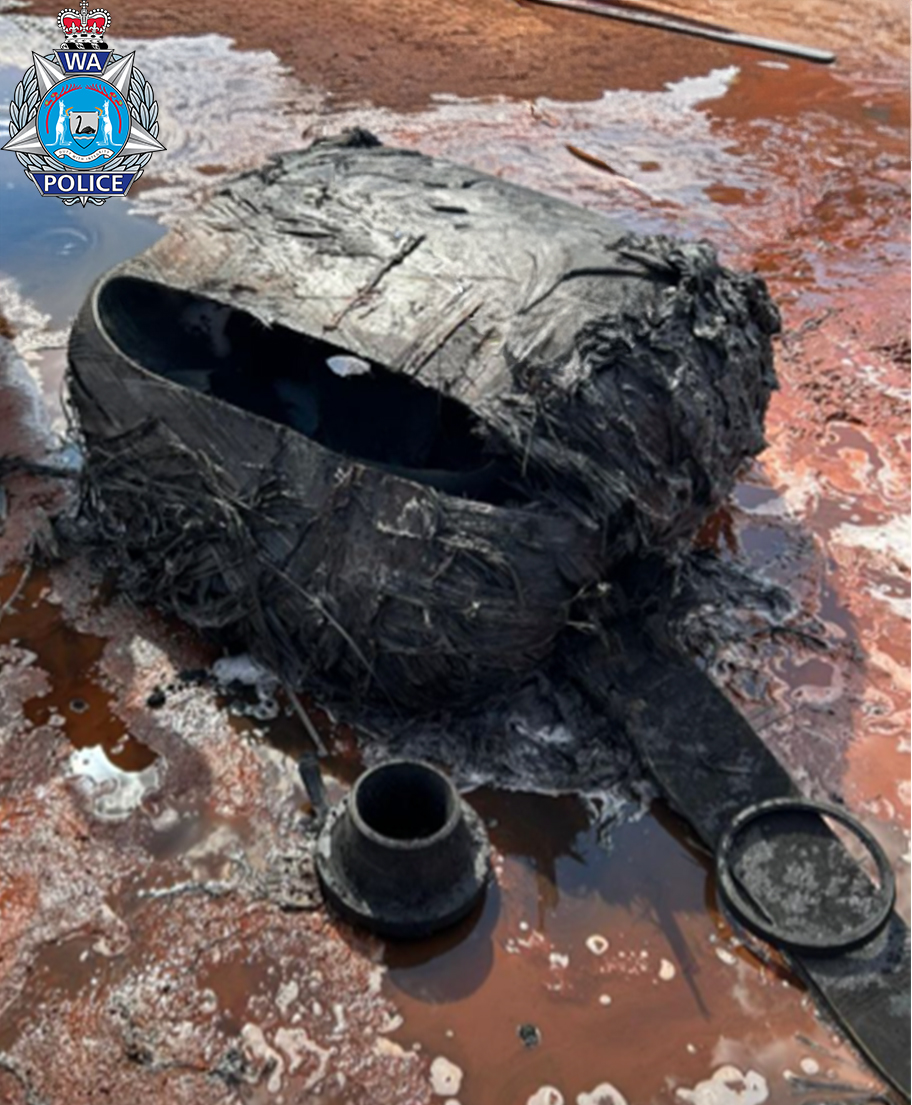

 English
 Arabic
 French
 Spanish
 Portuguese
 Deutsch
 Turkish
 Italiano
 Russian
 Romaian
 Portuguese (Brazil)
 Greek
Greek