


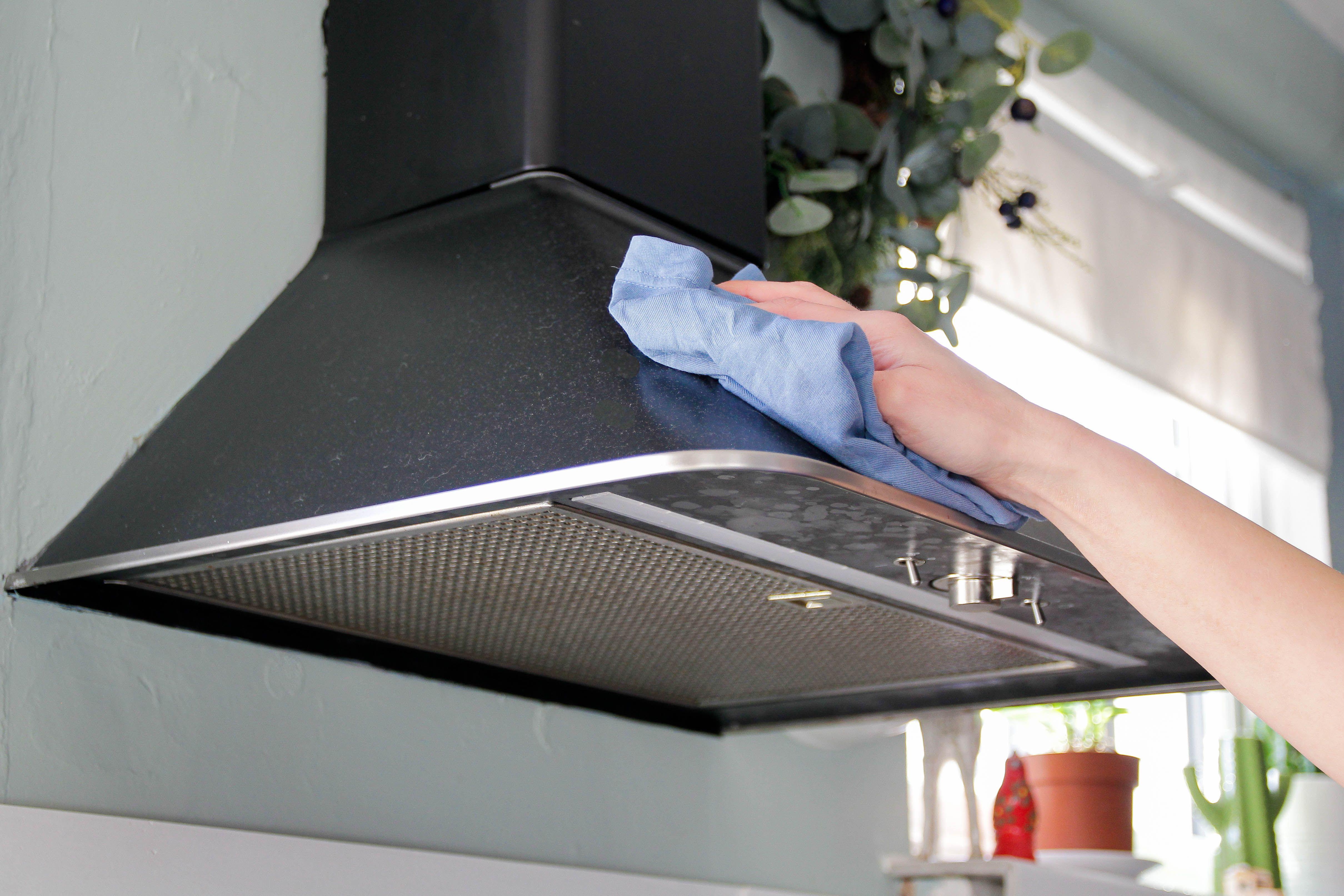
Range hoods capture grease, smoke, and other air pollutants to keep your kitchen safe while cooking. If you don’t clean your range hood periodically, buildup diminishes the range hood’s effectiveness and can pose a fire hazard. This guide explains how to get rid of grease on your range hood and how often to clean it, including tips to prevent the buildup from coming back.
How Often to Clean Your Range Hood
Cleaning your range hood once a month prevents grease from accumulating. However, if you cook frequently, especially with fried or greasy foods, you might need to clean it more often.
Change or clean the filter if the hood doesn’t efficiently clear smoke from the room, even on the highest setting. If the motor hums loudly or constantly, check whether the ductwork is damaged. Regular maintenance keeps your range hood functioning efficiently and reduces fire hazards.
How to Remove Grease from a Range Hood
Before beginning the cleaning process, clear the cooktop or stove of any utensils and ensure the burners are off. Consider wearing protective gear, such as latex gloves and a mask.
Step 1: Gather Cleaning Supplies
Gather a degreaser, whether you prefer a commercial degreaser or homemade vinegar and baking soda solution. Additionally, you'll need a microfiber cloth, sponge, scrub brush or old toothbrush, and bucket of warm, soapy water.
You may want to cover the cooktop with a cloth or plastic cover to protect it from falling dust or residue from cleaning products.
If you’re using a commercial grease remover, open a window for ventilation. Test your cleaning product on a small area to ensure it won’t damage the range hood's finish.
Step 2: Remove Dry Debris
Use a duster or dry cloth to remove debris or dust from the range hood.
Step 3: Remove the Filter and Clean Surrounding Area
Filters are typically located on the hood’s underside, facing down onto the cooktop. Some have a metal loop that allows you to pull them out, and others have a latch or opening to slide out. Avoid getting grease on your hands by wearing gloves.
Once the filter is out, use hot water and soap on a damp cloth to wipe the ledges where the filter sits. Use an old toothbrush to scrub the corners and crevices. If soap doesn’t work, add baking soda or vinegar to the water or use a commercial degreaser. Wipe down the surfaces with water.
Step 4: Clean Range Hood Filter
To clean the filter, fill a sink or bucket with hot water and add a few drops of anti-grease dish soap and about ½ cup of baking soda. Mix well and then submerge the filter. Let it soak for 15 to 20 minutes before scrubbing with gentle strokes. Drain the water, refill the sink or bucket with fresh, soapy water, and repeat the process until the filter is clean. Rinse and dry thoroughly before replacing it for use.
You can clean stainless-steel filters with a cycle in the dishwasher. Some aluminum filters may also be dishwasher safe when using the appropriate detergent.
If your hood uses single-unit filters, change them as recommended to ensure range hood efficiency. Some hoods have indicator lights to signal when filters need to be changed.
Step 5: Clean the Range Hood Surface
Use sturdy paper towels or durable rags to wipe down the surface from top to bottom. Mix anti-grease dish soap with warm water and wipe down the surface thoroughly. A wipe with a vinegar-based cleaner will remove any remaining residue.
For particularly greasy spots, pretreat the grease by spraying the degreaser and letting it sit for about 15 minutes before wiping it with a sponge. Use a microfiber cloth dipped in warm, soapy water to remove loosened grease and residue.
If you have a stainless-steel range hood, scrub in the direction of the grain to avoid scratching and polish it with a stainless-steel cleaner to restore the shine.
Safety Precautions
Ensure the range hood is turned off and unplugged when cleaning it (if possible) to avoid electrical hazards. Your kitchen should be well-ventilated when you use chemical degreasers to avoid inhaling fumes. Wear protective gear, such as gloves and a mask, to protect your skin and respiratory system. Do not use abrasive scrubbers or steel wool, as these can scratch the surface of your range hood, especially if your hood is painted.
If you notice a lot of grease buildup in the space where the fan runs after you take the filters out, call a professional duct cleaning service or company to check and clean, if necessary.
Materials to Avoid
Avoid ammonia- or bleach-based products, as they can damage the surface, corrode the metal, or leave harmful residue. Also, avoid scouring pads or steel wool.

 English
 Arabic
 French
 Spanish
 Portuguese
 Deutsch
 Turkish
 Italiano
 Russian
 Romaian
 Portuguese (Brazil)
 Greek
Greek