


When Red Devil Spiders Arrived On A New Island, Their Genome Dramatically Shrank In Half
When Red Devil Spiders Arrived On A New Island, Their Genome Dramatically Shrank In Half
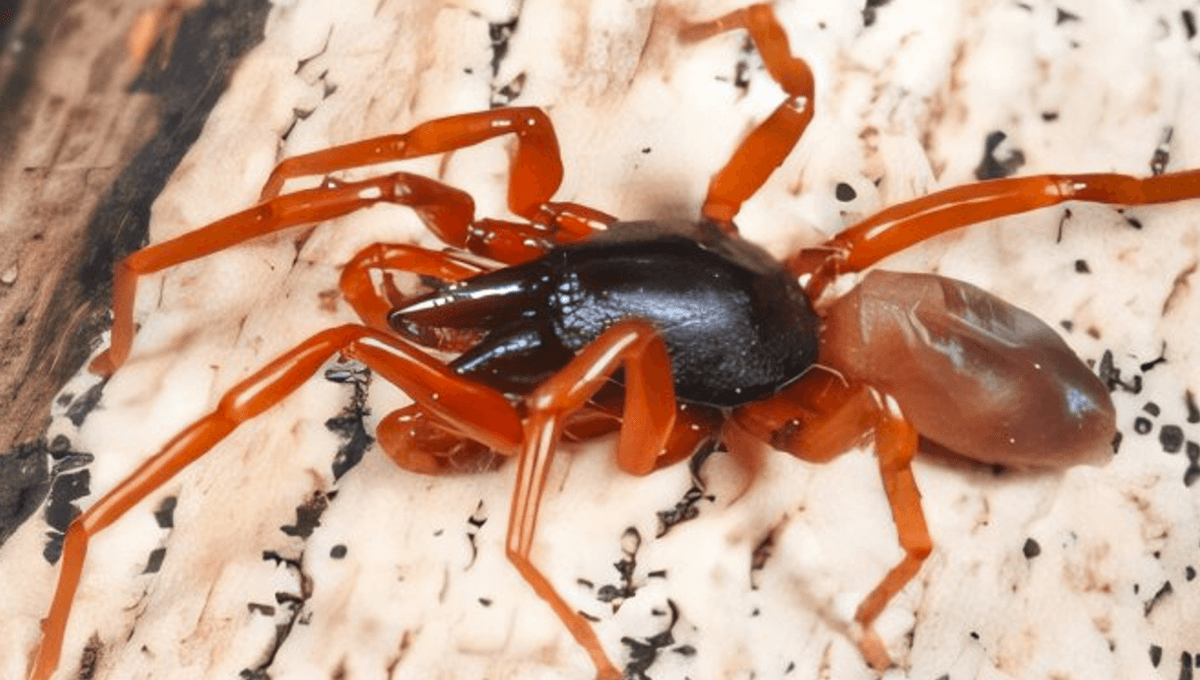
When red devil spiders ventured down the Atlantic and arrived on the Canary Islands, their genome dramatically shrank and became half the size within just a few million years (a blink of an eye in terms of evolution). A new study has investigated this “extraordinary diversification” to better understand how genomes can undergo such rapid ballooning or slimming.
The rest of this article is behind a paywall. Please sign in or subscribe to access the full content. The Canary Islands are an archipelago in the Atlantic Ocean, found off the northwestern coast of Africa. They were formed by waves of volcanic activity starting around 20 million years ago, making this cluster of islands a relatively new addition to the planet. Their geological youth also makes the islands a natural laboratory for studying how species and their genomes evolve in isolation. Since the islands’ formation, nearly 50 species of Dysdera spider have emerged that are endemic, meaning they are found nowhere else in the world. One of those is Dysdera tilosensis, a species of red devil spiders found only on Gran Canaria, one of the most populated of the Canary Islands. These spiders are closely related to Dysdera catalonica, a continental species native to northern Catalonia and southern France. After a few adventurous ancestors somehow reached the islands, perhaps carried by wind or rafting on driftwood, they began to evolve along a separate path in the new environment, eventually becoming dozens of different species, including D. tilosensis. However, something strange happened along this evolutionary path. Spot the difference: the mainland spider (Dysdera catalonica, left) and one from the Canary Islands (Dysdera tilosensis, right). Image credit: Marc Domènech and Pedro Oromí, respectively Led by scientists at the University of Barcelona, a team recently sequenced and compared the genomes of these two Dysdera spiders. Remarkably, they found that mainland spider D. catalonica has 3.3 billion base pairs in its genome, while the Canary Island’s D. tilosensis has just 1.7 billion. In essence, this suggests the genome of the spider was almost halved in size after colonizing the Canary Islands. Furthermore, the genomic sequencing also reveals that D. catalonica has a haploid chromosome number of four autosomes and one X sex chromosome, while D. tilosensis has six autosomes plus the X chromosome. “The genome downsizing of the spider D. tilosensis, associated with the colonization process of the Canary Island, is one of the first documented cases of drastic genome downsizing using high-quality reference genomes,” Professor Julio Rozas, director of the Evolutionary Genomics and Bioinformatics at the Faculty of Biology and the Biodiversity Research Institute of the University of Barcelona, said in a statement. “This phenomenon is now being described for the first time in detail for phylogenetically closely related animal species,” he continued. A smaller genome doesn’t mean the organism is any less complex or less geared towards survival. Much of the DNA lost during this downsizing likely consisted of repetitive or non-coding sequences rather than essential genes. The spiders’ biological functions and adaptability remain intact, but their genomes have essentially been streamlined and repackaged into a more compact form. Case in point, the species from the Canary Islands with the smaller genome actually has greater genetic diversity, hinting that a leaner genome doesn’t necessarily limit evolutionary potential. Nevertheless, the shrinking of the red devil spider genome is very unexpected. The genomes of living things are more inclined to increase over time, rather than reduce in size. This trend is especially common in small populations that colonize new environments due to a phenomenon known as the Founder Effect. When only a few individuals establish a new population, selective pressures are often reduced, allowing nonessential or repetitive DNA to accumulate and genomes to grow larger and more redundant. It’s unclear why the red devil spiders appear to buck this trend, although the researchers ponder whether it might have something to do with non-adaptive mechanisms, evolutionary forces that do not result from natural selection, but from random changes that don’t impact an organism's fitness. “Populations in the Canary Islands would have remained relatively numerous and stable for a long time. This would have made it possible to maintain a strong selective pressure and, as a consequence, eliminate unnecessary DNA,” explained Vadim Pisarenco, first study author, also from the University of Barcelona. The study is published in the journal Molecular Biology and Evolution.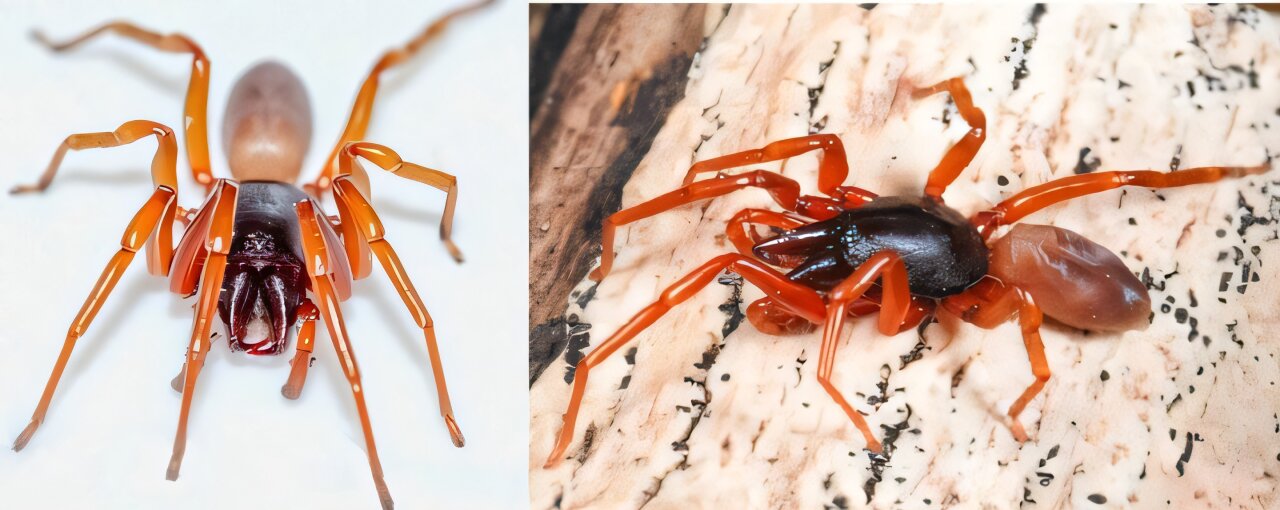

 English
 Arabic
 French
 Spanish
 Portuguese
 Deutsch
 Turkish
 Dutch
Dutch
 Russian
 Romaian
 Portuguese (Brazil)
 Greek
Greek