


Distinctive Rocks Might Be Remnants Of Earth Before The Collision That Made The Moon
Distinctive Rocks Might Be Remnants Of Earth Before The Collision That Made The Moon
Rocks from Canada, Greenland, and Hawai'i have less of the already rare isotope potassium-40 than those from the rest of the Earth. The scientists who discovered this fact consider it evidence that these rocks are formed from material that existed on Earth before the collision that led to the Moon’s formation.
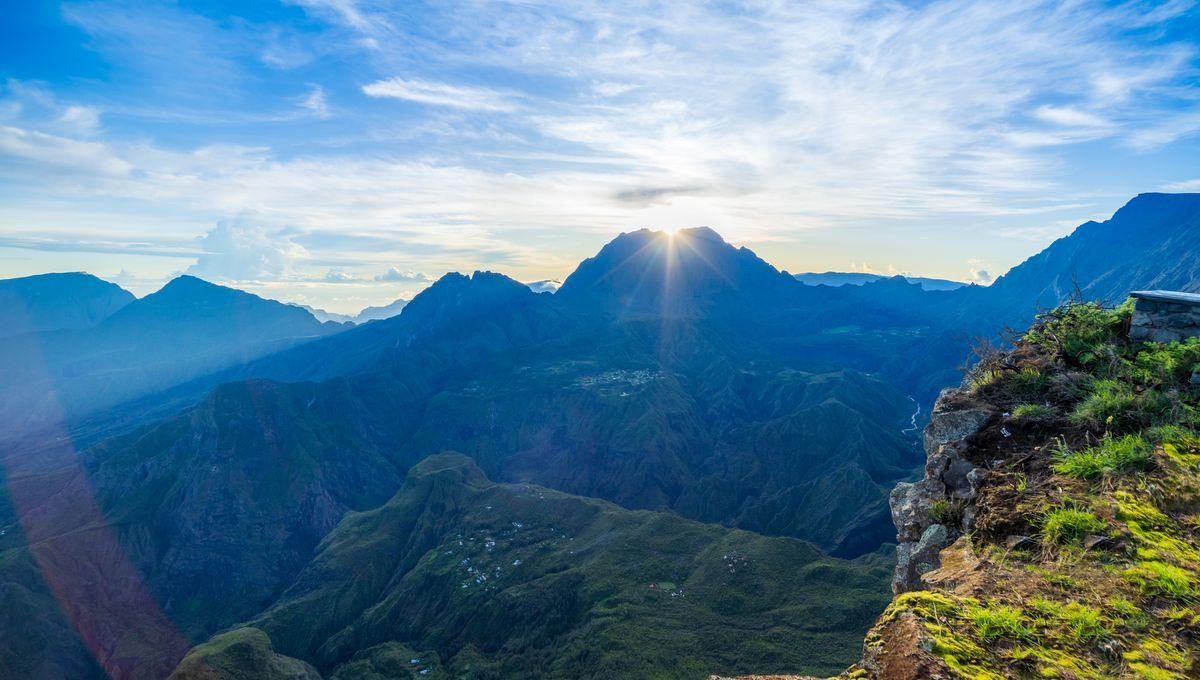
The rest of this article is behind a paywall. Please sign in or subscribe to access the full content. One collision, early in the Earth’s existence, changed everything. An object about the mass of Mars smashed into the proto-planet, throwing up so much material it became the Moon, and turning the planet’s surface molten for a long period of time. According to some recent research, the object in question, known as Theia, brought with it most of the water that makes up our oceans and makes Earth habitable. Theia smashed up the Earth so badly that most of the planet is now composed of a roughly 90/10 mix of proto-Earth and Theia, with small quantities from later meteorites mostly in the crust. However, MIT’s Dr Nicole Nie wondered if any purer remnants of the proto-Earth remained. To find them, Nie and colleagues reasoned they needed to identify what the later additions would have added, and look for examples that lack these. The team studied meteorites and found they are mostly richer in potassium-40, relative to its fellow isotopes potassium-39 and 41, than the Earth itself. Assuming this trend is long-lasting, before the arrival of all these meteorites, the planet must have had even less potassium-40 than it does today. That’s saying a lot, since potassium-40 makes up barely 0.01 percent of the element in the Earth’s crust. It’s possible that Theia was just as deficient in potassium-40 as the proto-Earth, and that all the extra arrived in subsequent meteorites, but the authors consider this unlikely. Consequently, they argue, if we can find rocks that are sufficiently low in postassium-40, they are likely to be from the time before Theia. The team reasoned there were two types of places best suited to this search. One is in regions hosting the world’s oldest rocks, such as Greenland and parts of Canada. The other is in relatively young rocks, formed from material deep within the mantle, where it might have been shielded from Theia’s influence. "If this potassium signature is preserved, we would want to look for it in deep time and deep Earth," Nie said in a statement. When the authors ran samples from Greenland and Canada’s most ancient regions, and volcanic islands Hawai'i and Réunion, through mass spectrometers they found concentrations of potassium-40 65 parts per million lower than from a wider variety of other places. This makes postassium-40 so rare relative to the other potassium isotopes, they believe the ingredients must have been almost pure proto-Earth. "This is maybe the first direct evidence that we've preserved the proto-Earth materials,” said Nie. "We see a piece of the very ancient Earth, even before the giant impact. This is amazing because we would expect this very early signature to be slowly erased through Earth's evolution." There are other elements where Earth’s isotopic composition is at the extreme end of the meteorite spectrum, such as ruthenium and molybdenum, However, differences in the way these elements are incorporated into the Earth’s core means they are not always suitable for confirmation testing. One big question the work has not resolved is why the proto-Earth was so low in potassium-40. There are some meteorites that are low in postassium-40, but none have been found that match the composition from the four locations. Nie and co-authors admit to not knowing why the proto-Earth was unlike any other object we have found in the Solar System, at least in regards to potassium. Nie suggests we may need a larger meteorite sample, as one that matched the Earth before Theia may still be waiting to be found. How these unusual samples avoided being contaminated with Theia’s potassium-40 is also unknown. The study is published in Nature Geoscience.

 Arabic
 French
 Spanish
 Portuguese
 Deutsch
 Turkish
 Dutch
Dutch
 Italiano
 Russian
 Romaian
 Portuguese (Brazil)
 Greek
Greek