


Manta Rays Dive Way Deeper Than We Thought – Up To 1.2 Kilometers – To Explore The Seas
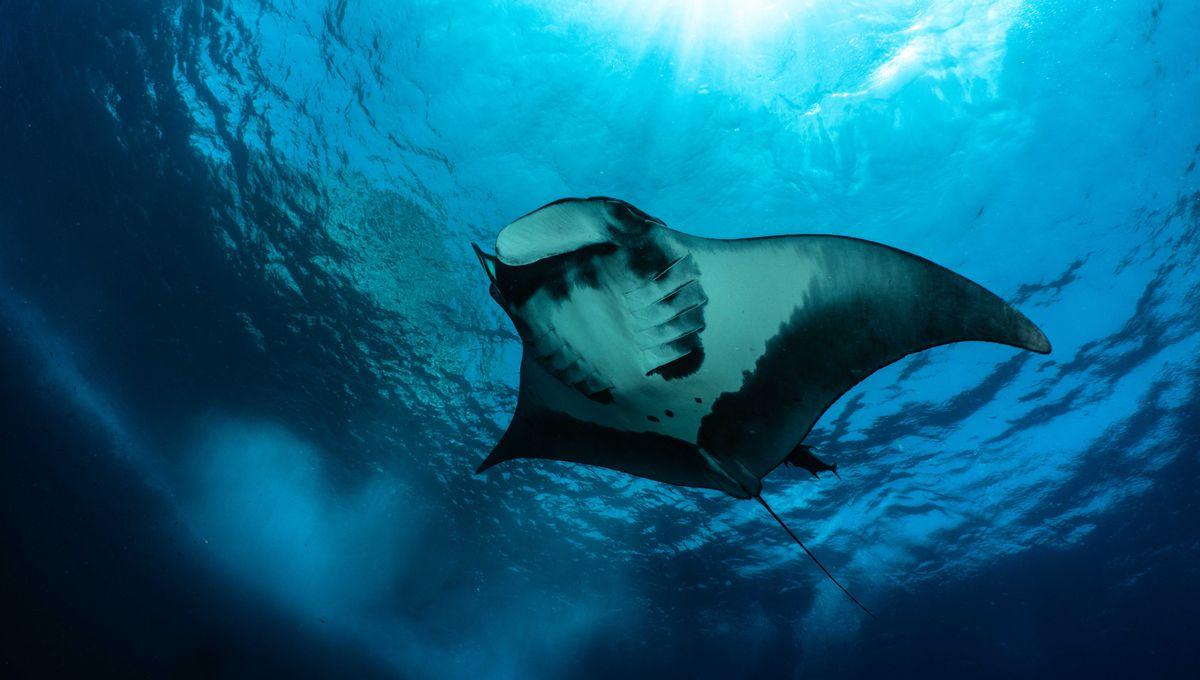
Manta Rays Dive Way Deeper Than We Thought – Up To 1.2 Kilometers – To Explore The Seas
It's been a bumper year for the manta ray with a brand new species added to the roster, and they’ve even been seen being used as scratching posts by Galapagos sharks. But the fun does not stop there, as new research has revealed that they are diving deeper than anyone thought.
The rest of this article is behind a paywall. Please sign in or subscribe to access the full content. To learn more about manta ray behavior, a group of researchers tagged 24 oceanic manta rays (Mobula birostris) at three different locations: Raja Ampat in eastern Indonesia, near Tumbes off the coast of northern Peru, and near Whangoroa in northern New Zealand. Eight of the tags were programmed to detach from the rays and were recovered on the water's surface, while the remaining 16 sent data back to the team via satellite. This gave the researchers loads of information about the manta rays' movements, amounting to 2,705 tag-days. This totalled data for 46,945 dives. On 79 of those days the rays were recorded diving to depths of more than 500 meters (1,640 feet), reaching a maximum of 1,250 meters (4,101 feet) deep. The dives occurred in “steps” rather than a straight descent, possibly to allow the mantas to adjust to the colder water, or to recover from the effort of descending. The team tagged 24 manta rays at three different locations. Image credit: © Edy Setyawan “We show that, far offshore, oceanic manta rays are capable of diving to depths greater than 1,200 meters, far deeper than previously thought,” said first author Dr Calvin Beale, who completed his PhD at Murdoch University, in a statement. “These dives, which are linked with increased horizontal travel afterwards, may play an important role in helping mantas gather information about their environment and navigate across the open ocean.” The tags on the New Zealand rays showed that they would make these deep dives after moving away from the coast, the rays did not spend much time at the maximum depth, which suggests they weren't diving this deep for foraging or to avoid predators. After the dives the rays then spent significant time at the surface, before spending 73 hours covering 200 kilometers (124 miles) of distance. It is thought that these deep dives help the rays learn about the properties of the water column, including temperature, geomagnetic gradients and dissolved oxygen. This information then helps the rays decide whether to stay in the same location or move on. “This study is the first of its kind to examine in detail the extreme deep diving behaviour of oceanic manta rays (Mobula birostris),” commented Dr Mark Erdmann, Shark Conservation Director at Re:wild (who was not directly involved in the study), to the Science Media Centre. “Understanding the nature and function of deep dives helps explain how animals cross vast, seemingly featureless oceans and connect ecosystems thousands of kilometers apart,” Beale pointed out. In the other locations of Indonesia and Peru, the tag data revealed that the rays were not diving to such extreme depths. This is related to the habitat, as the shores around these locations are much more shallow. In the New Zealand habitat the seafloor drops away quickly, making deep dives both possible and important for the rays. “Importantly, the research team in New Zealand has continued to satellite tag oceanic mantas every summer since 2019,” Erdmann added, “and expects to publish additional exciting insights into the movements and behaviours of these majestic creatures over the coming few years.” The study is published in Frontiers in Marine Science.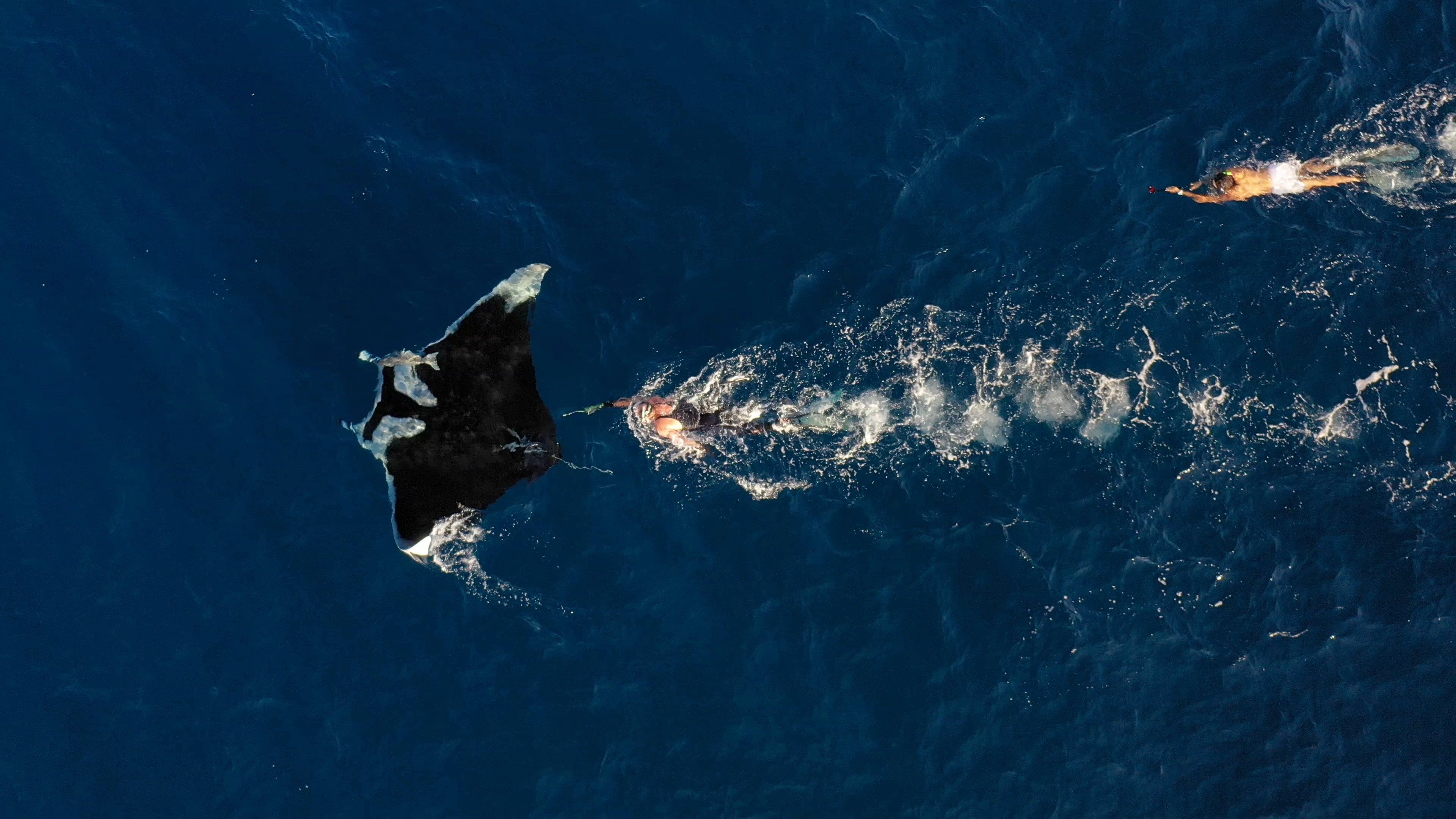

 English
 Arabic
 French
 Spanish
 Portuguese
 Deutsch
 Turkish
 Dutch
Dutch
 Italiano
 Russian
 Romaian
 Greek
Greek