


Pioneering “Pregnancy Test” Could Identify Hormones In Skeletons Over 1,000 Years Old
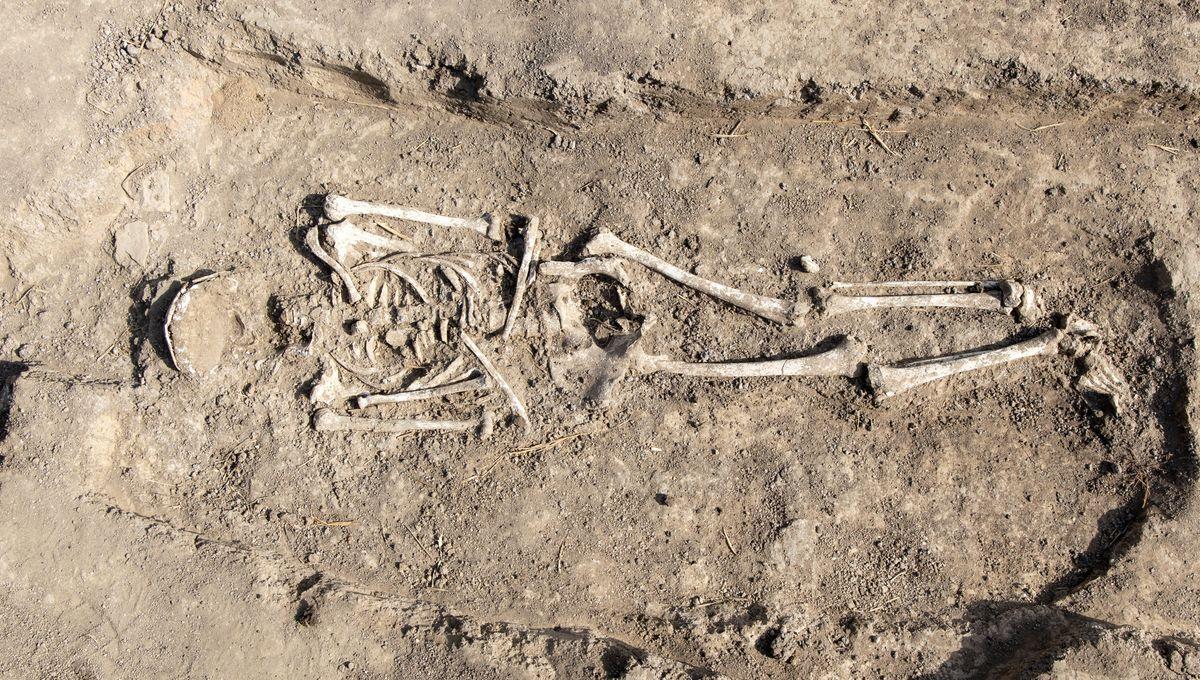
Pioneering “Pregnancy Test” Could Identify Hormones In Skeletons Over 1,000 Years Old
How do you spot pregnant individuals in the archaeological record? With great difficulty, it turns out. But that could be about to change, as a test capable of identifying hormones in skeletons breaks new ground in our understanding of ancient pregnancy.
The rest of this article is behind a paywall. Please sign in or subscribe to access the full content. For the first time, estrogen, progesterone, and testosterone have been detected in multiple human hard tissues, which could serve as an indicator of pregnancy, explain the authors of a recent study presenting the findings. Nowadays, pregnancy tests work by identifying the hormone human chorionic gonadotrophin (hCG) in urine – at one time, this involved frogs, believe it or not. However, hCG doesn’t linger in the body for long enough to be detectable in ancient remains. This means that archaeologists have, until now, had to rely on discovering fetal remains in the abdomens of pregnant people, which is incredibly difficult, nigh on impossible, to do. “New methods that can accurately identify pregnancy from skeletal remains are needed if we are to accurately reconstruct past women's reproductive histories, interpret their experiences within social and cultural contexts, and make effective comparisons between modern and archaeological populations,” the team behind the latest breakthrough explains. They studied the remains of 10 individuals dating from the first to the 19th century CE, demonstrating that estrogen, progesterone, and testosterone can be detected in their hard tissues. The cohort was made up of three males and seven females – two of whom had fetuses in their uteruses and two of whom were buried alongside newborn babies. Samples of bone, teeth, and dental calculus were ground into powder and analyzed for hormones using a newly developed version of a technique called an enzyme-linked immunosorbent assay. Elevated progesterone concentrations were detected in the bone and tooth samples of one pregnant woman, whose remains were dated to between the 11th and 14th centuries. Another pregnant woman, from the 18th or 19th century, also had heightened progesterone levels in bone samples. Moderate levels of the hormone – which is very important during pregnancy as it helps the lining of the womb to grow – were found in the dental plaque of the two women buried with babies in the fifth or sixth century. None of these four people had detectable testosterone in their bones or teeth. “High progesterone levels in dental structures and calculus, the presence of oestrogen in bone, and a lack of testosterone in hard tissues was consistent with pregnancy at the time of death,” the researchers conclude. This demonstrates the potential of this method as a pregnancy test for ancient individuals and provides unique insights into pregnancy in the past. There are, however, some limitations to the study. The technique is in its infancy, the authors acknowledge, and they encourage further research to refine it. If this comes to pass, they add, it has “the potential to revolutionise the way we study reproductive histories of past populations.” The study is published in the Journal of Archaeological Science.

 English
 Arabic
 French
 Spanish
 Portuguese
 Deutsch
 Turkish
 Dutch
Dutch
 Italiano
 Romaian
 Portuguese (Brazil)
 Greek
Greek