


In A World First, Autonomous Underwater Robot Sets Off On Mission To Circumnavigate The Globe
In A World First, Autonomous Underwater Robot Sets Off On Mission To Circumnavigate The Globe
A robot has just set off on its mission to complete the first-ever global circumnavigation with an autonomous underwater vehicle.
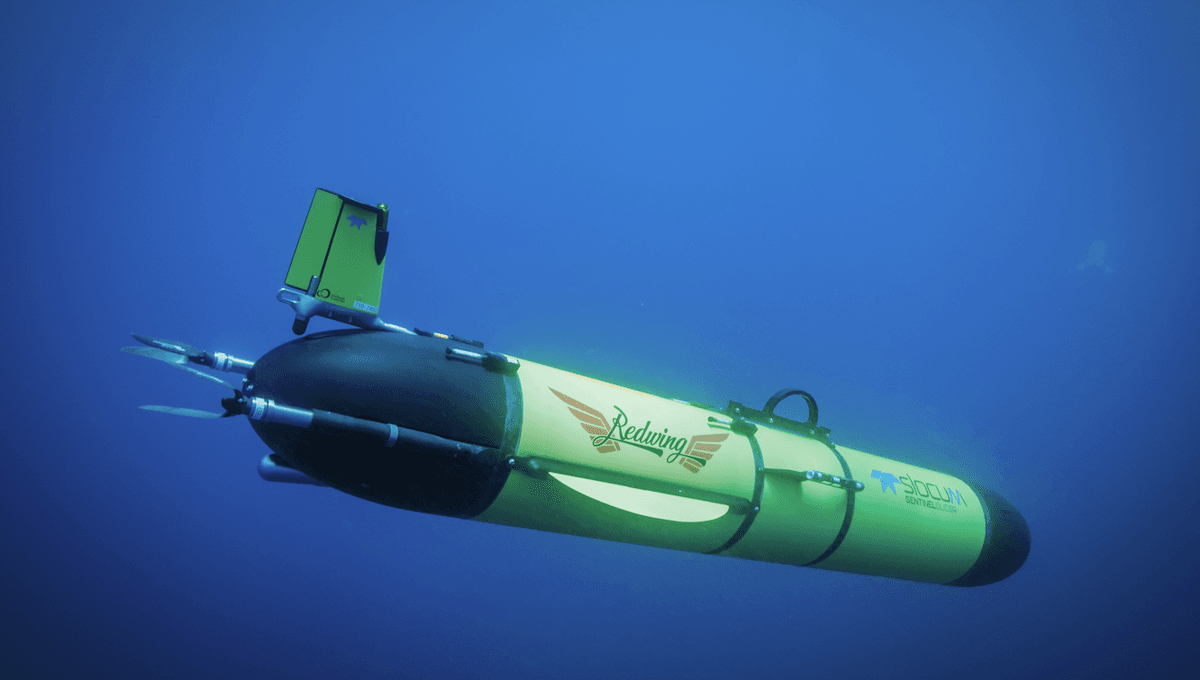
The rest of this article is behind a paywall. Please sign in or subscribe to access the full content. The self-gliding sub launched on the morning of October 10 from the docks of the Woods Hole Oceanographic Institution in Massachusetts, where it will go on to ride the Gulf Stream across the Atlantic Ocean. Its journey will echo the route taken by the Magellan Expedition between 1519 and 1522, the first known circumnavigation of the Earth, which headed from Spain, onto the Canary Islands, arced past southern Africa, crossed the Indian and Pacific Oceans, and returned home via South America. Its first major stop will be Gran Canaria in Spain’s Canary Islands, followed by Cape Town at the southern tip of Africa. From there, it will cross the Indian Ocean to Western Australia, then continue to New Zealand. It will then navigate the Antarctic Circumpolar Current below the tip of South America, taking it on its longest leg to the Falkland Islands in the South Atlantic. From there, it may stop in Brazil and the Caribbean before heading back to the US East Coast. The total journey is expected to take more than five years, covering roughly 73,000 kilometers (about 45,000 miles) at an average speed of 0.75 knots. Developed by Teledyne Marine and Rutgers University–New Brunswick, the Slocum Sentinel Glider – aka “Redwing” – represents a new generation of ocean robotics. Dubbed “the most advanced commercial subsea glider ever built,” it’s designed to travel vast distances while consuming minimal energy. “Redwing” being lowered into the sea during an earlier test journey. Image credit: Teledyne Marine Unlike traditional submarines, Redwing won't fully rely on propellers or engines. Instead, it glides through the water using gravity and buoyancy, “surfing” ocean currents rather than resisting them. By subtly adjusting its buoyancy, the glider moves forward in slow, graceful dives and ascents. However, it’s equipped with a dual-thruster system, including a propeller, to help it push through strong currents when necessary, plus lithium battery packs that power all of the glider’s systems. The battery system will also help to power all the exciting tech that's onboard. Throughout its long journey, Redwing will collect continuous data on salinity, depth, and temperature, building what scientists describe as a “three-dimensional view of the ocean.” This information could sharpen forecasts of hurricane formation, reveal how climate change is reshaping ocean systems, and offer clues about the health of marine ecosystems. Every eight to 12 hours, the torpedo-like sub will surface to beam back real-time data via satellite. It’s also equipped with a fish-tracking system capable of detecting tagged marine animals, potentially providing unprecedented glimpses into their long-distance migrations across the open ocean. Not only will the mission provide scientists with a huge amount of high-quality data, it’s also being used as a tool to teach dozens of undergraduate students who will closely follow Redwing’s progress. “This is a historic moment for ocean science,” said mission co-leader Glenn, a Distinguished Professor in the Department of Marine and Coastal Sciences in the Rutgers School of Environmental and Biological Sciences in a statement sent to IFLScience. “We’re deploying a robot that will travel the world’s oceans, gathering data. And we’re doing it with students, educators, and international collaborators every step of the way.” Of course, all of this relies on Redwing completing its voyage. Over the next five years, the autonomous sub will face numerous challenges, from dodging fishing nets and navigating busy shipping lanes to withstanding some of the ocean’s harshest conditions. Success is far from guaranteed, but the team is confident in their skills and the glider’s capabilities. Godspeed, Redwing, and good luck.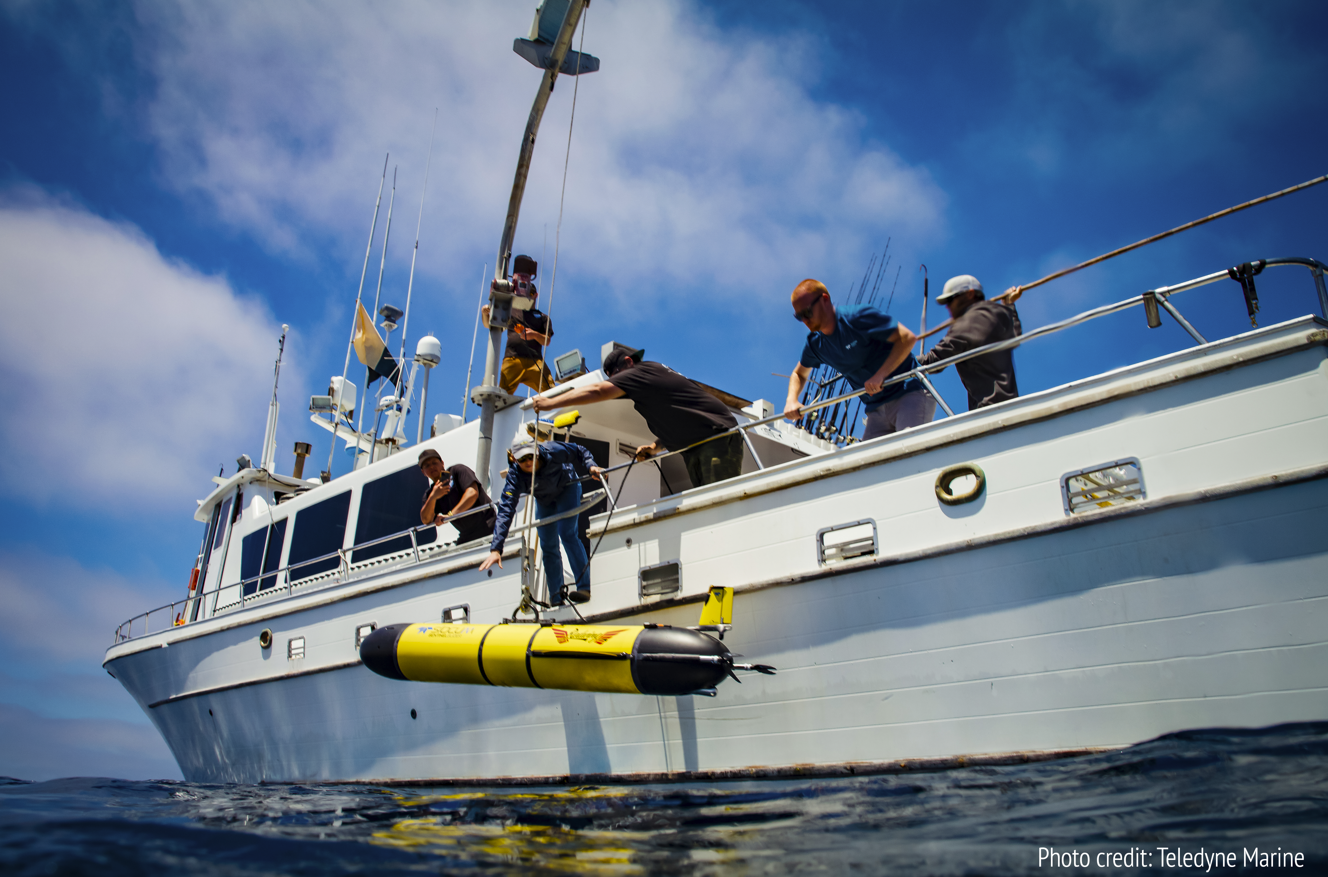

 English
 Arabic
 French
 Spanish
 Portuguese
 Turkish
 Dutch
Dutch
 Italiano
 Russian
 Romaian
 Portuguese (Brazil)
 Greek
Greek