


Dating Back 13,000 Years, One Of The Earliest Uses Of Blue Pigment Has Been Unearthed
Dating Back 13,000 Years, One Of The Earliest Uses Of Blue Pigment Has Been Unearthed
When archaeologists brushed away the dirt from a prehistoric artifact in Germany, they were startled to see a shimmer of extremely rare color. Clinging to the stone’s surface were flecks of deep, electric blue.
The rest of this article is behind a paywall. Please sign in or subscribe to access the full content. Blue is one of the rarest hues in nature. Even flowers, birds, and butterflies that look blue usually rely on optical tricks like iridescence because few natural substances produce a true blue pigment. That’s why the discovery at the Mühlheim-Dietesheim site in Germany is so remarkable. Dating to 13,000 years old, it’s the earliest known use of a blue pigment in Europe, and among the oldest examples in the world. “It’s nearly the oldest blue pigment in the world – the only other known example that predates our case is from Siberia, where traces of blue-green pigment were found on figurines dating to around 19-23,000 years ago,” Dr Izzy Wisher, lead study author and archaeologist at Aarhus University in Denmark, told IFLScience. There is also evidence from Georgia, dating to 32,000–34,000 years ago, of people potentially creating a purplish-blue pigment from crushed indigo plants (Isatis tinctoria), the same plant that would later give rise to the dyes behind blue jeans. Outside of these rare cases, however, true blue pigments are exceptionally scarce in the prehistoric world. Microscopic image of nano-sized specks of blue residue directly adjacent to visible concentrations. Image credit: I Wisher et al./Antiquity/2025 (CC BY) Using advanced imaging techniques and chemical analysis, the researchers found that the substance uncrushed on the stone was azurite, a deep-blue copper mineral formed by weathering of copper ore. The local geology of the Rhine-Main River is abundant in copper, suggesting that Paleolithic people may have collected the stone locally. It’s highly unlikely this rare pigment ended up on the human-crafted object by an accident of geology. The Mühlheim-Dietesheim site has plenty of evidence of paleolithic humans using red and brown ochre, a naturally occurring pigment that’s been used across the world by humans throughout most of our species’ existence. Clearly, they had a taste for adorning their artifacts, and perhaps their own bodies, in wonderful colors, but the presence of rare azurite suggests these people were experimenting with a far broader color palette than previously thought. “This challenges what we thought we knew about Palaeolithic pigment use,” Dr Wisher said in a statement. “The presence of azurite shows that Palaeolithic people had a deep knowledge of mineral pigments and could access a much broader colour palette than we previously thought – and they may have been selective in the way they used certain colours,” she added. The most famous use of blue pigments in the ancient world comes from the ancient Egyptians, the first culture to produce synthetic blue pigment. Starting around 4,500 years ago, they concocted a blend of minerals to create a powdery (in both tone and texture) blue pigment used to grace their murals, jewelry, and other beautiful objects. It was thought that this was when blue pigment started to become a more common part of human life. However, the tiny flecks of azurite in Germany indicate that Ice Age artists in Europe were already seeking out a color that rarely occurs in nature, long before pharaohs painted their temples in glorious colors. The study is published in the journal Antiquity. 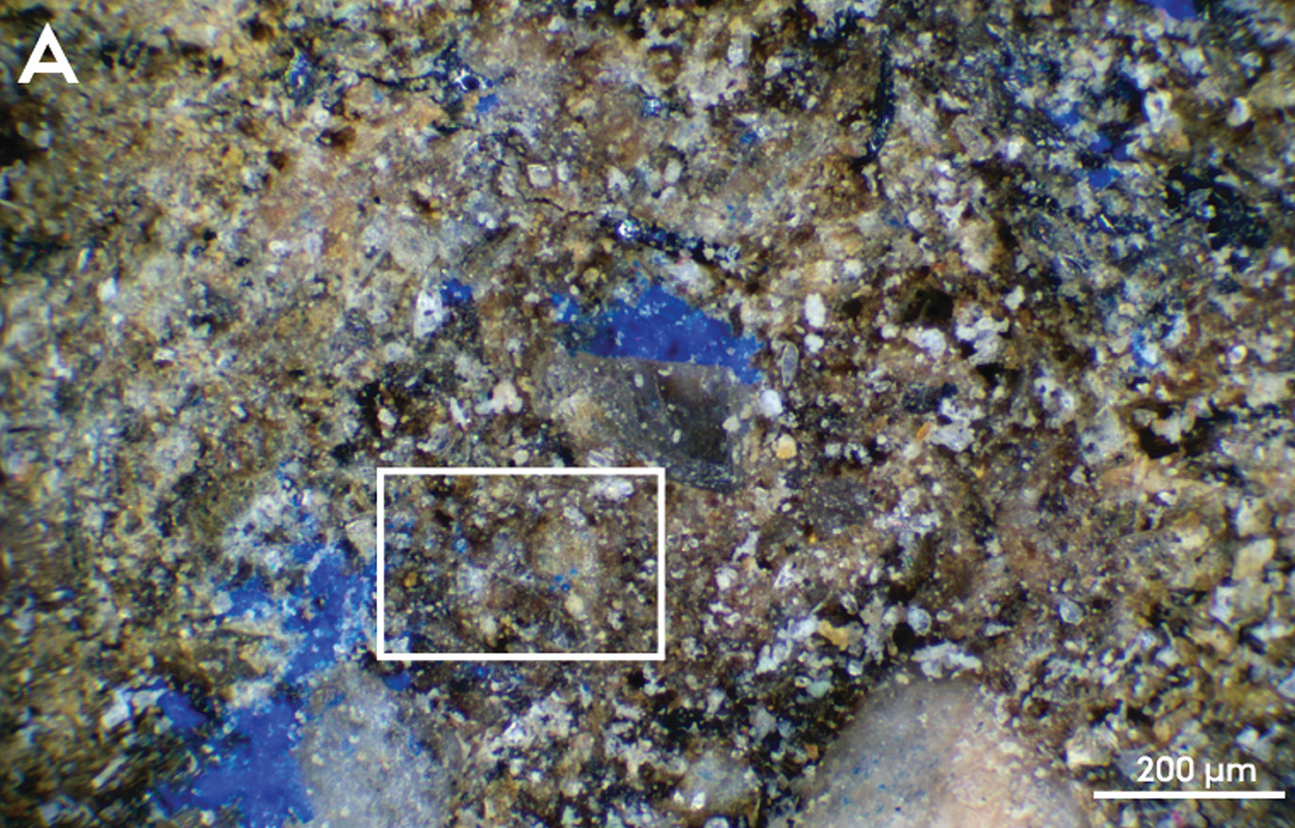

 English
 Arabic
 French
 Spanish
 Portuguese
 Deutsch
 Turkish
 Dutch
Dutch
 Italiano
 Russian
 Portuguese (Brazil)
 Greek
Greek