


 PUBLISHED
Imagine you find yourself walking through a forest during the fall, collecting conkers and admiring the crunchy, vividly colored leaves, when the scent of delicious baked goods hits you. You search far and low for the source, only for no bakery to be found. Where is the smell coming from? It may well be the trees.
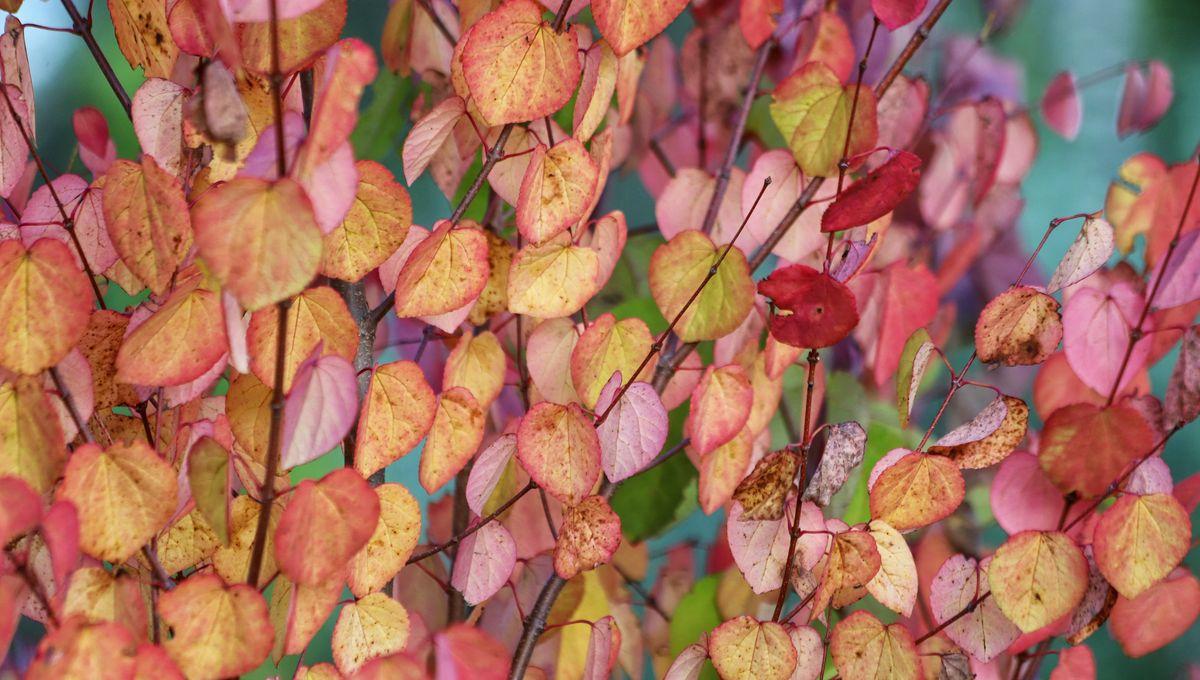
The rest of this article is behind a paywall. Please sign in or subscribe to access the full content. At least, if there are some katsura around. That’s the popular name for Cercidiphyllum, a group of trees consisting of two species – C. japonicum and C. magnificum – whose leaves both produce a mouthwatering aroma come the fall months. The sugary sweet scent has been compared to caramel, cotton candy, gingerbread, or Madeira cake – hence why it’s often referred to as the “kuchenbaum” or “cake tree” in German. These delectable-smelling leaves and the trees they belong to have been around for millions of years; they’re considered to be “living fossils” that emerged and were once widespread sometime after the non-avian dinosaurs kicked the bucket 66 million years ago. As if getting merked by a meteor wasn’t bad enough, dinosaurs didn’t even get to experience cake trees. Devastating. Fast forward to today, and katsura are native to a smaller area in what’s now Japan and China, although they’ve been introduced elsewhere. In the US, for example, C. japonicum was introduced in 1865 when US Marshal Thomas Hoggs Jr. sent seeds of the tree from Japan to his family’s nursery in Manhattan. Some of those seeds ended up being planted in Queens’ Kissena Park, where they can still be found today. Now you know where to find them – but the real question is why they smell the way they do. The answer involves maltol, a compound that’s often used in the food industry as a flavor enhancer in products like your favorite fall baked goods and candy, and comes with a characteristic caramel, slightly fruity scent. Maltol can also be found in katsura leaves at any time when the leaves are present on the tree, but concentrations of the compound peak during the fall. As the leaves begin to change from green to red, gold, and orange, the sugars contained within the leaves begin to break down, producing an abundance of maltol. Working alongside other sugary compounds, the result is the sweet, sweet smell of fall. From an evolutionary perspective, it’s not clear whether giving off a caramel smell provides the trees with some sort of advantage. Sweet smells might otherwise attract pollinators, but fall isn’t exactly the time for that. Still, we’re not complaining – it’s easy to overlook an evolutionary mystery when something smells this good.


 English
 Arabic
 French
 Spanish
 Portuguese
 Deutsch
 Turkish
 Dutch
Dutch
 Russian
 Romaian
 Portuguese (Brazil)
 Greek
Greek