


How Does Tickling Work? We’ve Been Trying To Find Out For 2,000 Years
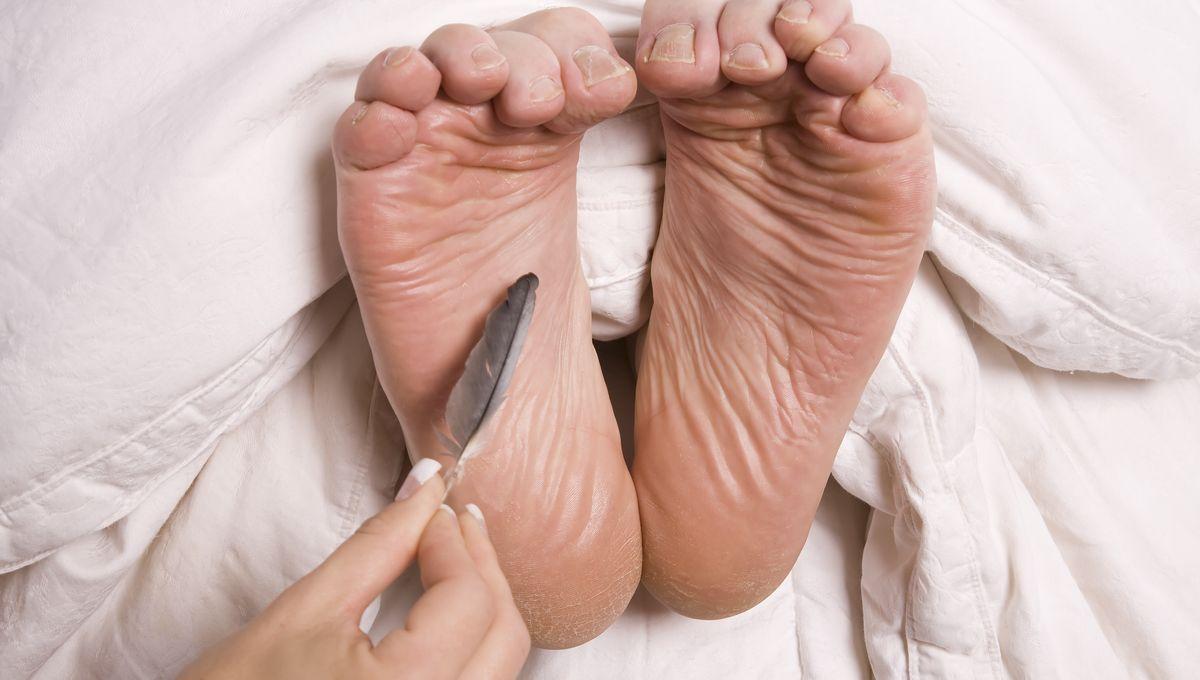
How Does Tickling Work? We’ve Been Trying To Find Out For 2,000 Years
What’s the greatest mystery in the world? Is it the nature of dark matter, the origins of life on this planet, or maybe it’s whether we are alone in the universe? Or, more profound still, perhaps the biggest mystery is one that you’ve probably never considered: how the hell does tickling work?
This may sound silly, but despite it being something that has perplexed thinkers for over 2,000 years, we are no closer to knowing what a tickle is and why we are so sensitive to them. A tickle, otherwise known as gargalesis, is probably a familiar sensation to most of us. At some point in our lives, we have likely been tickled or tickled someone else, or even our pets (rats love being tickled and even "laugh" at it). However, despite it being a common part of human bonding, the sensation has been poorly researched, to the extent that we still know little about it. For instance, we don’t know why certain areas of our bodies are more sensitive than others, nor why some people enjoy being tickled while others dislike it, but still laugh. Why, too, can we not tickle ourselves? The mysteries of gargalesis have tickled the minds of people for centuries. Thinkers from the Greek philosophers Socrates and Aristotle to the Early Modern luminaries like Francis Bacon, René Descartes, and even Charles Darwin pondered different aspects of this sensation and its underlying mechanism. "Tickling is relatively under-researched," Konstantina Kilteni, a neuroscientist and author of a new study on gargalesis, explained in a statement. "It is a complex interplay of motor, social, neurological, developmental and evolutionary aspects. If we know how tickling works at the brain level, it could provide a lot of insight into other topics in neuroscience. Tickling can strengthen the bond between parents and children, for instance, and we usually tickle our babies and children," Kilteni added. "But how does the brain process ticklish stimuli and what is the relationship with the development of the nervous system? By investigating this, you can learn more about brain development in children." Given this, what do we know? Well, existing research has shown that people with autism spectrum disorder perceive touches as more ticklish than people without the disorder. Further research into this particular phenomenon may offer insights into differences between the brains of people with autism spectrum disorder and those without it, offering a deeper understanding of autism more generally. Another question is not just how, but why tickling came to be. "We also know that apes such as bonobos and gorillas respond to ticklish touches, and even rats have been observed being so," Kilteni explained. "From an evolutionary perspective, what is the purpose of tickling? What do we get out of it?" The weird fact that we can’t tickle ourselves could also offer interesting scientific information. "Apparently, our brain distinguishes ourselves from others, and because we know when and where we are going to tickle ourselves, the brain can switch off the tickling reflex in advance, " said Kilteni. "But we don't know what exactly happens in our brain when we are tickled." One of the reasons why this subject remains so unclear, Kilteni proposes, could be due to a definition issue within the scientific community. A significant problem within this is that there is a difference between the act of tickling someone hard and tickling someone lightly. Apparently, the former sensation is significantly understudied compared to the latter. It is also difficult to make comparisons between the research that does exist. For example, how can you replicate the exact form of tickling used in another study? The answer is, with great difficulty. However, there are ways to overcome this. In fact, Kilteni has a special tickling lab (yup, I just wrote that) designed for this purpose. What do you find in such a lab? A chair, but with a plate that has two foot holes in it. Once the feet are in, a mechanical stick is used to tickle them. Not only does this setup allow Kilteni to ensure that test subjects experience the same stimuli, but it also means researchers can take multiple measurements when someone is being tickled: what happens in a person’s brain, their heart rate, sweating, breathing, and even laughter or screaming reactions. "By incorporating this method of tickling into a proper experiment, we can take tickling research seriously," said Kilteni. "Not only will we be able to truly understand tickling, but also our brains." The paper is published in Science Advances.

 English
 Arabic
 Spanish
 Portuguese
 Deutsch
 Turkish
 Dutch
Dutch
 Italiano
 Russian
 Romaian
 Portuguese (Brazil)
 Greek
Greek