


Key Takeaways
- Leaf blowers are convenient and fast, but they cause noise and air pollution.
- An electric or battery-powered leaf blower eliminates air pollution.
- Leaf raking is more eco-friendly as well as more physically demanding and time-consuming.
Cleaning up fallen leaves and other plant debris is an almost inevitable yard chore for homeowners. So what's the best way to tackle this task? Anyone who’s had a peaceful fall day interrupted by the loud sound of a leaf blower is likely to have a little more affection for leaf rakes. Other homeowners find that the time- and labor-saving benefits of leaf blowers outweigh the noise and air pollution.
Take a closer look at the pros and cons of each tool for collecting fallen leaves so you can make the best choice for your situation.
Leaf Blowers
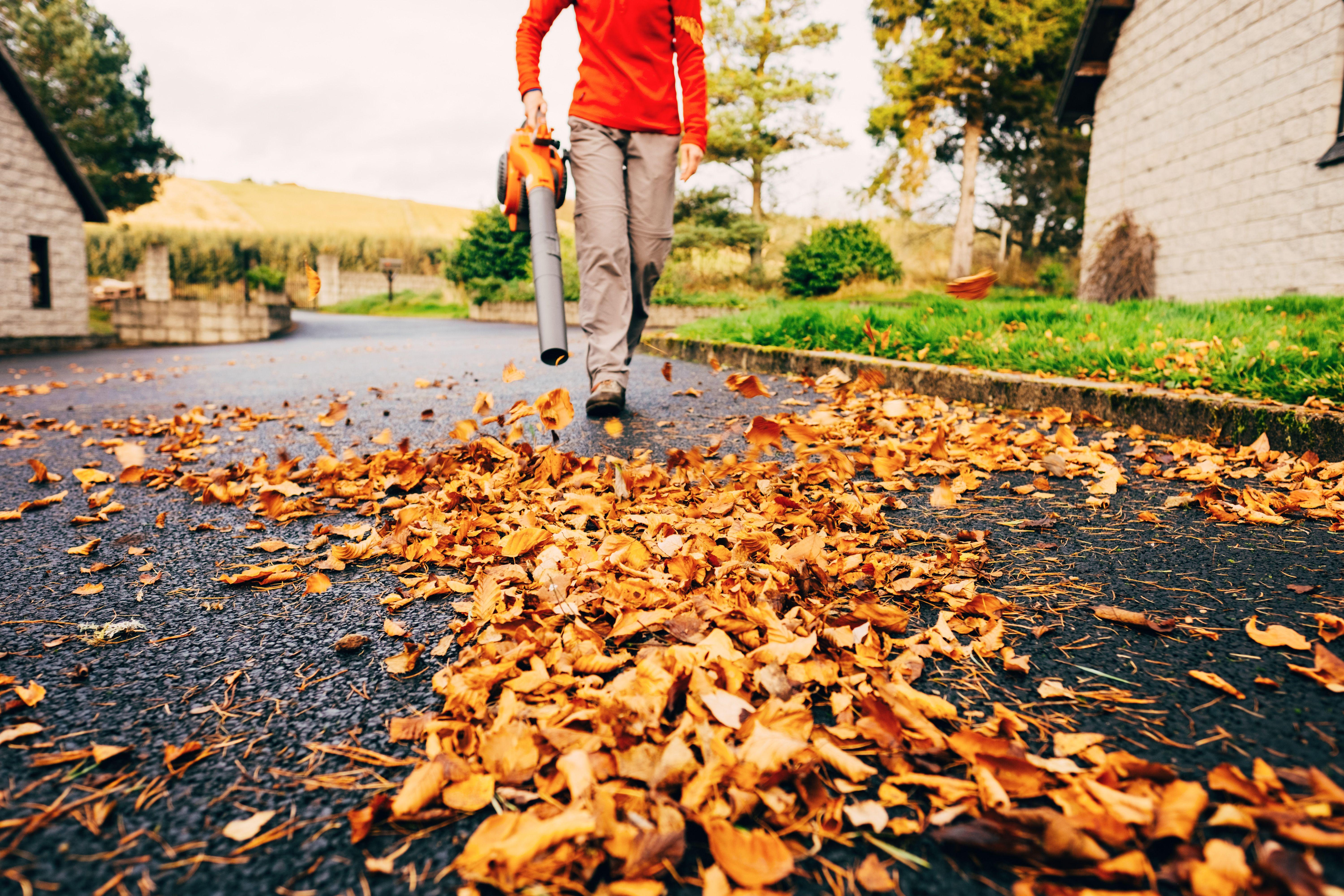
Leaf blowers come in backpack or handheld models, and can be powered by gas, electricity, or batteries. All are fairly simple to operate, and offer various pros and cons.
Pros
Leaf blowers cover a lot of ground quickly, so they’re especially useful for large yards. They are also good at removing leaves and other debris from corners, as well as decks, patios, and other paved surfaces.
Cons
Leaf blowers are loud and add to noise pollution—certainly not appreciated by neighbors early in the morning or when they are grilling or entertaining later in the day. Without ear protection, extended exposure causes hearing loss.
Some communities have banned leaf blowers entirely, while others have restricted the decibel level allowed. Gas-powered leaf blowers emit air pollution, which can be avoided by using an electric or battery-powered leaf blower. Leaf blowers of any kind may disturb wildlife habitat and contribute to soil erosion by removing organic matter and exposing the top layer of soil. They also kick up dust, which may include pollen, mold, animal feces, fertilizer, and other sinus irritants or health hazards.
Related
Leaf Raking
Leaf rakes can be plastic or metal, with different widths. Some offer ergonomic designs, but all just need your elbow grease to operate.
Pros
Leaf raking is quiet, so there are no time constraints; Collecting leaves manually not only avoids disturbing neighbors or wildlife, is also does not cause air pollution. And it's a form of low-impact exercise that can be good for you. The act of raking doesn’t erode the soil (although some people would argue that removing leaves by any method may lead to soil erosion). Raking also offers the opportunity to dethatch your lawn and break up dry, crusted soil so rain or irrigation penetrates the soil more easily. Finally, rakes are cheaper to buy and rarely, if ever, need maintenance.
Cons
Leaf raking is time-consuming. Even if you use an extra-wide rake spanning 32 to 36 inches, if you have a large yard, the time element is worth considering. The physical exercise may also bring on muscle aches the next day if you’re not used to it, or if you spend an inordinate amount of time raking without taking a break. A rake with soft handles and an ergonomic design helps alleviate physical strain.
Rather than raking or blowing leaves, consider investing in a mulching mower and allowing the leaf fragments to remain in place where they break down over time and benefit the lawn. Or use shredded leaves as mulch elsewhere in the yard, keeping the material away from plant stems. Sharpen your mower blade when finished, especially if you're dealing with thick or waxy leaves like those of oak or magnolia.
What to Do with Fallen Leaves
No matter whether you use a leaf blower or a rake to remove leaves from your lawn and hard surfaces, don't bag and toss them out. Distribute them elsewhere in the yard, such as in flowerbeds or vegetable gardens. Or at least add them to a compost pile.
Leaves offer a spot for beneficial insects, including bumblebees and butterfly larvae, to overwinter. Earthworms, small animals, and birds also benefit from an ecosystem that includes dead leaves and other natural debris. Moreover, leaves help conserve moisture, add nutrients as they decompose, and support the overall soil microbiome, which in turn benefits plants.

 English
 Arabic
 French
 Spanish
 Deutsch
 Turkish
 Dutch
Dutch
 Italiano
 Russian
 Romaian
 Portuguese (Brazil)
 Greek
Greek