


Asia's Other "Great Wall": Very Unexpected Finds Unearthed At Mongolia's Medieval Wall System
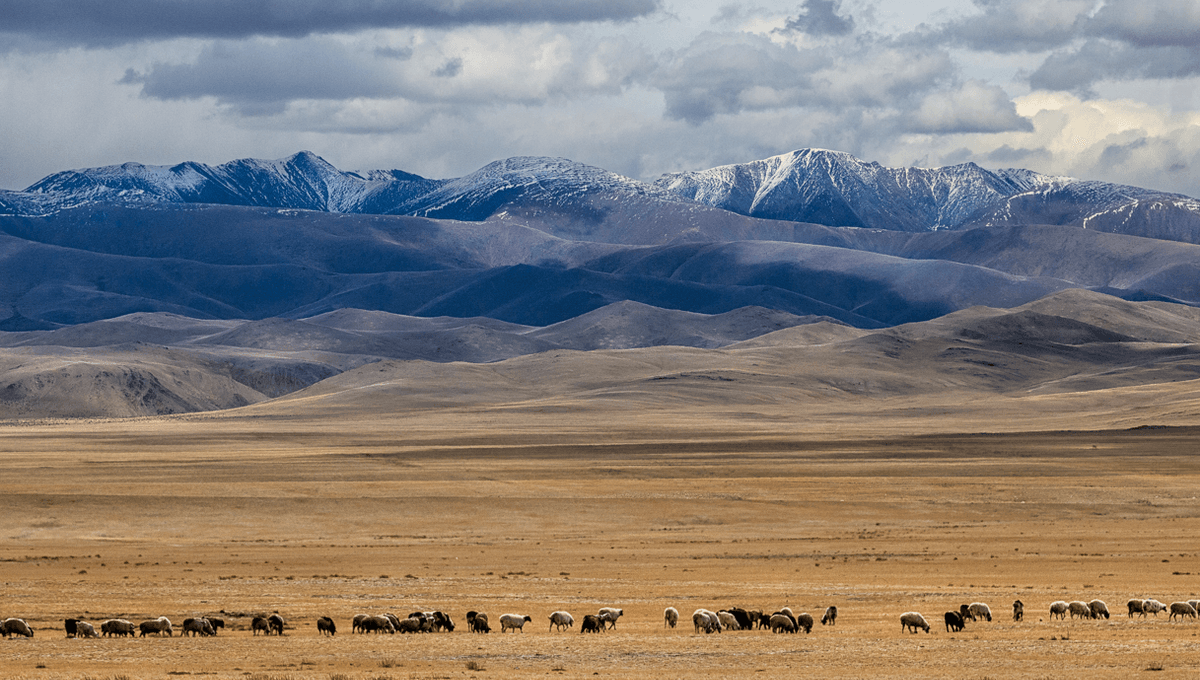
The "Other Great Wall" Of Asia You've Probably Never Even Heard Of
The Great Wall of China is the best-known strip of fortifications in East Asia, if not the world. But just a few days’ horse ride away lies the remnants of a long-forgotten wall system that once rivaled it, but served a strikingly different purpose.
In a new archeological dig, researchers have excavated parts of the Medieval Wall System (MWS), a network of walls and stretches that stretched for 4,000 kilometres (2,485 miles) across parts of modern-day China, Mongolia, and Russia. It was built between 826 and 1,125 years ago by a collection of warring dynasties, most notably the Jin dynasty, which was founded by Jurchen people from Siberia and northeastern China. Archaeologists at the Hebrew University of Jerusalem and the National University of Mongolia studied a lesser-known part of the MWS known as the Mongolian section, which runs for 405 kilometres (251 miles). Their aim was to unravel why a long-lost culture went to great lengths to build such a structure. “We sought to determine the use of the enclosure and the Mongolian Arc”, lead author of the research, Professor Gideon Shelach-Lavi, an archaeologist from the Hebrew University of Jerusalem, explained in an emailed statement. “What was its function? Was it primarily a military system designed to defend against invading armies, or was it intended to control the empire's outermost regions by managing border crossings, addressing civilian unrest, and preventing small-scale raids?" Map showing the location of the Medieval Wall System in East Asia. Image credit: figure by Dan Golan via G Shelach-Lavi et al/Antiquity (2025) To their surprise, they found evidence that this part of the MWS was not necessarily built for military purposes. Most of the Mongolian Arc was not an impenetrable wall, but a relatively shallow ditch accompanied by a pile of earth. This led the researchers to believe it couldn’t have effectively deterred invaders. Instead, they think it served as a symbol, marking the area under the direct control of the Jin dynasty. Location of a significant structure and the wall-trench line on the Mongolian landscape. Image credit: G Shelach-Lavi et al/Antiquity (2025) It may have also served to direct the movement of people toward gates where crossing was more manageable. The closely spaced forts along the trench line would have enabled personnel to monitor and, if needed, restrict movement across the barrier. This suggests that the Mongolian Arc was intended more for civilian purposes than for military defense. Certain sections of the wider MWS likely focused on regulating the flow of people, animals, and goods, rather than defending against major external invasions. However, the ruling powers did not cut corners with the construction and upkeep of the wall. Archaeologists uncovered a wealth of Song dynasty coins, iron artifacts, and signs that soldiers and military officials were stationed there year-round, suggesting that considerable resources were put towards the maintenance and control of this frontier. Yet despite these efforts, the fortifications ultimately proved insufficient. In the 13th century, the Jin dynasty fell to the Mongols, and with their conquest, their impressive wall system faded into obscurity. The new study was published in the journal Antiquity. 


 English
 Arabic
 Spanish
 Portuguese
 Deutsch
 Turkish
 Dutch
Dutch
 Italiano
 Russian
 Romaian
 Portuguese (Brazil)
 Greek
Greek