


This Plant Is The Only One We Know Of That Pretends To Be An Ant To Lure In Pollinators
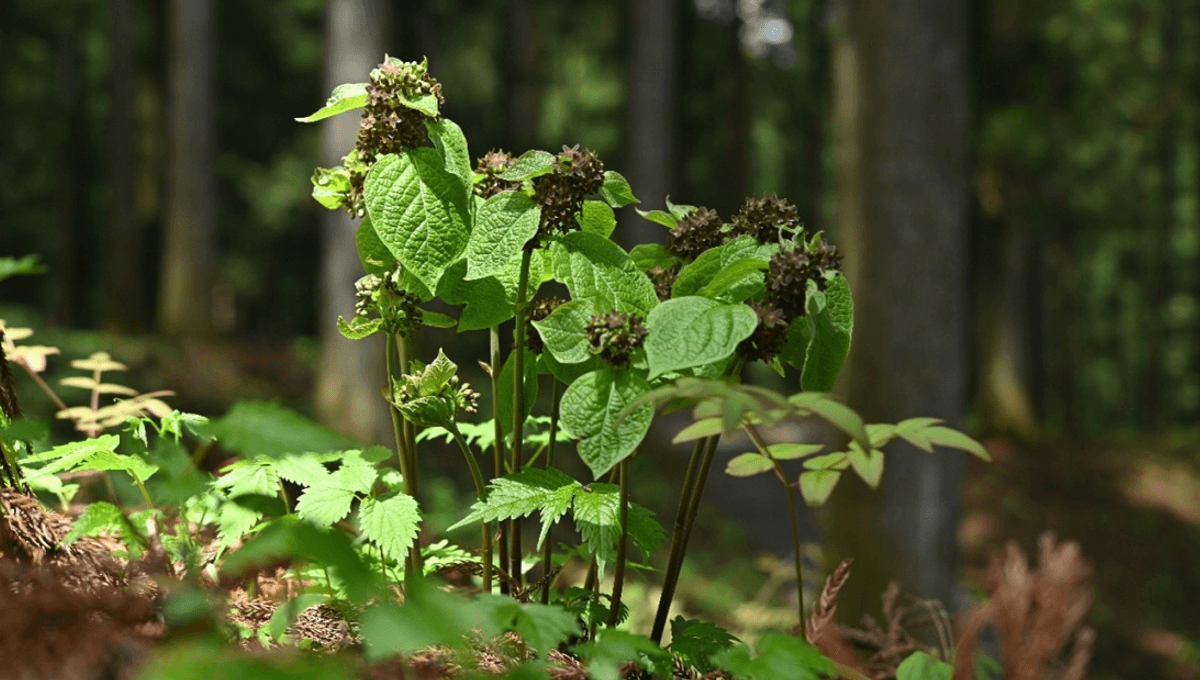
One-Of-A-Kind Plant Pretends To Be An Ant So It Can Lure In Pollinators – Clever Girl
It’s easy to forget that plants are living, moving, reactive organisms when to the human eye they appear to swoosh about so passively. Every now and then a species comes along that reminds you of this – most recently Vincetoxicum nakaianum, the plant that pretends to be an ant.
The rest of this article is behind a paywall. Please sign in or subscribe to access the full content. This species is pretty new-to-science in itself, having only been described just last year. It’s one of several dogbane species and as scientists continued to study its unique qualities, they discovered that it was using chemical signals to mimic those of ants as a way to lure in pollinators. It’s the first time we’ve ever discovered a plant that does this. It all hinges on the laziness of grass flies. You see, they don’t like to kill their own prey, but instead go in search of prey that’s already injured. The process begins with an attack, such as a spider going after an ant. The ant then sends out a signal that, as well as letting other ants know its injured, alerts the grass flies to an easy meal. What our clever plant has evolved to do is mimic that distress signal sent out by the ant. The grass fly then comes zooming in expecting a free lunch, and instead unwittingly pollinates the dogbane plant. An incredible discovery, and one that was a complete accident. The grass fly visiting the flowers (A) and kleptoparasiting spider hunting ant (B) Image credit: Mochizuki 2025 “I was working on another research project and originally collected this species only as a 'reference' for comparison,” said Ko Mochizuki of the University of Tokyo in a statement. “By chance, I noticed chloropid flies gathering around its flowers in the nursery in the Koishikawa Botanical Gardens, and immediately realized that the flowers might be imitating dead insects.” “That moment, when I saw the flies on the flowers, was truly one of inspiration. A hypothesis suddenly taking shape. This experience taught me that unexpected discoveries often emerge from a combination of preparation and chance.” There are many beautiful examples of mimicry among plants, including Pouyannian mimicry where plants essentially trick insects into copulating with their flowers. They think they’ve spread their seed when in fact they’ve just covered their pants in someone else’s pollen. Cheeky, but effective, and this dogbane discovery suggestions there could be all kinds of mimicry going on in the plant kingdom we humans haven’t clocked yet. “I would like to investigate the evolutionary background of ant mimicry by comparing the pollination systems, evolutionary history, and genetic makeup of Vincetoxicum nakaianum and its close relatives. In addition, since this study suggests that many forms of floral mimicry may remain hidden, I plan to explore other species, both within Vincetoxicum and in unrelated plant groups, to uncover further examples of potential mimicry.” The study is published in the journal Current Biology.

 English
 Arabic
 French
 Spanish
 Portuguese
 Deutsch
 Turkish
 Dutch
Dutch
 Italiano
 Russian
 Portuguese (Brazil)
 Greek
Greek