


6 Million Years Ago, These Wolf-Sized Otters Were The Largest Carnivores In Their Ecosystem
China Once Had Otters The Size Of Wolves, And They Were Top Predators
Imagine yourself by a stream in Shuitangba, China, 6 million years ago. The birds are singing, the Sun is shining, and you’ve just woken up to find a wolf-sized otter sniffing your toes. That impressive beast is Siamogale melilutra, and it’s the largest known carnivore in its ecosystem.
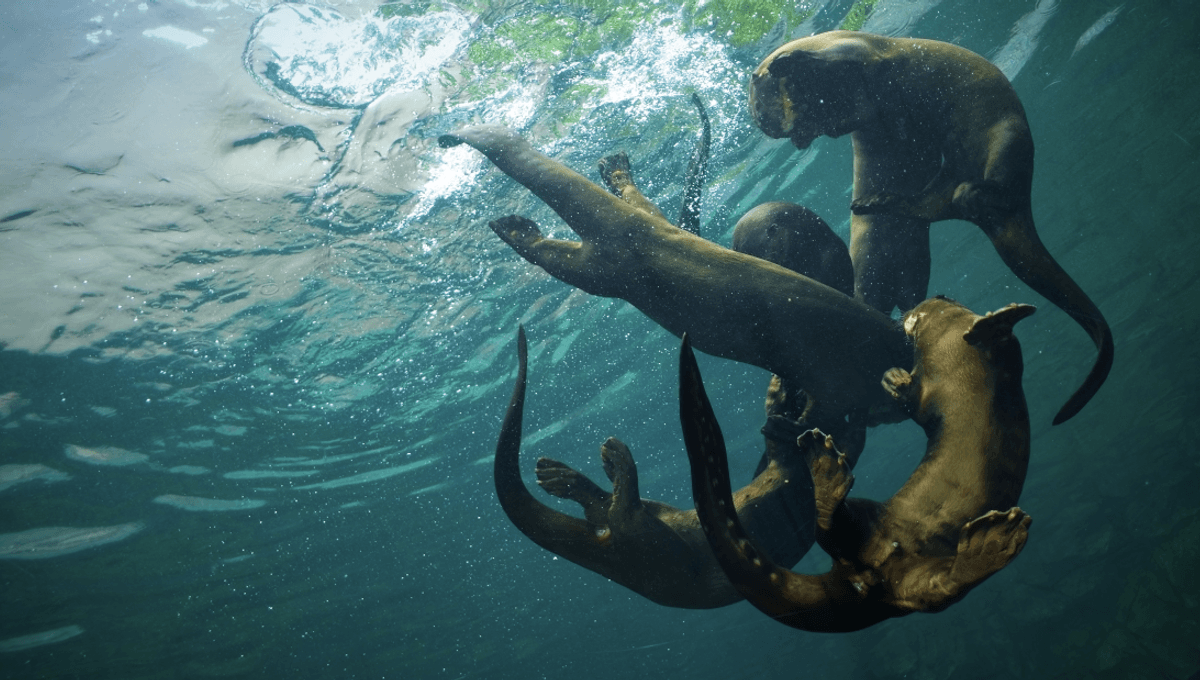
The rest of this article is behind a paywall. Please sign in or subscribe to access the full content. These otters were humungous. Comparative in size to a wolf, they were also top predators and lived alongside beavers, elephants, tapirs, and waterbirds. As for what they were eating and how they hunted? It’s a good question, one that a team of scientists recently set out to answer. S. melilutra was first described back in 2017 after a complete cranium, mandible, and some teeth were found, drastically expanding what we knew about a mysterious macropredator from ancient China. The largest otters alive today are those found in the Amazon that can stretch to up to 1.8 meters (6 feet) in length and weigh around 32 kilograms (70 pounds). They would look average-sized next to S. melilutra, being almost twice as big with a skull that would dwarf their extant counterparts’ (though still not as big as Enhydriodon). “When we found the otter, our first question was 'What is it?'" said Denise Su, research scientist at ASU's Institute of Human Origins and associate professor at the School of Human Evolution and Social Change, in a statement. “The analysis that was undertaken to answer the question of 'what is it' is very different from the analysis we were undertaking to answer the next question: What was it doing, and what was it eating?" Its latter name, melilutra, is a combination of meles for "badger" and lutra for "otter", representing its mixture of otter- and badger-like skull and teeth. The cheek teeth are particularly interesting because they’re what’s known as bunodont, meaning they have rounded cusps. This suggests that the giant otters had cranial and dental adaptations to feed primarily on large shellfish and mollusks, fossils of which are also abundant in the same layer of rock that the skull was found. Scientists were similarly able to gather clues from bones from the rest of its body including a particularly well-preserved femur, and then compare these against those of modern otters. “I used published measurements from bones belonging to various modern mustelid species to numerically compare proportions of the limb bones, and also measured relevant specimens in museum collections,” said ASU graduate student Brenton Adrian. “Different species have limb and bone proportions that reflect their mode of locomotion (e.g., swimming, climbing). By comparing the S. melilutra material with the comparative dataset, we could infer its locomotion based on similarity of bone proportions to modern species.” Doing so painted a picture of a semi-aquatic animal that wouldn’t have been a particularly skilled swimmer, but that would’ve been very adept at burrowing and digging. This was apparent from the stabilization of their hips, as well as its limb proportions. “Essentially, what we have is a not terribly specialized swimmer but with some digging adaptations thrown into the mix,” Adrian said. “There is a modern otter that is very similar to S. melilutra – clawless otters in Africa of the genus Aonyx. They don’t eat fish primarily; they eat crabs and mollusks and other invertebrates. They basically dig into these muddy riverbanks and pull out all the clams and huge earthworms.” Impressive, but not quite so terrifying as the lion-sized otters of Ethiopia. The latest study is published in The Anatomical Record.

 English
 Arabic
 French
 Portuguese
 Deutsch
 Turkish
 Dutch
Dutch
 Italiano
 Russian
 Romaian
 Portuguese (Brazil)
 Greek
Greek