


You’re Born With Nearly 100 More Bones Than You Have Now – Where’d They All Go?
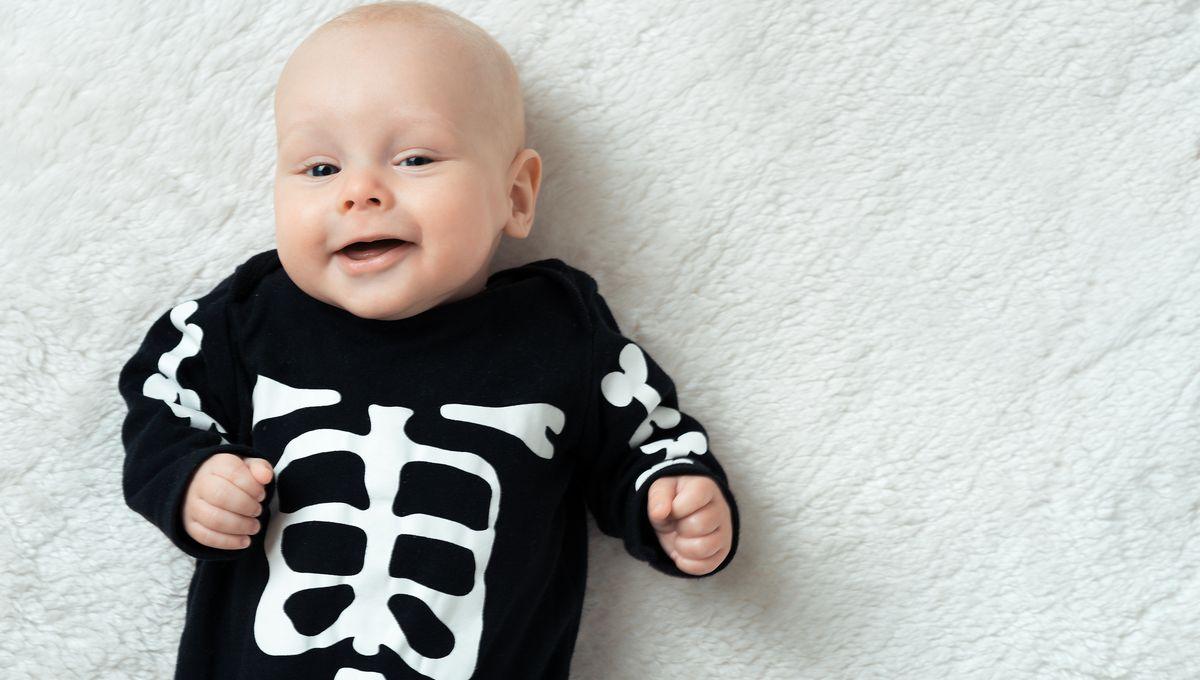
You’re Born With Nearly 100 More Bones Than You Have Now – Where’d They All Go?
It’s a well-known fact that human babies are, well, a bit rubbish at lots of things. Unlike many baby mammals, which are up and walking within hours of popping out, human babies rely on adults for literally everything for several years. But there’s one area where babies are killing it compared to older humans, and that’s number of bones. Believe it or not, tiny baby skeletons have about 100 more bones than you do right now – so where’d they all go?
A typical human adult has 206 bones in their body. For a newborn baby, that jumps up to somewhere between 275 and 300. Why so many? Put simply, in order to be born successfully, your fairly large human infant has to fit through a fairly small opening. This requires some degree of flexibility. There’s no way a baby would be able to curl itself up inside the uterus and squeeze its way out of the birth canal if it had the long, hard bones of an adult. Instead, babies have a larger number of smaller bones, many of which are made of flexible cartilage instead of mature bone tissue. The clearest example of this that we can outwardly see is probably the fontanelle, or “soft spot”, at the top of a baby’s head. “Babies are born with five major skull bones that allow the skull to mold during delivery,” explained pediatrician Dr Matthew Badgett for the Cleveland Clinic. “The fontanelle is a space between these skull bones. It gradually closes within the first year or two of life as the baby develops a solid, hard skull.” During childhood, the remaining cartilage in the skeleton is replaced with bone in a process called ossification. In tandem, many of the shorter bones fuse into their eventual adult forms. This happens on a different timeline for each person, but results in a final complement of 206 bones by adulthood. Ossification, also called osteogenesis, actually starts really early on, during the eighth week of embryonic development inside the womb. It then continues slowly throughout childhood and adolescence, and it doesn’t necessarily stop there – ossification can re-start in adulthood to repair broken bones. There are two types of ossification. Intramembranous ossification occurs when sheets of connective tissue develop into bone tissue and is how some of the flat bones of the skull, and other irregular bones, form. Endochondral ossification is how the majority of the bones in the skeleton form, when bone tissue gradually grows on top of hyaline cartilage “scaffolds”. The cartilage in the middle eventually breaks down, leaving just the bone behind. Both cases involve cells called osteoblasts, which produce the bone matrix that eventually solidifies into hard bone tissue. The matrix is made up of proteins like collagen and minerals like calcium, which is why it’s so important to include calcium-rich foods in our diets. As kids grow, their bones must grow too. While their remaining newborn cartilage is being replaced with regular bone, a process similar to endochondral ossification also allows the diaphysis (the long bit of bones like the femur) to increase in length. Bone development starts in the womb, but continues all the way to adulthood. Image credit: Alexander_P/Shutterstock.com Because kids’ bones are still developing in this way, they tend to heal from fractures more quickly than adult bones with less risk of lasting damage. Still, it may sound like a risky strategy, evolutionarily speaking, to give birth to young with incomplete skulls and rubbery bones. But it’s all part of the trade-offs we’ve made for being upright, bipedal big-brains. Growing a baby takes a huge toll on the mother’s metabolism, so much so that it’s just not sustainable for much longer than 40 weeks. Add to that the aforementioned need to get an overlarge head out of a small opening, and you can see why a lot of human development is left until after we’re born. How many bones do babies have?
How do our adult bones form?


 English
 French
 Spanish
 Portuguese
 Deutsch
 Turkish
 Dutch
Dutch
 Italiano
 Russian
 Romaian
 Portuguese (Brazil)
 Greek
Greek