


Saturn And Neptune Will Reach Their Brightest In Days – And Look For Saturn's Temporary Beauty Spot
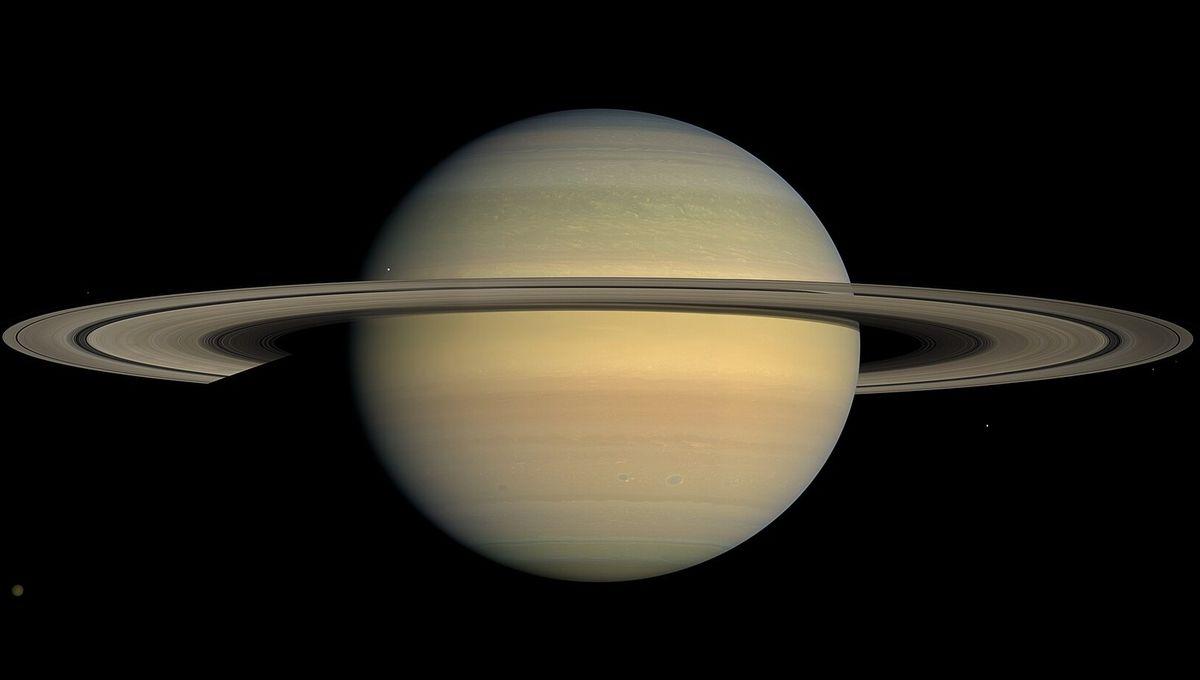
Saturn And Neptune Will Reach Their Brightest In Days – And Look For Saturn's Temporary Beauty Spot
Sky lovers assemble! There is a lot going on in the next few days – stuff for every interest, location, and ability. We have a very awkward partial solar eclipse (best for literal seals), the equinox bringing forth the fall in the Northern Hemisphere and spring in the Southern, and some planetary shenanigans.
The rest of this article is behind a paywall. Please sign in or subscribe to access the full content. With your naked eye, you’ll be able to see Saturn at its brightest on Sunday. The planet reaches opposition on September 21. A planet is said to be in opposition when the Earth is between it and the Sun in its orbit. The orbits are all a bit misaligned, so the light is not blocked. Actually, this is the moment that the specific planet appears the brightest as we see it as its most illuminated. The gas giant planets in the Solar System go around the Sun a lot slower than the Earth, so the opposition happens almost every year. For Saturn, it happens every 374 days. So, in 2026, it will happen on October 4. Neptune is so far away that its opposition happens every 367 days, truly just about every year. For this year, the opposition will be on September 23. The two events bookend the equinox, which will take place on Monday, September 22, 2025, at 18:20 UTC. At that point, night and day will have roughly equal lengths all over the planet. The day is always a bit longer because the atmosphere refracts sunlight before the Sun has actually risen, adding a bit more daylight to the day. Neptune and Saturn will also be pretty close in the sky. To find Saturn, look east in the hours after sunset. Planets can be recognized in the sky because they do not twinkle like stars. Stars twinkle because they are point sources of light, and the turbulence in the atmosphere shifts their light. Planets might look like point sources, but they are not; they are little disks, so the shifts cancel out. To see Neptune, you’ll need a telescope, and if you do have a moderately good one (a 76-millimeter or 3-inch telescope with at least a 200x magnification should do the job), you could see another exciting thing. On Saturday, September 20, the shadow of Titan, the largest moon of Saturn, will cross the face of the "Lord of The Rings". It will start at 5:09 am UTC and end at 7:34 am, so it will be best observed from the Americas. If you have Saturn fever, there are a couple of other nice nights coming up for you. Titan itself, and not its shadow, transits Saturn on November 22 (from 18:52 to 01:10 UTC), and the rings will be at their narrowest on November 23, making that another great night for viewing. We wish you clear skies and happy watching!

 English
 Arabic
 French
 Spanish
 Portuguese
 Turkish
 Dutch
Dutch
 Italiano
 Russian
 Romaian
 Portuguese (Brazil)
 Greek
Greek