


Why Cats Adapted This Defense Mechanism From Snakes
Why Cats Adapted This Defense Mechanism From Snakes
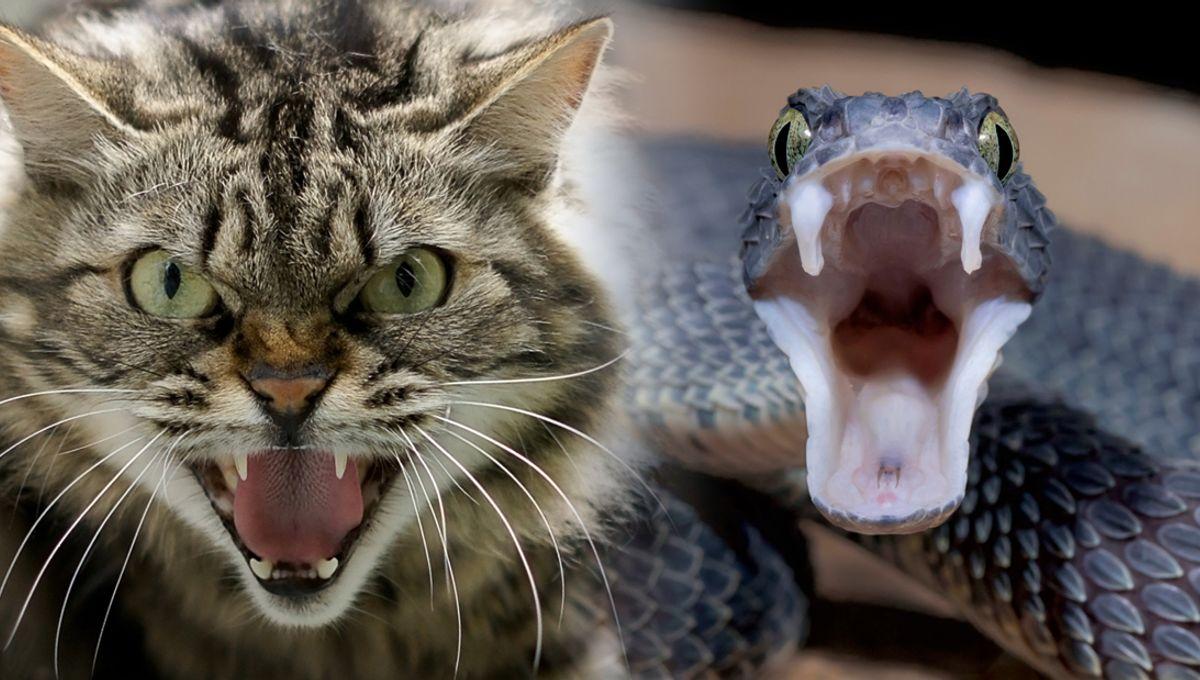
Stumble across a feisty feline, piss off a snake in the wild, or get a little too close to a family of geese, and you’ll likely be greeted with the same sound: a sharp, angry hiss. From reptiles to mammals to even certain birds, hissing shows up all over the animal kingdom. But why do so many different creatures make the same noise, who started it, and why is it usually a warning?
The rest of this article is behind a paywall. Please sign in or subscribe to access the full content. Hissing is the most distributed warning sound in vertebrates, and it can sound shockingly similar between animals, regardless of body size or species. Categorized as ventilatory sounds, hisses in vertebrate species are produced using the respiratory system. Snakes create their hisses by forcibly expelling or inhaling air through the glottis. The glottis is a tube-like structure situated at the base of the mouth, connecting to the trachea and then to the (usually singular) lung. While they always use the glottis to breathe, it’s the forcefulness of air movement that creates the hissing sound when a snake is trying to tell you to “back off”. This eastern hognose (left) is attempting to make itself look larger and displaying its glottis. The Madagascar hissing cockroach's (right) spiracles are visible in pair down the body. Image credit: Mike Wilhelm / vandycan / Shutterstock.com Similarly, cats hiss by pushing air out of a restricted airway (much the same way humans do when mimicking a hiss), and geese do the same by expelling air through their beaks. However, for insects that lack this oral dexterity, like the Madagascar hissing cockroach (Gromphadorhina portentosa), they hiss using their spiracles. These tiny dark circles run in pairs down the length of the cockroach’s body and function in place of nostrils, again using the expulsion of air to create a distinct hissing sound that sounds a bit like a deflating tyre. Take a listen. We now know how some animals hiss, but why do they do it? The vast majority of hissing animals make the noise as a form of defense, to scare away potential threats, and to make the animal appear larger. Although there isn’t direct evidence to prove cats evolved their hiss to mimic snakes, it’s widely believed this is the case. While felines are found on five of Earth’s continents, snakes live on every continent except Antarctica, meaning the two species have numerous overlapping habitats. It’s also thought that snakes first evolved over 100 million years ago, while the common ancestor of all cats is believed to have lived just 10-12 million years ago. As with many of Earth’s extinct and extant species, cats and snakes do share a common ancestor, albeit roughly 300 million years ago. Both deriving from the Amniota group of limbed vertebrates, which includes all living reptiles, birds, and mammals, the group branched into Synapsida, where all modern-day mammals are found, and Sauropsida, the reptilian branch. But this is where their genetic link ends; the rest is convergent evolution. As a result of snakes' success in defending their limbless bodies, and some species' ability to deliver venom so potent it could kill almost any animal regardless of size, it would make sense for other animal species, like cats, to develop acoustic mimicry to tap into the widespread innate fear of snakes. It’s even thought that some closely related venomous and non-venomous snake species exhibit acoustic mimicry in the frequency of their hisses. However, the act of hissing for snakes is not all fun and gamesss. A 2024 study looking at the physiological costs of hissing found that the act dramatically increased average metabolic rate and water loss, both negatively impacting the health of the individual. So, the next time your cat hisses at you for moving it off the couch, or you come across a particularly irritable snake, remember they’re not being aggressive – they’re simply using one of evolution's most effective communication tools.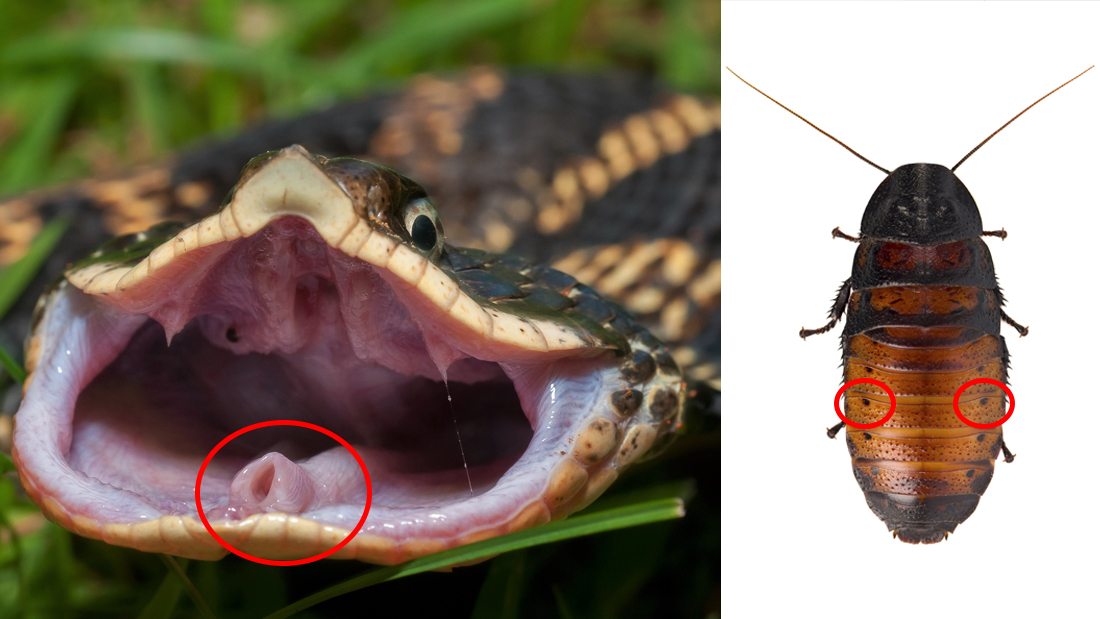
Why do animals hiss?

 English
 Arabic
 French
 Spanish
 Portuguese
 Deutsch
 Turkish
 Dutch
Dutch
 Italiano
 Russian
 Portuguese (Brazil)
 Greek
Greek