


WWW.THECOLLECTOR.COM
The Wisdom of Florence Nightingale in 5 Quotes That Shaped Nursing & Beyond
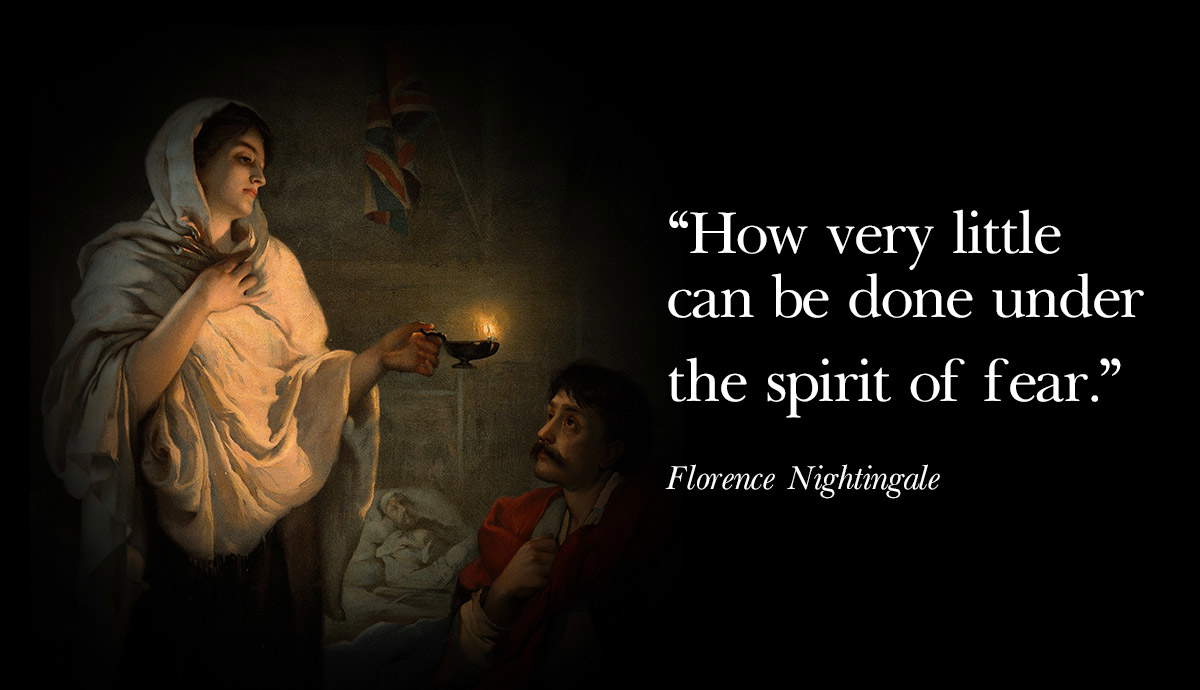
Florence Nightingale felt that she had a calling. Her desire was to change lives through the profession of nursing, though the medical field was not a highly reputable career choice at the time. Casting doubters aside, she pursued her passion and brought a number of cutting-edge methods and technologies to the field. In addition to her forward-thinking changes, Nightingale was an inspiration in herself. Her actions and words affected those around her and changed the future of nursing. Lets examine some of Nightingales most famous words and how they shaped contemporary medicine.Florence Nightingale: The Lady With the LampA lithograph based on a painting by Henrietta Rae, 1891, depicts Nightingale at a patients bedside during the Crimean War. Source: Wellcome Collection/Wikimedia CommonsFlorence Nightingale was born to wealthy English parents traveling in Italy. Entering the world on May 12, 1820, Florence was named for the city in which she was born. The family returned to England the following year and took up residence in two homes, one for the summer in Derbyshire and a winter homestead in Hampshire. Nightingale was homeschooled, and religious topics were often a focus of study. As a result, Nightingale grew up to be a deeply religious woman.As a teenager, Florence claimed to have heard the voice of God. While walking in a garden on February 7, 1837, Nightingale asserted that God called her to a specific mission, to help the poor and sick of the world. She told her parents that she wanted to become a nurse as a result. Nursing was not a respected profession at the time, and the modern medical profession itself was a young one. Instead, her parents hoped she would marry an appropriate man and raise a family. Nightingale refused and insisted she heed her calling. Her parents finally relented and allowed her to go to Germany and Paris for medical training. By the time she reached her 30s, Nightingale was making herself known in the medical field and had returned to England.A grim depiction of the Crimean War painted by William Simpson. Source: Library of Congress/Wikimedia CommonsAs the Crimean War began, British officials looked to Nightingale to help improve the terrible medical conditions that the media was constantly broadcasting. Nightingale and her team were not welcomed at first, but as she and her methods began to make an impact, opinions changed. Nightingale and her team brought new sanitation methods, focused on nutrition, and created a caring atmosphere. Due to her efforts, death rates at the military hospitals dropped dramatically. Nightingale became known as the lady with the lamp as she took the time to check on the soldiers at all hours of the night.After the war, Nightingale continued to work for improved hospital conditions. She conducted research, taught, and wrote books, all of which helped improve nursing practices in England and around the world. Even after Nightingales death in 1910, her methods persisted, shaping the future of the profession. In addition to her work, her words remained as reminders of what the medical profession is and should be.1. How very little can be done under the spirit of fear.Nightingale photographed by Henry Hering, circa 1860. Source: National Portrait Gallery, London/Wikimedia CommonsA quote attributed to Nightingale, this has applications for both providers and patients, from Nightingales time to the modern day. A feeling of safety is essential to performance, whether a nurse assisting patients or someone in a risky position in another profession. Nightingale, who grew up in a life of luxury, found herself in a literal war zone and needed to address her fear to perform her duties to the best of her abilities. It was necessary for her to have the courage to speak up for the practices that she knew were most effective, against a team of unwelcoming doctors.On the other hand, this quote emphasizes the importance of patient safety. If patients are fearful, healing can be directly affected and even slowed. Nightingales words emphasize the importance of overcoming fear and building safe environments for medical professionals and patients.Nightingales dedication to courage in the field of nursing has been recognized since 1912 with the Florence Nightingale Medal, bestowed annually by the International Committee of the Red Cross. This award is given to exceptional nurses who demonstrate courage and devotion to patients while working in armed conflicts or natural disasters.2. Once insure that the air in a house is stagnant, and sickness is certain to follow.An engraving of Nightingale by W. Wellstood from a painting by J.B. Wandesforde, 1856. Source: Wellcome Collection/Wikimedia CommonsThese words come directly from Nightingales impactful work, Notes on Nursing: What It Is and What It Is Not. Nightingale maintained that in order for a home or building to be healthy, it must have fresh air. While Nightingales thoughts on the matter originated from incorrect medical beliefs, she was not entirely wrong. Nightingale believed in the miasma theory, which held that bad air caused disease. While the miasma theory was disproven by the now widely-accepted germ theory, fresh air is still essential to a healing environment.Fresh air has a positive impact on overall health, and getting outside to breathe clean air is recommended by most modern health professionals. It can improve energy levels, relieve stress, and improve the immune system. In her sick ward designs, Nightingale included full-height windows to maximize fresh air. Her efforts continue in modernity, as modern hospitals are built with an emphasis on ventilation. The Centers for Disease Control even provides recommendations for ventilation in healthcare settings to reduce risk and improve healing.3. Apprehension, uncertainty, waiting, expectation, fear of surprise, do a patient more harm than any exertion.Nightingale in a photo taken between 1860 and 1870. Source: Library of Congress/Wikimedia CommonsWhen she wrote these words in Notes on Nursing, Nightingale was highlighting the importance of what modern healthcare professionals call psychosocial well-being. This means that patients possess effective psychosocial functioning that contributes to their healing. These functions can be influenced by external factors, including a patients care team. Doctors and nurses can speed their patients recovery by supporting their mental and emotional health while repairing their physical health.When patients feel listened to, understood, and supported, it increases their compliance and satisfaction with their treatment, which can result in better outcomes. Methods and teaching in this area are still a research focus in the world of 21st-century healthcare.4. Nursing is one of the fine arts: I had almost said, the finest of fine arts.A statue of Nightingale in London. Source: Wikimedia CommonsDespite her familys opinion on the nursing profession, Nightingale argued, Nursing is one of the fine arts: I had almost said, the finest of fine arts.The public view of nursing has proved dynamic over the course of history. Modern outlook holds an improved viewpoint compared to Nightingales time, when nurses were seen as unskilled workers in unclean environments. Today, public views of nursing are often celebratory, with nurses ranked as the most trusted professionals in America for the 24th consecutive year according to the 2026 Gallup polls.Results like these are also a reminder of the importance of continuing to advocate for what Nightingale campaigned for in order to attract and retain high-quality nurses: safe working conditions, support, and education.5. Let us never consider ourselves finished, nurses. We must be learning all of our lives.An older Nightingale poses for a photo. Source: Wellcome Collection/Wikimedia CommonsHer lifelong campaigns for reforms illustrated her dedication to constant improvement, both personal and professional. Nightingale opened her own nursing school in 1860, which not only impacted the English medical field but also inspired similar institutions to open in America, Australia, and Africa.Nurse education at Nightingales institution was innovative in that it didnt just include lectures and bookwork; it required practical instruction in medical wards on-site, and a minimum of two years of work experience in hospitals. This hands-on, practical medical education is now a staple not only for nurses, but also for doctors, dentists, and other healthcare professionals around the world.Nightingales original medical school evolved into nursing education, developing over the following century. Today, nurse education isnt just recommended; it is demanded. Nurses have different educational requirements depending on their desired licensure, requirements of which may vary by state and country. In addition to achieving initial certifications or degrees, most states require nurses to participate in continuing education every two to three years. Certain employers may also require periodic competency training or have other educational requirements. Florence Nightingale would not recognize the strict educational standards nurses are held to today, but she would likely approve.Florence Nightingale at Scutari by Jerry Barrett. Source: Wellcome Collection/ Wikimedia CommonsThough she died over a century ago, Florence Nightingale continues to impact the field of nursing and modern healthcare. Despite the fact that medicine is one of the most cutting-edge and constantly evolving professions, many of Nightingales methods and words remain true across eras, providing a timeless, principled foundation for modern nursing.
0 Comentários
0 Compartilhamentos
21 Visualizações

 English
 Arabic
 French
 Spanish
 Portuguese
 Deutsch
 Turkish
 Dutch
Dutch
 Italiano
 Russian
 Romaian
 Greek
Greek