


WWW.THECOLLECTOR.COM
How Frederick Douglass Became the Father of the Civil Rights Movement
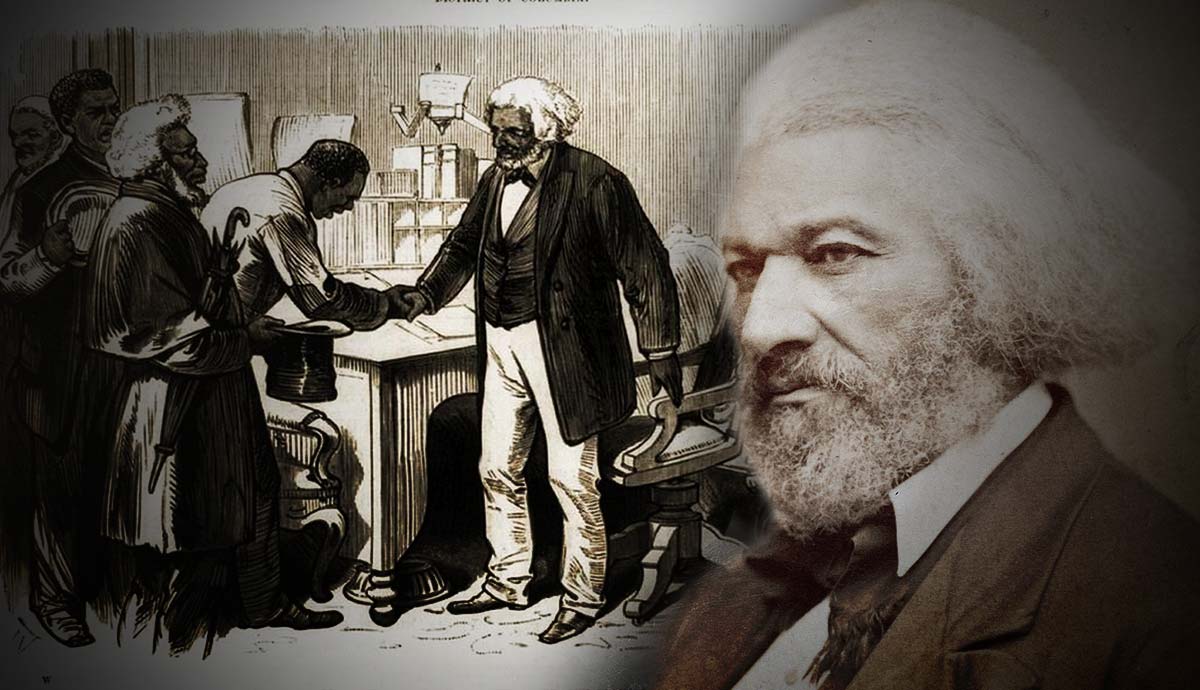
Perhaps Frederick Douglass summarized his lifes experiences and driving forces best when he gave his keynote speech asking What to the Slave is the Fourth of July? Born into servitude, Douglass made freedom his lifes work, not only for himself, but for other men and women who suffered merely because of their misfortune of being born into what was considered a second-class race or gender. Douglass rose to become one of Americas foremost Civil Rights leaders, an abolitionist, incredible speaker, and defender of women. His legacy is one that still resonates in modernity, reminding the world of the true definition of equality.Born a SlaveFrederick Douglass in the 1840s. Source: Explore PA History via Wikimedia CommonsLike many 19th-century American slaves, Frederick Augustus Washington Bailey was unsure of his actual birthdate. However, he was likely born in February 1818 on a plantation in Eastern Maryland. Frederick was raised by his grandparents, as his mother worked in forced labor at a different location. She died when he was about seven years old, and he continued to live with his maternal grandparents and aunt. Though he knew his father was white, Frederick was unsure of the mans identity, though it was rumored to be his mothers slaveholding master, Aaron Anthony.At just eight years old, Frederick was taken away from his grandparents and siblings and sent to work for a ship carpenter in Baltimore. However, Frederick later proclaimed that his time in Baltimore opened the gateway to all my subsequent prosperity. While he was living with his new master, Hugh Auld, Aulds wife taught Frederick to read and write. Mr. Auld put a stop to the lessons, worried that education would give slaves ideas about rebellion. However, Fredericks desire to continue his studies was ignited, and he continued to work on his literacy skills in secret. He read newspapers and bought a volume of speeches, The Columbian Orator, to study. In Baltimore, Frederick also first heard about the idea of abolition and the efforts of abolitionist causes. Though he didnt know it at the time, these ideas would lay the groundwork for his future.Try, and Try AgainFrederick Douglass statue at the New York Historical Society. Source: Jay Dobkin/Wikimedia CommonsAt the age of 15, Frederick was sent back to the Maryland shore. He was assigned to work as a field hand, where he quickly earned a reputation as a rebel. He taught fellow slaves to read and write and wasnt afraid to question the status quo. A man named Edward Covey, known as a slavebreaker, someone who got unruly slaves back under control, applied his methods to Frederick. The teen was subjected to daily beatings and whippings, limited access to food, and other forms of torture. Though he admitted to being broken in body, soul, and spirit, the treatment still strengthened Fredericks dedication to the idea of freedom.On January 1, 1836, Frederick made a New Years Resolution: he was going to be free by the conclusion of 1836. Some sources say that Frederick made two escape attempts, others three, but all are in agreement that he was jailed after an April 1836 attempt. After his release, he was sent back to Baltimore to work in the shipyards with Mr. Auld. During this stint in Baltimore, Frederick met Anna Murray, a free Black housekeeper. Anna used her money, risking her life, to help Frederick on his final escape attempt in 1838.Frederick used the knowledge hed gained working in Baltimore to disguise himself as a free Black sailor, and used a train ticket Anna had purchased him to board a train heading north. 24 hours later, he arrived in New York. Anna soon joined him, and the pair were married. They felt the presence of slave catchers in New York made it unsafe for them to continue living there, and headed to New Bedford, Massachusetts to make a life for themselves.Building a FamilyDouglass and grandson Joseph in the 1890s. Source: Cowans Auctions via Wikimedia CommonsFrederick and Anna were married by another escaped former slave, minister James W.C. Pennington on September 15, 1838. Not long after their move to New Bedford, they became friends with Polly and Nathan Johnson, free Black people who owned several neighborhood businesses. Frederick and Anna were considering a name change to further protect their identities, and Nathan suggested naming the family after a character in a poem by Sir Walter Scott, Lady of the Lake. Adding an S to the characters last name, Frederick Bailey became Frederick Douglass. He and Anna had five children together, three of which were born during their time in New Bedford.The Johnson properties in New Bedford, photographed in 2008. Source: Daniel Case/Wikimedia CommonsThe Johnsons were politically active and passionate abolitionists. Mr. Johnson made assisting fugitive slaves a regular practice and had a close relationship with the local government due to their business interests. Not only was the couple instrumental in assisting the Douglass family as they established themselves in New Bedford, but they helped foster Fredericks involvement in abolitionist causes. Douglass involved himself in various civic and political organizations, including abolitionist groups. At just 23, Douglass was asked to speak at the Massachusetts Anti-Slavery Societys annual convention. He gave an eloquent presentation, and it launched his career as an in-demand orator.Ardent AbolitionistDouglass being greeted by citizens after his appointment to Marshal, 1877. Source: Fine Art America via Wikimedia CommonsIn 1843, Douglass traveled the country as part of the American Anti-Slavery Societys Hundred Conventions project, speaking at various stops. He was attacked numerous times along the route, even suffering a broken hand at one point. Still, he continued to travel, speaking on his experiences as a slave and the horrors he had been through and witnessed. His travels even took him abroad to Ireland and Great Britain. In 1845, Douglass published his first novel, an autobiography, Narrative of the Life of Frederick Douglass, an American Slave. He had some concerns that his publication would invite slave catchers, and he stayed in Europe for two years as a result.In 1847, a group of abolitionists purchased Douglasss freedom from his former enslaver, and he returned to the United States truly free for the first time in his life. The Douglasses moved to Rochester, New York, where Fredericks abolitionist work only grew. He worked with Gerrit Smith and John Brown, among other famed anti-slavery advocates. Initially, he was friendly with William Lloyd Garrison, a famed abolitionist publisher, but Garrisons radical views led to a divergence of the friendship.An issue of The North Star from 1848. Source: Library of Congress via Wikimedia CommonsPerhaps inspired by Garrisons long-running abolitionist newspaper, The Liberator, Douglass purchased a printing press and began publishing The North Star, in 1847. The publication acquired more than 4,000 subscribers, not only in the United States but in Europe and the Caribbean. Douglass used his paper as a tool to advocate for continuing change. His abolition work continued on the ground as well. He urged President Abraham Lincoln to consider emancipation, and encouraged the recruitment and use of Black soldiers during the Civil War.Defender of WomenFrederick Douglass photographed with his second wife, Helen, right, and her sister, Eva Pitts. Source: National Park Service via Wikimedia CommonsFrederick Douglass was a firm believer in civil rights for all, not just former slaves. He was involved in the womens suffrage movement, and attended the Womans Rights Convention in Seneca Falls, New York in 1848. He played an important role at this convention, encouraging the group to move forward in their fight for suffrage. He worked with several notable womens rights advocates, including Susan B. Anthony, who spoke at his funeral.Post-War WorkFrederick Douglass, circa 1876. Source: National Portrait Gallery via Wikimedia CommonsAt the conclusion of the Civil War, and thus the end of slavery in the United States, Douglass was still not satisfied with his accomplishments. He argued that despite emancipation, the work would be in vain if safeguards were not put into place. Former slaves had to have access to the same human rights as their white counterparts. He pushed for the passing of constitutional amendments that would offer these protections, including the 14th Amendment guaranteeing citizenship and the 15th Amendment that protected voting rights for all.Douglass moved to Washington D.C. and served the United States in a number of capacities after the war, including his appointment as president of the Freedmans Savings & Trust Co., or the Freedmans Bank, a corporation chartered by Congress to educate recently freed people and assist them in regard to their finances. In 1877, Douglas was appointed US Marshal for the District of Columbia. He later became a US Minister and Consul General to Haiti, and with this appointment by President Harrison in 1889, he was considered the first Black man to hold high office in the US.Anna Murray Douglass. Source: Wikimedia CommonsAnna, who had loyally supported Fredericks efforts throughout their 44 years together, died in 1882. Two years later, Douglass remarried, inviting controversy with his new bride, Helen Pitts, who was not only 20 years his junior but also white. The couple was married for 11 years until Fredericks death on February 20, 1895, when he suffered a heart attack.A Legacy of Freedom FightingThe Frederick Douglass Memorial Bridge in Washington, DC. Source: G. Edward Johnson/Wikimedia CommonsIn 1961, President John F. Kennedy addressed the nation, stating that the life of Frederick Douglass is part of the legend of AmericaBy advancing that cause through law, democratic methods and peaceful actions, we in America can give an example of the freedom which Frederick Douglass symbolizes. Kennedy was correct in associating Douglass with the burgeoning Civil Rights Movement in the United States. Not only was Douglass instrumental in ending American slavery, he continued to influence politics and human rights legislation in America for decades afterwards. His presence in history is a reminder of the importance of championing these causes, and a suggestion that perhaps, the fight is never over.
0 Comentários
0 Compartilhamentos
19 Visualizações

 English
 Arabic
 French
 Spanish
 Portuguese
 Deutsch
 Turkish
 Dutch
Dutch
 Italiano
 Russian
 Romaian
 Greek
Greek