


WWW.THECOLLECTOR.COM
The Angevins and Henry II, Medieval Europes Most Explosive Royal Family
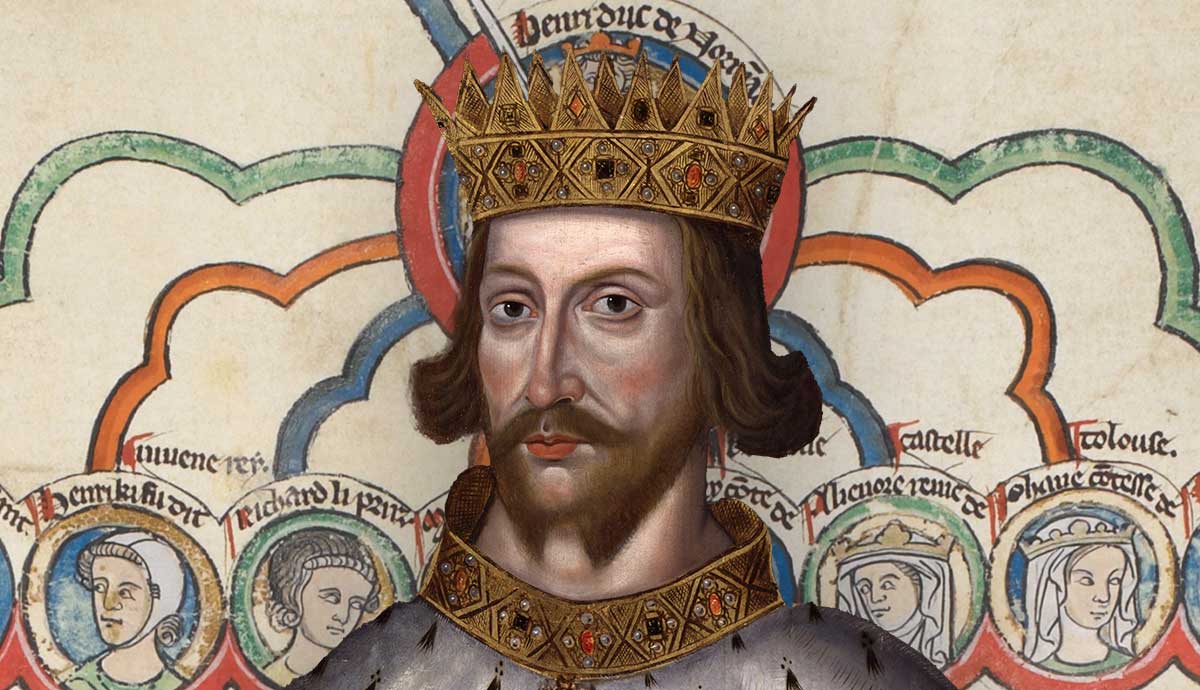
There have been many great dynasties and noble lineages throughout history, but 12th-century Britain and France were beholden to a powerful husband, his glamorous wife, and their equally ambitious children. The Angevin Dynasty of Henry II, Eleanor of Aquitaine, and their five sons and three daughters dominated not just politically but culturally and socially too. Their interpersonal squabbles, relationships, and machinations would see the Kingdom of Medieval England go from its greatest height to almost total collapse, all under the gaze of this one family.Meet the AngevinsHenry II, 1597-1618. Source: Wikimedia CommonsHenry II (1133-1189) founded what is now known as the Angevin Empire, encompassing much of the British Isles and more than half of France. Barely a generation later, this empire collapsed. This dramatic rise and fall is the story of Henry and his own family, the Angevin Dynasty, and their scandals, schemes, triumphs, and tragedies.The story begins, unsurprisingly, with Henrys parents. His mother was Matilda, the heir of Henry I of England. His father was Geoffrey, Count of Anjou, hence the name of Angevin, though the dynasty also went by Plantagenet, after Geoffreys symbol of a broom flower (Latin name: Planta Genesta).When Henrys grandfather died, his mother became embroiled in a decades-long civil war with her cousin, Stephen of Blois, for the English throne. Matilda and Geoffrey controlled the Duchy of Normandy, where Henry grew into a young man with an energetic and passionate nature and a love of hunting.Matilda, Henrys mother, 1188. Source: Herzog August LibraryBy 1152, Henry had become Duke of Normandy and Count of Anjou after his father died, and he took over his mothers campaign for England. That year, Henry made possibly the most consequential decision of his life. He married someone nine years his senior and barely two months out of her first marriage. However, she also happened to be the most glamorous and powerful woman in Europe.Eleanor of Aquitaine (1124-1204) is one of the most famous women of the Medieval Era. She was the Duchess of Aquitaine, which consisted of much of what is now southwest France. She became Duchess in 1137 at the tender age of 13, and that same year she married Louis, the next king of France.In their 15-year marriage, Eleanor deftly navigated French court politics and culture. However, despite having two daughters, the marriage was not successful, and with no male heir forthcoming, Louis agreed to an annulment in March 1152. Two months later, Eleanor married Henry.The Beginnings of a European HegemonyA map of the Angevin territories in France. Source: Wikimedia CommonsThe speed of the marriage strongly suggests the two had secretly negotiated their match before Eleanors annulment was finalized. It was a good match for both. Henry more than doubled his power base and resources, while Eleanor gained a powerful political ally and retained much of her sovereignty.Yet, this was more than just a marriage of politics. Eleanor, the tall, graceful, and sophisticated older lady of culture and courtly politics, made a surprisingly good match with Henry, the young, stocky, and rustic Norman noble. Henry was intellectually and culturally inclined as well and was known to be amiable and charming. At any rate, Eleanor had far better chemistry with Henry than with the pious but somewhat dull Louis.Speaking of Eleanors ex-husband, Louis absolutely opposed her union with Henry. He immediately declared war on the newlyweds with support from Stephen in England, who saw an opportunity to remove Henry as a threat to his crown.However, Henry and Eleanor proved more than a match for this coalition. Eleanor quickly removed all the influence Louis had gained in Aquitaine, preventing him from undermining the duchy. Meanwhile, Henry defeated Louiss invasion, then turned his attention to Stephen.As 1153 began, Henry landed in England, and after a few months of campaigning, Stephen agreed to recognize Henry as his heir after his own son, Eustace, died suddenly. A year later, Stephen passed away, and in December 1154, Henry and Eleanor ascended to the throne of England.After decades of civil conflict, Henry faced the daunting task of restoring England to its former glory and bringing the nobility, particularly Stephens former allies, under control. Fortunately, his and Eleanors charm, ability, and diplomatic grace soon reestablished royal authority.The Royal Power CoupleHenry II and Eleanor receiving a French envoy, Medieval illumination. Source: British LibrarySo began the halcyon days of the Angevin Empire, though the term empire was never used at the time, and Henry never sought a title higher than king. In England, Henry swiftly made major improvements to Englands administration and legal system, building the foundation of English Common Law, and reforms to the economy and coinage.However, the majority of Henry and his familys domain, and thus their time and attention, was in France, and Henrys capital, for want of a better word, was at Chinon. However, Henry spent much of his reign travelling throughout his vast domain, overseeing important matters, dispensing justice, dealing with his vassals, and, of course, hunting.Thanks to the great wealth of his dominion, Henry was able to keep a spectacular travelling court, arguably the finest in Europe. Eleanor would sometimes accompany her husband, but often she acted as his regent in England. While Henry oversaw his kingdom on the road, she maintained a powerful political center for their empire.Queen Eleanor, by Frederick Sandys, 1858. Source: National Museum of WalesThe new power couple soon grew into the most powerful and glamorous family in Western Europe. Their first child, William, sadly died in infancy, but their seven other children all reached adulthood. Next came Henry in 1155, then Matilda in 1156, Richard in 1157, Geoffrey in 1158, Eleanor in 1161, Joan in 1165, and John in 1166.Henry also retook land that Stephen had lost to Scotland and became overlord of the Kingdom of Wales. Meanwhile, in France, Henry generally maintained good terms with his legal overlord, Louis, barring the occasional war and Henrys encroachment on other French vassals, such as the Count of Toulouse. The two even betrothed Henrys two boys, Henry and Richard, to Margaret and Alys, Louiss daughters from his second marriage.Eleanor and Henry also arranged successful political marriages for their other children. Matilda was betrothed to the Duke of Saxony, and Eleanor to the King of Castile. In another geopolitical win, Geoffrey was also married to Constance, Duchess of Brittany, effectively bringing Brittany into the empire.The Beginnings of DiscontentIllumination of Henry and Eleanor at court enjoying the Tale of King Arthur performed by their courtier and famous chronicler, Walter Map, 13th century. Source: BnFYet, behind the glorious faade, cracks had developed. Henry, though charming, was also prone to fits of violent rage and could be somewhat of a bully. His most infamous falling out was with Thomas Becket, an old friend who became Henrys chancellor and then Archbishop of Canterbury in 1162.However, the two ended up disagreeing violently over royal authority over the Church, and Thomas was even forced to flee in exile to Louiss court. Though they attempted to reconcile, Thomas wouldnt return to England until 1170.At the same time, Henrys marriage also began to break down due to his wandering eye. While keeping mistresses was not unusual for medieval kings, Henry was notoriously promiscuous. His first illegitimate son was born before he and Eleanor were married, but rumors abounded about other trysts as he traveled his kingdom.In 1168, not long after Henry had acknowledged his second illegitimate son, Eleanor left England for her own court at Poitiers. Though legally they remained united, on a personal level, the marriage was over. Henry, meanwhile, became more open with his mistresses.Murder of Thomas Becket, 1864. Source: Wikimedia CommonsDespite these troubles, both Eleanor and Henry continued to display their authority and majesty externally while focusing on the future of their domain. In 1169, Henry officially gave his sons their domains: Richard would take Aquitaine, ruling alongside his mother, and Geoffrey, Brittany. Henry, as the eldest, would take England and Normandy, becoming overlord of this fraternal federation on his fathers death. There were no great Duchies left for John, giving rise to his nickname of Lackland.All three swore homage to Louis for their French holdings, then in June 1170, Henry Junior was crowned co-monarch of England, becoming known as the Young King. With the continuation of his kingdom seemingly secure, the older Henry might have been optimistic about what the 1170s would bring. Yet, only six months later, things would go horribly wrong.Keeping up With the PlantagenetsIllustration of Henry the Young Kings coronation, 1220-40. Source: Wikimedia CommonsIt began with the tragic death of the turbulent priest Thomas Becket. In December 1170, after another disagreement, Henry flew into a rage and rhetorically despaired that his court allowed Thomas to continue insulting their king. Four of his knights took him at his word and tried to capture Thomas, but ended up murdering him in Canterbury Cathedral.Though Henry distanced himself from the murderers, the tragedy greatly damaged his prestige, angered the church, and seriously disquieted his vassals. Thomas became a martyr, both literally and figuratively, as a symbol of Henrys tyranny. Without Eleanors political support and counsel, Henry struggled to manage the unfolding PR disaster. Even more unfortunately, Henry had just promoted a perfect figure for opposition to gather around.Henry the Young Kings public prestige increased rapidly after his coronation. He married Margaret at a stylish wedding and performed his public duties well. He also developed a talent for jousting under the tutelage of his fathers vassal William Marshal, the greatest knight of the age. Young Henry showed a penchant for the glamorous life, even setting up his own royal court like those of his parents.Effigy of Henry the Young King, Rouen. Source: World History EncyclopediaHowever, Young Henry soon began resenting his father, who refused to give his son any actual royal responsibilities. Young Henry had been given several large estates to manage, but his father kept all their revenues, making young Henry do all the work for no reward.Nor was he the only Angevin with a grudge. Geoffrey and Richard both had similar issues with their father, and of course, Eleanor had her own grievances. The four conspired in secret until spring 1173, when another dispute with their father led to the Young King and his brothers fleeing to Louiss court, requesting his intervention as their fathers liege lord.It is likely Louis had been encouraging the boys resentments, eager for any opportunity to weaken his arch-rival and sow division amongst the ambitious Angevins. With a coalition of unhappy vassals and international backers, the boys began the Great Revolt.Uprisings broke out across Henrys domain, while Louis and King William of Scotland launched separate invasions on different fronts. Just like all the way back in 1152, though now without Eleanor, Henry was surrounded by enemies on all sides, and just like then, he had them exactly where he wanted them.The Great Revolt and the AftermathHenry IIs royal seal. Source: Wikimedia CommonsIn a whirlwind 18-month campaign, Henry and his loyal vassals defeated the rebels and bloodily repulsed the incoming invasions, even capturing William of Scotland in battle. Henry also found time to make a pilgrimage to Canterbury, where he performed a public act of penance at the new shrine of Thomas Becket. Henrys tears for his old friend and rival could have been genuine or crocodile but either way, they helped him regain much of his popular support and prestige.The rebel vassals were variously fined, imprisoned, or had land confiscated. William of Scotland was forced to recognize Henry as his legal overlord and was kept hostage to ensure his kingdoms compliance. Likewise, Henry placed Eleanor under house arrest in England. His wife and cherished partner for so many years was now his prisoner, the great court matriarch of Europe, kept under guard in a rural English manor.Meanwhile, Henry settled a white peace with Louis, while Richard, Geoffrey, and Henry kept their lands and titles and had their funds increased. Henry did make Richard responsible for punishing the Aquitanian vassals who had joined his revolt, but aside from that and public pledges of loyalty and pardon, his sons were forgiven.William II of Sicily, Joans first husband, Cathedral of Monreale. Source: Wikimedia CommonsBy 1175, Henry was more powerful than ever. He further grew his domain after taking over the Norman colonies in Ireland, and he was the most prestigious ruler in Europe. He arranged for his daughter Joans marriage to the Norman king of Sicily and arbitrated diplomatic disputes across Europe.As for his sons, Richard and Geoffrey both became more settled in their new duchies, though Richard continued to struggle with rebellious lords in Aquitaine. Even John finally received an inheritance, becoming the future Lord of Ireland.Meanwhile, Young Henry, alongside William Marshal and an all-star squad of knights, became one of the greatest tournament teams in Europe. Across Christendom, the Young King became a sporting icon. Yet unknown to all the family, events would soon change drastically, with devastating consequences.A Family Falling ApartAn image of Henry and his eight children with Eleanor, who is not included for unknown reasons, from the 14th century Genealogical roll of the kings of England. Source: British LibraryIn 1180, Louis died and was succeeded by his son Philippe, who combined his fathers cunning and anti-Angevin sentiment with his own political and military brilliance. He happily weakened Angevin hegemony whenever the opportunity arose and often succeeded in playing the Angevin sons off against one another and their father.All the brothers had inherited Henrys stubbornness and ability to start an argument in an empty room. Eleanor did her best to resolve her familys disputes, but could only do so much while still under lock and key.Henry preferred his sons squabbling amongst themselves rather than uniting against him, but in 1182, the situation devolved drastically. Young Henry still resented his lack of royal authority, especially with his brothers now in full control of their own duchies. Trying to compromise, Henry ordered Geoffrey and Richard to officially swear homage to Young Henry. However, Richard, angered by recent fraternal disputes, refused.Henry, seeing the future of his kingdom threatening to go the way of the Carolingian Empire, forced Richard to back down and apologize to his brother, but the damage was done. Young Henry marched on Aquitaine to teach Richard a lesson. While on campaign in June 1183, the Young King suddenly came down with a fever. In the end, the Young King died with only William Marshal and his loyal knights by his side.Poets and bards mourned Young Henrys passing as the end of the heyday of tournaments and chivalry. Chroniclers were more mixed on the 28-year-old, believing he preferred sporting to governing. His potential as a future king aside, his loss was truly devastating for his family and their political future.The Sins of the FatherYoung Henrys tomb in Rouen Cathedral. Source: Wikimedia CommonsAs the next eldest, Richard was set to inherit the kingdom. However, his struggle to control his Aquitanian vassals boded poorly for his future kingship, managing the whole empire. Henry, trying to be pragmatic, decided John should have Aquitaine instead of Richard. Richard, after 13 years of blood, sweat, and tears keeping control of Aquitaine, refused.In 1184, Eleanor managed to bring about a temporary family reconciliation after Henry allowed her to negotiate with Richard directly. However, Henry also kept Richard in line by threatening to make Geoffrey heir to the throne instead of Richard.Tragically, though, Geoffrey died suddenly in 1186, leaving Henry to struggle with a defiant Richard and the emotional loss of two of his sons. Henry attempted to negotiate an alliance with Philippe to keep Richard subdued. However, Philippe instead sided with Richard in a very public display of friendship and anti-Henry allegiance.In 1188, Richard, Philippe, and Henry all pledged to join the Third Crusade. However, delays and disputes over the Crusades organization, combined with Richard and Henrys personal animosity and Philippes manipulation, finally boiled over into outright war.Richard I, the Lionheart, Westminster. Source: Wikimedia CommonsIn summer 1189, Henry once again faced a coalition of family, foes, and the French king, but this time there would be no energetic response. Now 56 years old, drained from years of family squabbling and loss, and suffering from severe stomach ulcers, Henrys drive and energy were spent. Too sick and exhausted to keep fighting, he surrendered to Richard and Philippe.He lived just long enough to hear that John had sided with his brother before slipping into a coma. Henry II, King of England, Duke of Normandy and Count of Anjou, ruler of the Angevin Empire, died on July 6, 1189. Henrys deathbed, like that of Young Henrys before him, was not attended by his family but only a few loyal knights, including William Marshal.Fate of the EmpireA battle between Philippe of France and John, during Johns reign from 1199 onwards, most of Angevin France fell to Philippe, 14th century. Source: World History EncyclopediaIn his last moments, Henry may have wondered how he had come to this end. He might also have wondered how long his kingdom would survive after his death, the answer may have surprised him.Richard reversed some of his fathers more unpopular policies before departing for the Third Crusade, leaving Eleanor and a council of regents, including William Marshal, in charge. The 65-year-old Eleanor tirelessly managed the kingdom in her favorite sons absence. When Richard was kidnapped during his return journey, Eleanor raised his ransom and held his kingdom together while John, Henrys favorite son, conspired with Philippe to dismantle the empire.On his return, Richard and Eleanor maintained the empire until Richards sudden death at the siege of Chlus-Chabrol in 1199. John then took the throne while Eleanor, having outlived her husband and three sons, retired to Fontevraud Abbey in Aquitaine. There she was laid to rest beside her husband and Richard in 1204. That same year, Philippe strategically and politically outplayed John, taking all of the Angevin lands in France save for Gascony in Aquitaine.Johns misrule eventually saw the barons of England force him to sign the Magna Carta, which originated from his fathers legal reforms. Fortunately, William Marshal, by now a powerful landowner and politician, remained loyal to John and became regent to his nine-year-old son, Henry III, on Johns death in 1216. Marshal protected Henry III from an attempted invasion by Philippes son, Louis, before he passed away in 1219. Henry III and his descendants would continue the Angevin Dynasty, though going by Plantagenet henceforward, for many more years to come.Analyzing the Great DramaEffigies of Eleanor and Henry in Fontevraud Abbey, Eleanor designed her tomb to be larger and raised higher than Henrys, making her appear more prominent than him. Source: Wikimedia CommonsTheres a curious phenomenon in the contemporary sources on the Angevins. Seemingly, Henry II was reviled at the time of his death, but barely 20 years later, he and the greatness and stability of his reign were widely mourned. For over 30 years, Henry kept his kingdom together through his own ability and iron will. However, the stubbornness and lack of compromise in him and his sons all but doomed the Angevins.It is true that personalities are never the sole drivers of history. It is also likely true that the Angevin Empire, with its loose centralization over a wide diaspora of regions and social structures, was too unstable to ever last. Yet it is fun to speculate on what Young Henry and his brothers could have achieved had he survived, glory or disaster being equally possible.Likewise, it is a simplification, but not meritless, to argue that the decline in Henrys reign coincided with his separation from Eleanor. Just as it is worth dwelling on the irony that it was Eleanor and her favorite son Richard, who successfully maintained the empire, while Henrys favorite son, John, nearly lost it all. Or how the only remaining parts of Henrys French territories were in Aquitaine, or how Henrys legal reforms nearly caused his son to lose his crown.The character drama of Henry and his family is so gripping, it is hard to take a step back for a more historical and dispassionate view. The Angevins were such extraordinary characters with such a compelling story that their personalities left an unquestionable impact on the history and national stories of England and France.
0 Reacties
0 aandelen
26 Views

 English
 Arabic
 French
 Spanish
 Portuguese
 Deutsch
 Turkish
 Italiano
 Russian
 Romaian
 Portuguese (Brazil)
 Greek
Greek