


WWW.THECOLLECTOR.COM
The Roles & Lives of Women in the Ottoman Empire
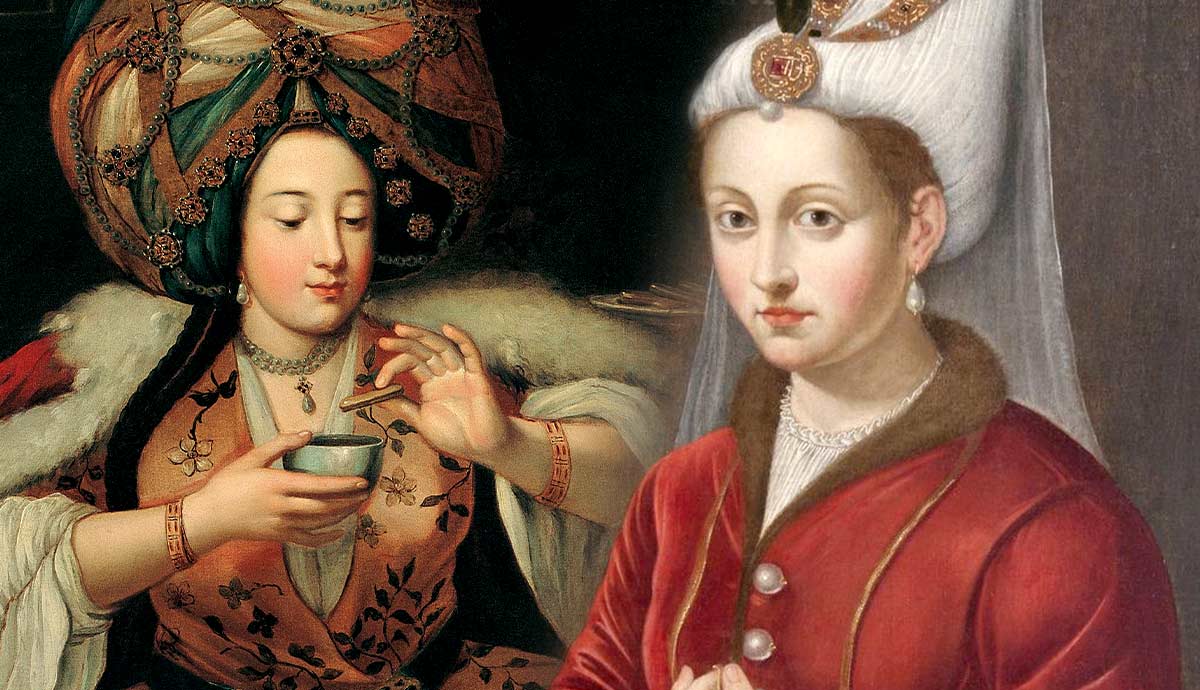
Ottoman women from the 16th to 18th centuries lived in a patriarchal society where they had clear-cut gender roles in the household. Although they had limited opportunities for formal education and employment, many women played important roles in politics, arts, medicine, economic production, and governance.Wives and MothersWoman on birthing chair, from Enderunis Zenanname (Book of Women), a work about the women of the world and their qualities, 1793. Source: Wikimedia CommonsIn early-modern Ottoman society, gender was one of the defining factors in a persons life. Women were expected to become dutiful wives and show obedience to male family members, who were considered the heads of household. Ideas like honor were instilled in womens bodies and actions.During the reign of Sultan Sleyman (r. 1520-1566), the Kanunname or secular law was put into place alongside Islamic law to regulate the behaviors of Ottoman citizens. These laws considered order in the household as the basis of order in wider society. Thus, men whose wives were guilty of crimes like adultery, for instance, were also fined for being unable to preserve order and honor in their households.Motherhood was another purpose of a womans life. A good wife was expected to bear healthy children and teach them good manners and morals. In the 16th century Turkish epic The Book of Dede Korkut, the narrator opines that a girl cannot become a lady unless she has good breeding from her mother.Womens WorkFemale musicians, painted by Levni, d. 1732. Source: Wikimedia CommonsWomen were not expected to have careers or professions in the early-modern Ottoman Empire. They were often barred from joining craftsmens guilds and rarely received formal professional training. Yet, many women were exceptions to this rule. Rural and nomadic women were expected by their communities to participate in fieldwork, such as farming, animal herding, and cotton or hazelnut picking.Townswomen often performed work as servitors, that is, as maids, washerwomen, servants, and personal attendants. They worked mainly in baths, hospitals, and for elite households. Some areas, such as midwifery, nursing, weaving, and embroidering, were even female-dominated. Pierre Belon, a 16th-century French traveller and diplomat in the Ottoman Empire, noted that women would frequently sell their handmade goods at markets.Women also performed roles where their voices and opinions could be heard. Belon noted that women were employed as teachers in primary schools for girls. Women like Mihri Hatun (d. 1506) and Ayse Hubbi Hatun (d. 1590) were celebrated court poets who were patronized by sultans. Ayse Hubbi was born into an elite family with close ties to Sultan Sleyman. As a result, she received a fine education in court and eventually became a lady-in-waiting and close friend of future sultan, Prince Selim II. Ayse Hubbis poetry challenged the misogynistic beliefs of her time:Being feminine is no shame to the name of the sun Being masculine is no glory to the crescent moon.Many women also broke the barriers of gender segregation through their work in the medical field. Saliha Hatun was a physician who practiced in Istanbul in the 1620s-30s. Her consent forms, dated between these years, reveal that she performed successful hernia and tumour operations, mostly on men. Interestingly, she had no female patients.Festivities and CelebrationsWedding procession, by Lambert de Vos, ca. 1574. Source: Gennadius LibraryWomen, though to a lesser extent than men, were involved in the public and social arena. They attended celebrations for royal marriages, circumcision festivities, and military campaigns. Since women were not allowed to perform in public, they held gender-segregated dance and theatrical shows.These restrictions did not reach inside the private space, however. In 1524, Istanbuls Italian community organized festivities in celebration of the peace treaty between the Italian states. In the house of the Italian ambassador, a ballet and various other dances were organized and danced by Turkish women.English historian and orientalist Thomas Hyde (d. 1703) also wrote in his book De Ludis Orientalibus (1694) that women dancers, called engi, dressed like men and took part in plays and traditional dances such as the zeybek.Patrons of Art and ArchitectureHrrem Sultan Complex, Istanbul. Source: Wikimedia CommonsWomen were important patrons of art, learning, and architecture. They mostly founded religious buildings like mosques and tekkes (dervish monasteries), rather than secular ones. Royal women patronized buildings as a symbol of their goodwill, religiosity, and power. Having a building patronized in their name immortalized and publicized these women, the majority of whom would never be seen outside the harem.Hrrem, wife of Suleyman the Magnificent, had the Haseki Hrrem Klliye built in 1540. This massive structure consisted of a mosque, medreses (religious schools), a hospital, hamam (bathhouse), and soup-kitchen.Womens patronage was felt all around the empire. Rabia Gln Sultan (d. 1715), consort of Sultan Mehmed IV, and mother of two Sultans, Mustafa II and Ahmed III, established pious foundations, hospitals and soup-kitchens in Mecca for weary pilgrims. After the conquest of the island of Chios in 1695, Rabia Gln had a church converted into a mosque and built a fountain to provide the area with clean, flowing water.Unruly WomenTurkish prostitute, from Travels in Turkey, by Nicolas de Nicolay, circa 1578. Source: Academia.eduIn Ottoman society, womens honor and reputation were policed and considered a communal issue. According to the etiquette of high society, female respectability was linked to public visibility. In the 16th century, scholars considered a respectable woman to be one who was veiled and did not leave the house without a retinue of attendants or servants.Despite these beliefs, women often acted in unseemly ways. Rural women did not have the luxury of being idle and secluded. Field and housework, including going to the river to wash clothes or to the well to collect water, made women visible and active in public. Likewise, Gypsy (Romani) women had a strong public presence. They abided by the moral guidelines of their own community, and thus could be seen in the street without veils, performing dances, and selling goods.Women also engaged in illegalalbeit widespreadwork like prostitution. Women found guilty of prostitution could be fined or exiled, and even being accused of such work was enough to ruin a womans reputation. Those who were accused of prostitution could take their accusers to court. If the accusations were proved to be false, the accuser would receive a hefty fine!Queens and ConcubinesImagined portrait of Hrrem Sultan, by Johann Theodor de Bry (1561-1623), circa 1590s. Source: Wikimedia CommonsWomen in the Ottoman Empire had important responsibilities as the wives, consorts, concubines, mothers, or sisters of sultans. In the early 14th century, it was common for Ottoman sultans to marry princesses of rival empires like the Byzantines. However, by the 16th century, the Ottomans dominated Turkey and the Balkans, and so, sultans preferred to take concubines.Concubines were slaves of the sultan. Many of them, such as Hrrem, were products of the Crimean slave trade. Concubinage allowed sultans to produce heirs and secure their dynastys survival without the need for marriage. Although marriages were acceptable, they were not preferred. This was because local Turkish families could strengthen their influence or lay claim to Ottoman lands and power if their daughters were married to the Sultan.Concubines and wives of the sultan were more restricted than other women in their society. They were free to travel, although their visibility was restricted by enclosed carriages. Until the Early Modern Era, concubines were restricted to having one son with the ruler. This was due to Ottoman governmental practices. Once a prince reached his teenage years, he would be sent to govern another province. His mother would accompany him, acting as the Sultans eyes and ears, and ensuring the court functioned properly.This changed when Sultan Suleyman I married his concubine Hrrem, had several male children with her, and allowed them to live with him in Istanbul. The most powerful position a woman could reach was that of valide sultan, or queen mother. The valide not only ran the harem, but also had a major influence on her sons choice of concubines and even his political decisions.Women of the CourtWomen of the harem, in the Album of Sultan Ahmed I, circa 1610. Source: Topkapi Palace MuseumThe harem was almost like a smaller version of court in court. Some of the roles played by women included mistress of financial affairs, housekeeper, and educator of the ladies-in-waiting.Female members of the royal family, who were raised in the harem, usually married grand viziers, ministers, or princes of other dynasties. After this, they would move into their own palaces or homes. Some, such as Sultan Suleymans daughter Mihrimah, still retained their influence and wealth. When her brother Selim became Sultan, Mihrimah continued to give him political counsel and even lent him a sum of 50,000 gold coins.Most women in the harem, however, played service roles. They sewed and embroidered clothes for the pages of the court. They also ensured the harem remained clean and hygienic. Wet nurses or daye were common in the Ottoman court. The wet nurses of princes held high status and established mosques inscribed with their titles and names, something that many queen mothers themselves were not able to do.The gender segregation in court also meant that males could not freely access the harem. As a result, many women had to perform traditionally male professions. In Suleyman Is era (ca.1514), female physicians were appointed for the women at court. Non-Muslim women were also given specific roles. Jewish women often acted as the political agents or kiras of powerful women at court. As intermediaries and economic advisors for the queen mothers, kiras gained status and wealth, which sometimes led to them being blamed for poor management of finances in court.
0 Comentários
0 Compartilhamentos
20 Visualizações

 English
 Arabic
 French
 Spanish
 Portuguese
 Deutsch
 Turkish
 Dutch
Dutch
 Italiano
 Russian
 Romaian
 Greek
Greek