Was Edward the Black Prince a Noble Warrior Prince or a Bloodthirsty Tyrant?
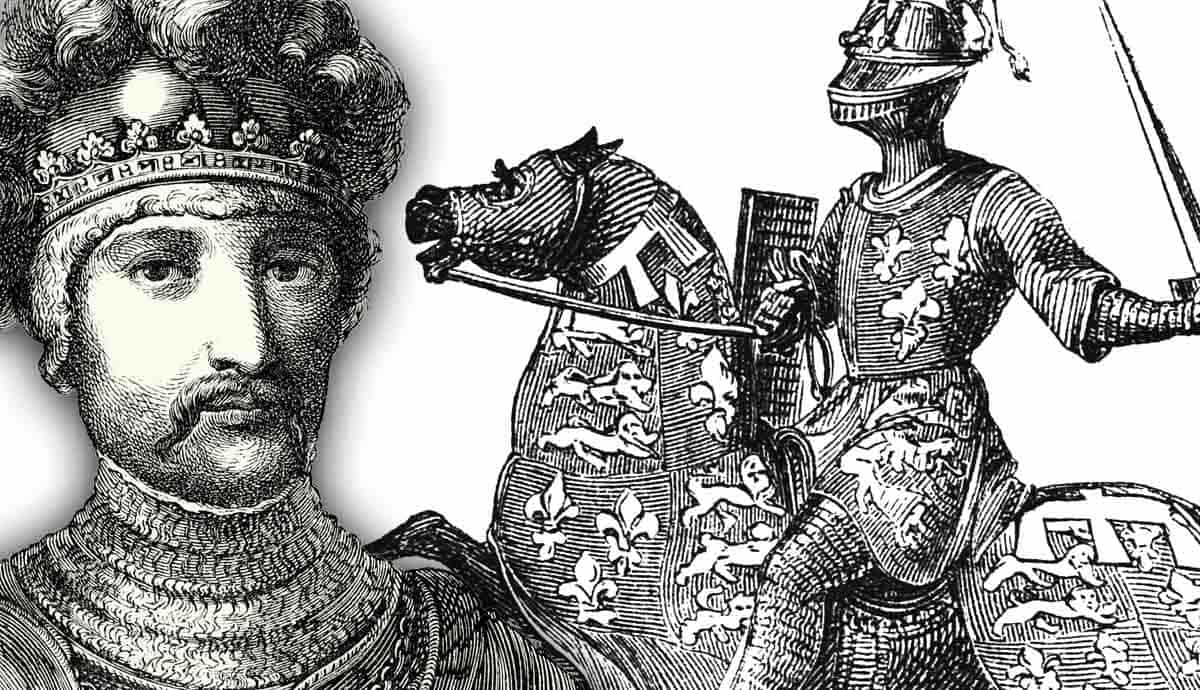
Edward of Woodstock (1330-1376) was the eldest son of King Edward III of England. During the Hundred Years War (1337-1453), he distinguished himself at the battles of Crcy and Poitiers, earning fame and recognition in his homeland. His legacy evokes admiration for his military capabilities. However, he also remains a controversial figure for his alleged brutality, embodying both the virtues and the violence of his era.The Early Years of Edward the Black PrinceEdward III (on the left) grants Aquitaine to the Black Prince. Source: The PastEdward of Woodstock was born on June 15, 1330, in Oxfordshire, Woodstock Palace, to King Edward III and Queen Philippa of Hainault. Being the kings first son and heir to the English throne, Edward acquired the title of Prince of Wales.The socio-political environment in England greatly influenced Edwards childhood and early years. King Edward III was an ambitious leader and engaged in military campaigns against France, resulting in the Hundred Years War, fought between England and France from 1337 to 1453. Hence, Edward was brought up as a quintessential medieval prince, learning the arts of war, governance, and codes of chivalry, all of which were intended to prepare him for leadership roles both on a battlefield and on the throne.From a young age, Edward demonstrated exceptional military prowess and was held up as an example of valor and knightly ideals. In 1346, when Edward was 16, King Edward III knighted him.By the time his military reputation grew, plans for Edwards future had long been set up. Indeed, the royal family had arranged his marriage when he was only seven years old. In 1362, Edward married his fathers cousin, Joan of Kent, daughter of Philippe III of France. The marriage aimed to reinforce the unity and continuity of the royal line.The couple resided in France, as the rulers of Aquitaine, and had two sons there. The firstborn died at the age of six due to the plague. Hence, the younger son, Richard, became the next heir to the throne, ultimately becoming king after King Edward IIIs death in 1377, only a year after his fathers death due to dysentery in 1376.Battle of Crcy & Battle of Poitiers: The Birth of the Legend of the Black PrinceThe Black Prince at the Battle of Crcy, by Julian Russell. 1888. Source: War History NetworkThe battle of Crcy, fought on August 26, 1346, between England and France, represents Edwards first significant military involvement and achievement. He was only 16 at this time. Before the Battle of Crcy, England led a remarkable campaign with a long chevauche (armed raid) through Normandy. Led by Edwards, the British forces managed to carry out a fast-moving raid across the French region. During this raid, Edward observed tactical maneuvers executed by experienced commanders.The Battle of Crcy turned out to be a pivotal event during the Hundred Years War. Despite being outnumbered, British forces achieved a remarkable victory, utilizing still-evolving military tactics, longbowmen, and strategic positioning. At his young age, Prince Edward demonstrated excellent military skills, extensive tactical knowledge, bravery, and composure, earning him the status of a future military leader.This battle proved to be a pivotal event during the Hundred Years War. Despite being outnumbered, the British forces achieved a remarkable victory, utilizing still-evolving military tactics, longbowmen, and strategic positioning.At his young age, 16-year-old Prince Edward demonstrated excellent military skills, extensive tactical knowledge, bravery, and composure, earning him the status of a future military leader. He was entrusted with commanding a major division of the English army, and his leadership on the battlefield, where he maintained discipline under pressure, was instrumental in securing victory.Map showing Prince Edwards two chevauchees through central France in 1355-1356. Source: Warfare History NetworkThe victory at the Battle of Crcy influenced the following Battle of Poitiers, fought on September 18, 1356, between the French army commanded by King John II and the Anglo-Gascon forces led by Prince Edward. In this battle, Edward also demonstrated excellent leadership and a brilliant strategic mind, leading his troops to a decisive victory through successful maneuvers, utilizing the favorable battle terrain to his advantage.One of the key outcomes of the battle was the capture of the French King John II, which led to the signing of the Treaty of Brtigny of 1360. Additionally, France had to pay a ransom to secure the release of King John II. The treaty temporarily de-escalated the tensions between England and France. England acquired territories in southwestern France, including Aquitaine, and installed Edward as its ruler.The Battle of Poitiers proved to be a key milestone in Edwards military and political career. Ruling Aquitaine from Bordeaux, Edward strengthened English rule in those territories, though not without challenges.The Black Princes Military Command and GovernanceEdward the Black Prince, by Alfred O. Hemming. Source: MeisterdruckeEdwards military success was both the result of his personal characteristics and strategic acumen. He acquired the strategic skills from a very young age, whereas his inspiring leadership style was the result of his inherent qualities. Naturally courageous, he led his forces from the front, experiencing the hardships of the battlefield alongside the soldiers. This earned Edward lifelong respect and loyalty in England.As the Prince of Aquitaine in southwestern France, Edwards rule was characterized by his efforts to find compromises between Englishmen and the local French population, who often resisted English rule due to their deep-rooted French allegiances. His policies were, unsurprisingly, influenced by the chivalric code, an ethos that underlaid all the aspects of Edwards life.This attitude was vividly illustrated in how Edward treated King John II following his capture at the Battle of Poitiers. According to medieval accounts, Edward personally assisted the French king in removing his armor and hosted him at supper; Edward even refused to be seated at the same table, declaring himself unworthy, which earned him praise among the French.As a Florentine chronicler remarked, the honor done to King John must have increased the misery of the captive and magnified the glory of King Edward.In his The Black Prince (2018), historian Michael Jones also states: Heralds and chroniclers called him the flower of all chivalry and the embodiment of all valor, personal characteristics that were highly esteemed in medieval England.The Siege of Limoges: Controversy & DebateFrench King John II Leads a Swirling Melee at the Climax of the Battle of Poitiers, by Eugne Delacroix. 1830. Source: Warfare History NetworkThe darkest stain on Edwards reputation as a cruel and bloodthirsty tyrant is the siege of Limoges in September 1370.Limoges was located in French territories but in English possession under the rule of Edward, as Prince of Aquitaine. Limoges was guarded by a strong English garrison, while its governor, the bishop Johan de Cross, was a close friend and the godfather to the princes eldest son.In the summer of 1370, the bishop of Limoges betrayed Edward. He received a French envoy, welcomed the French garrison, and declared his allegiance to the French, ultimately surrendering the city. When informed, Edward was furious and determined to reclaim control over the city. Along with his brothers, John of Gaunt, Duke of Lancaster, and Edmund of Langley, Earl of Cambridge, he amassed over 3,000 men to punish the city.The Black Prince, by Giuseppe Rava. Source: MeisterdruckeOne of the most well-known sources of the history of the siege is the Froissart Chronicles (c. 1370s), written a few years later. The chronicler, aiming for dramatic effect and adding a moral commentary, described Edwards actions as follows:When intelligence was brought to the prince that the city of Limoges had become Frenchhe was in a violent passion He swore by the soul of his father, which he had never perjured, that he would have it back again, that he would not attend to anything before he had done this, and that he would make the inhabitants pay dearly for their treacheryThe prince, the Duke of Lancaster, the earls of Cambridge and Pembroke, Sir Guiscard dAngle, and the others, with their men, rushed into the town. You would then have seen pillagers, active to do mischief, running through the town, slaying men, women, and children, according to their orders. It was a most melancholy business; for all ranks, ages, and sexes cast themselves on their knees before the prince, begging for mercy; but he was so inflamed with passion and revenge that he listened to none, but all were put to the sword, wherever they could be found, even those who were not guilty: for I know not why the poor were not spared, who could not have had any part in this treason; but they suffered for it, and indeed more than those who had been the leaders of the treachery.There was not that day in the city of Limoges any heart so hardened, or that had any sense of religion, who did not deeply bewail the unfortunate events passing before their eyes; for upwards of three thousand men, women, and children were put to death that day. God have mercy on their souls! For they were veritable martyrs.John of Gaunt, c. 1593. Source: Wikimedia CommonsHowever, modern historical accounts challenge Froissarts claim. For instance, Michael Jones, a British historian, in his biography The Black Prince: Englands Greatest Medieval Warrior (2017), declares that through archaeological and documentary evidence, from 200 to 400 civilian and combatant deaths are documented. So does Richard Barber, who notes that a contemporary source from Limoges only records about 300 civilian casualties.Recently, a French historian, Dr Guilhem Pepin, discovered a new letter of Edward to Gaston III, Count of Foix in France, in a Spanish archive. The letter also lists about 200 prisoners being captured, including the bishop of Limoges, without mentioning the civilian deaths.According to Pepin, Froissarts inflated numbers serve as an injustice to Edward. It now seems he doesnt deserve the evil reputation he has for what happened at Limoges, Pepin argues.Black Prince: A Bloodthirsty Tyrant or a Man of His Time?The armor-clad effigy of the Black Princes tomb at Canterbury Cathedral in England. Source: Smithsonian MagazineThe origin of Edwards nickname the Black Prince remains a subject of debate among historians. According to some theories, it refers to his exceptional cruelty in the battles of the Hundred Years War with France. On the other hand, according to Black Armor Theory, Edward was nicknamed the Black Prince because he wore a black armor or shield that set him apart from other soldiers. However, the tomb effigy in Canterbury Cathedral shows him in gilded plate armor, not black.Interestingly, the nickname Black Prince does not appear in any contemporary sources. It first emerged around 1577, more than 150 years after Edwards death, in Raphael Holinsheds Chronicles (1577). This suggests that the origin of the nickname can be traced to the evolving historical memory.Having lived through an era consumed by the brutalities of the Hundred Years War, Edwards life was deeply shaped by the violent norms and expectations of that time. He played a significant, albeit complex, role in English political and military history. He became and remained a noble warrior and ruthless commander, embodying bravery and brutality, honor and vengeance, feudal loyalty, and repression. Whether tyrant or a man of his time, he remains celebrated as a remarkable leader with medieval martial virtue.











 English
 Arabic
 French
 Spanish
 Portuguese
 Deutsch
 Turkish
 Dutch
Dutch
 Italiano
 Romaian
 Portuguese (Brazil)
 Greek
Greek