0 Commenti
0 condivisioni
1 Views
Elenco
Elevate your Sngine platform to new levels with plugins from YubNub Digital Media!
-
Effettua l'accesso per mettere mi piace, condividere e commentare!
-
YUBNUB.NEWSBillion-Dollar Camp, Homicide AllegationA rushed, billiondollar migrant camp at Fort Bliss wasted millions, let conditions rot, and left both detainees and taxpayers exposed. Story Snapshot A federal watchdog says the fasttracked ICE0 Commenti 0 condivisioni 2 Views -
YUBNUB.NEWSViolent Immigrant Fraudster Stole $100 Million to Fund Jets, Cars, and OrgiesAn Indian financier who obtained permanent resident status in California is now in handcuffs as federal authorities say he bilked a bank of almost $100 million to fund his luxurious and licentious lifestyle.0 Commenti 0 condivisioni 2 Views -
YUBNUB.NEWSMs. Rachel Leads Protest Sing-Along Outside Delaney HallThings are getting serious outside Delaney Hall, the ICE detention center in Newark, New Jersey, that's been under siege from rioters since Memorial Day. Rachel Anne Accurso, better known as Ms. Rachel,0 Commenti 0 condivisioni 2 Views -
ALLTHATSINTERESTING.COMJohnny Roselli, The Mobster Who Worked With The CIA In An Attempt To Assassinate Fidel CastroPublic DomainBefore his grisly 1976 murder, Johnny Roselli was known as a smooth-talking mobster who moved comfortably through both criminal and celebrity circles.Johnny Roselli always worked behind the scenes. Operating far from the main Mafia hubs of New York and Chicago, Roselli did most of his business in Los Angeles and Las Vegas. To movie producers and celebrities, he seemed charming, stylish, and generous. But Roselli had a dark side. And he played an important role in American history.In the 1960s, Roselli started working with a surprising ally: the CIA, who had recruited him and other mobsters in hopes of using their expertise to assassinate Cuban leader Fidel Castro. Though the assassination was unsuccessful, Roselli later suggested that it triggered a chain of events which led to the assassination of John F. Kennedy.Congressional investigators wanted to know more, but before Roselli could tell the whole story, he vanished. His mutilated body was discovered floating in a steel drum near Miami in 1976, and his murder remains unsolved.How Filippo Sacco Became Mobster Handsome Johnny RoselliJohnny Roselli was born as Filippo Sacco on July 4, 1905, in Esperia, Italy. When he was six years old, Roselli immigrated to Boston with his mother and siblings to join their father, who had already settled in the United States. But Rosellis life changed after his father died. His mother remarried and, according to The New York Times, Rosellis stepfather introduced him to a life of crime by burning down the family home for the insurance. Meanwhile, Roselli dropped out of school and began to hang around Maverick Square, where criminals hired boys to be lookouts. Public DomainJohnny Rosellis mugshot from the 1920s.Then, during the 1920s, Rosellis life would change in more ways than one. He left Boston, and spent time in New York, Chicago, and Los Angeles. He changed his name to John Morgan, then changed it again when mafiosos in Chicago told him hed need an Italian name to be accepted. Roselli picked Johnny Roselli in homage to Renaissance painter Cosimo Rosselli. He earned the respect of Chicago mobster Al Capone, who deployed Roselli to Los Angeles. There, Roselli would conduct mob business while rubbing elbows with movie producers and celebrities. Johnny Roselli began to make a name for himself. Which is, perhaps, how he got on the radar of the Central Intelligence Agency.Johnny Roselli And The CIA Plot To Assassinate Fidel CastroBy the 1960s, Johnny Roselli had experienced great highs and great lows. Hed done well in Los Angeles, and later in Los Vegas, but hed also served time for extorting Hollywood studios. Then, according to the National Archives, the CIA got in touch through a middleman named Robert Maheu.UCLA Library/CalisphereJohnny Roselli went from being a bootlegger to one of Hollywoods most powerful fixers.Maheu told Roselli and his fellow mobster Sam Giancana that Maheus clients were willing to offer them $150,000 to help with the assassination of Fidel Castro, the revolutionary Cuban leader who had risen to power in 1959. Roselli and Giancana said they would do it for free. Though they cited patriotism, the mobsters actually had their own reasons for wanting Fidel Castro out of the picture. After the Cuban Revolution, Castro had shut down the lavish Havana casinos operated by American mobsters, including the Sans Souci, which Roselli and Giancana had run alongside mobster Santos Trafficante. Roselli and the other mobsters agreed to help. Not only were their interests aligned with the CIA, but Politico also reports that they hoped that their cooperation could earn them a get-out-of-jail-free card for the future. New York Times Co./Getty ImagesCuban leader Fidel Castro speaking in New York City in 1960.The mafiosos tried to kill Castro. They enlisted snipers and arranged midnight boat raids, and tried to sneak poison pills that the CIA had prepared into Castros food. But the plot never succeeded. That said, it had a lasting impact for Johnny Roselli and perhaps the United States. The Risky Congressional Testimony About The CIA And CubaBy the 1970s, Johnny Rosellis influence within organized crime had declined. He faced mounting legal problems, financial troubles, and increasing scrutiny from federal investigators. Then came the testimonies.In 1971, while serving time for a card cheating operation, Johnny Roselli testified about Mafia involvement with the Las Vegas Frontier Hotel. Though his testimony was a tightly guarded secret, it roused the suspicion of his fellow mafiosos, especially when several of their own were sent to prison. Wikimedia CommonsJohnny Roselli, also known as Handsome Johnny.Then, in 1975, Roselli agreed to testify before the Senate Select Committee on Intelligence about CIA overreach. Giancana agreed to testify too, but he was murdered just a few days before he was set to appear. Roselli survived long enough to testify, and he discussed the CIAs assassination plots against Castro and revealed sensitive information about the agencys connections to organized crime. According to The New York Times, Roselli also expressed his belief that Fidel Castro was behind the assassination of John F. Kennedy. (Some also believe that Roselli played a role in the Kennedy assassination, perhaps as a gunman, though theres little evidence to back this up.) Rosellis decision to testify had been risky. Not only had he revealed CIA secrets, but Mafia leaders were furious that hed spoken without consulting senior leadership. According to The New York Times, many mafiosos saw Rosellis testimony as proof that the he had become a dangerous liability who might continue cooperating with investigators.Congressional investigators wanted Roselli to return and testify further but in the aftermath of his testimony, Roselli reportedly became increasingly paranoid. He spent much of his time hiding in Florida, staying close to family members, changing up his routine, and avoiding unnecessary attention. But despite his caution, he could not escape forever. The Grisly Unsolved Murder Of Johnny RoselliOn July 28, 1976, Roselli disappeared. Ten days later, fishermen discovered his body stuffed inside a 55-gallon steel drum floating in Dumfoundling Bay near Miami. Roselli had been asphyxiated, his legs sawed off so his body could fit inside the drum. Chains wrapped around the barrel had failed to keep it submerged.So who had murdered Johnny Roselli? Its largely believed that Roselli was killed by the mob, who saw him as a threat, someone who talked too freely before federal investigators. But those close to Roselli suspected that he could have been killed by Cuban agents, and some think he may have been murdered by the CIA.Each, indeed, might have had motive. But Johnny Rosellis murder remains unsolved to this day.Today, Roselli is more or less a footnote to history, a minor figure in the greater dramas of Fidel Castro, John F. Kennedy, and the CIA. But he played an important role during a crucial era. Fittingly, for a mobster who worked in Hollywood, his life and death seems like something out of the movies. Johnny Roselli rubbed elbows with mobsters, movie stars, and secret agents. He revealed surprising, hidden truths. And, in the end, Roselli paid the price. After reading about Johnny Roselli, the mobster who tried to assassinate Fidel Castro on behalf of the CIA, and then was gruesomely murdered, learn about some of the most fascinating Mafia bosses in American history. Then, go inside the shocking story of Al Capones death.The post Johnny Roselli, The Mobster Who Worked With The CIA In An Attempt To Assassinate Fidel Castro appeared first on All That's Interesting.0 Commenti 0 condivisioni 2 Views -
ALLTHATSINTERESTING.COMArchaeologists Are Stunned After Uncovering A 7,000-Year-Old Ditch In Slovakia With 77 Decapitated SkeletonsDr. Martin FurholtThough researchers arent sure about what to make of this macabre find, they have said, The features clearly exhibit an intentional manipulation of the bodies.A heap of 77 headless skeletons, buried together without any apparent sense of organization, would normally suggest a gruesome massacre. Archaeologists did recently discover this grisly scene when surveying a 7,000-year-old settlement in Vrble, Slovakia but it doesnt look to be the result of a massacre.In this case, experts came to a different conclusion, as detailed in a new study published in the Proceedings of the Prehistoric Society. Researchers determined that these skeletons were the result of a systematic practice of intentional skull removal that could reveal broader insights about burial practices in Neolithic Europe.The Discovery Of Dozens Of Headless Skeletons Dating Back 7,000 YearsA farming community that thrived from around 5250 to 4950 B.C.E., the settlement in question was an important site for the Linear Pottery culture. Researchers have been investigating the site since 2012, and have found the remains of 300 houses across three neighborhoods of the settlement.Dr. Nils Mller-ScheeelResearchers began fieldwork on the ditch in 2022.The researchers had already discovered human remains in previous excavations, but nothing came close to the sheer volume of skeletons in this recent find. The remains of the headless skeletons were discovered in a ditch at the entrance to the settlement. Excavators also found one skeleton of a child with an attached skull the only set of remains that wasnt decapitated.The skeletons were lying in various positions at the bottom of the ditch, facing up, down, or even twisted. Their limbs could also be angled, splayed, or tucked beneath their bodies. The skeletons were not laid to rest with any discernible pattern or order, and were not evenly distributed throughout the ditch.The original discovery of some of the headless skeletons occurred in 2022, and, since then, researchers have been analyzing the bones and compiling data from their excavation to uncover the story behind this puzzling mass grave.Dr. Till KhlThe headless skeletons laid jumbled, with no apparent order to their burial.The researchers found that the bodies were buried not long after death, and, following initial analysis of the cut marks, they determined that the skeletons were not beheaded by chopping via blunt force. Rather, it seems as though the heads were cut off with sharp tools, which indicates an intentional pattern of skull removal. The researchers also noted that they only found a few fragments of jaw bones, which suggests that it was important that the face and head stay intact during this ritual beheading.The features clearly exhibit an intentional manipulation of the bodies, Dr. Katharina Fuchs, a biological anthropologist at at Kiel University and co-author of the study, said in a statement. First analyses suggest, above all, that violent decapitations were not conducted here, but rather skillful removals of the skulls.What The Decapitations Could Reveal About Neolithic Burial Practices In The RegionDr. Katharina FuchsResearchers found 77 headless skeletons in a ditch near an entrance to the settlement.While researchers acknowledge that the mass grave could possibly be the result of a single massacre of some kind, their findings indeed more strongly suggest a repeated practice of careful decapitation taking place over a long period of time.Perhaps the most likely explanation behind these headless skeletons is a burial rite in which special attention was paid to the skulls. Or perhaps this society partook in headhunting, the process of cutting off the head of an enemy or rival and preserving it as a trophy.Proceedings of the Prehistoric SocietyResearchers remain uncertain as to why 77 of the 78 skeletons were uncovered without a head.Although the researchers are confident in their conclusion that the removal of the skulls was done skillfully and intentionally, the more difficult part is figuring out why.We must assume that these practices were embedded in completely different contexts of meaning than those of modern societies. This is what makes an interpretation of them so challenging, said lead study author Dr. Martin Furholt of Kiel University.Researchers say that these decapitations could have to do with anything from ritual to religion to violent conflict, but that more study and excavation is needed.The most illuminating future finding would be the discovery of the missing skulls, which could potentially be buried in a different ditch or beneath the remains of one of the houses on the site. Meanwhile, determining the biological and social connections between the headless bodies could also provide researchers with insights into potential reasons for these baffling beheadings carried out some 7,000 years ago.After reading about the dozens of headless skeletons found in Slovakia, discover the story of the 6,000-year-old skeletons found in a lovers embrace. Then, take a deeper dive into unusual death rituals from around the world.The post Archaeologists Are Stunned After Uncovering A 7,000-Year-Old Ditch In Slovakia With 77 Decapitated Skeletons appeared first on All That's Interesting.0 Commenti 0 condivisioni 2 Views -
ALLTHATSINTERESTING.COMHow 9 Ordinary People Became Heroes During The Holocaust And Risked Everything To Save Jewish LivesThe horrors of the Holocaust are well known. But the genocide led by Nazi Germany which killed six million Jews and millions of other people during World War II also contained moments of quiet bravery.In the darkest days of the war, ordinary people across Europe bravely stepped up to save Jewish people often risking their own lives in the process. Some of these heroes used their position of power to help people. For example, Paul Grninger used his role as a Swiss border commander to usher thousands of Jewish refugees to safety in Switzerland.But other heroes such as watchmaker Corrie ten Boom or office assistant Miep Gies worked jobs that werent considered nearly as powerful. And yet, they still risked being executed by the Nazis to help Jews.These are nine stories of heroism during the Holocaust.Corrie Ten Boom: The Dutch Watchmaker Who Saved 800 JewsYad Vashem/The World Holocaust Remembrance CenterCorrie ten Boom showing the hiding place that her family used to conceal Jewish refugees.Until the outbreak of World War II, Corrie ten Boom had led a quiet life. Born into a Christian family in the Dutch city of Haarlem, ten Boom grew up in a small apartment above her fathers watch shop. As an adult, she followed in his footsteps to become the first licensed female Dutch watchmaker.But everything changed in May 1940 when the Nazis invaded the Netherlands. Ten Boom watched in horror and disbelief as her Jewish friends, neighbors, and customers started to disappear.At any minute there might be a rap on this door, she wrote in her memoir, The Hiding Place, about a visit to see Jewish friends. These children, this mother and father, might be ordered to the back of a truck.As the situation grew dire, ten Boom and her family decided to help Jewish people who were fleeing the Nazis. So they constructed a secret hiding place in ten Booms bedroom. There, until 1944, the ten Booms sheltered some 800 Jewish refugees until they could be transported away to safety. United States Holocaust Memorial MuseumThe Nazis swiftly deported Dutch Jews from the Netherlands, leading high-ranking Nazi Adolf Eichmann to say: In the beginning you could say that the trains from the Netherlands were really rolling; it was quite wonderful.But in February 1944, the ten Booms were found out. The Gestapo, tipped off by an informant, raided the home and arrested Corrie, her sister Betsie, and their elderly father Casper. Though the Gestapo searched the house, they did not find the last group of refugees who were hiding in the secret room.Casper, Betsie, and Corrie ten Boom were thrown in prison. Casper, then 84 years old, died after just 10 days behind bars. And Corrie and Betsie were soon sent to concentration camps. Though Betsie fell ill at a camp and died, Corrie was released at the end of 1944 due to a clerical error. Corrie later found out that she had narrowly avoided death as the other women in her age group were sent to the gas chambers shortly after she left. She returned to the Netherlands, where she set up a rehabilitation center for concentration camp survivors. Ten Boom, inspired by her sisters dying words about the power of God, spent the rest of her life preaching forgiveness. Yad Vashem, The World Holocaust Remembrance Center in Israel, later recognized Casper, Betsie, and Corrie ten Boom as Righteous Among the Nations, an honor given to non-Jewish heroes of the Holocaust. The post How 9 Ordinary People Became Heroes During The Holocaust And Risked Everything To Save Jewish Lives appeared first on All That's Interesting.0 Commenti 0 condivisioni 2 Views -
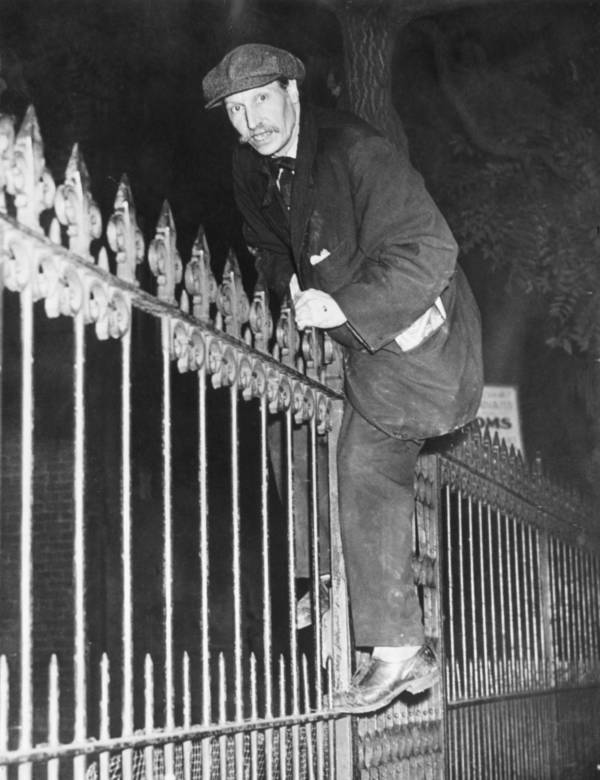
ALLTHATSINTERESTING.COMThe Collyer Brothers, The New York City Hoarders Found Dead In 1947 Surrounded By 120 Tons Of RubbishClick here to view slideshowOn March 21, 1947, an anonymous caller notified New York's 122nd Police Precinct about the smell of decomposition emanating from the dilapidated house at 2078 5th Avenue. It belonged to the Collyer brothers, Homer and Langley, and who were known to be eccentric and reclusive.An officer was dispatched to investigate but, upon arriving at the property, couldn't find a way inside. The doors were locked, there was no doorbell, and the basement windows, through broken, were reinforced with iron bars. The officer called for backup, but even once the men got inside, they found themselves facing a vertible fortress of debris.Indeed, the Collyer brothers' foyer was packed with newspapers, boxes, and a melange of other items, including chairs, half a sewing machine, and part of a wine press. Officers ultimately broke through a second story window, only to find more debris. With no other choice, they started to dig.Hours later, they came across the body of Homer Collyer. But it would take them weeks to find the remains of Langley.This is the strange story of the Collyer brothers, the infamous Harlem hoarders.How The Collyer Brothers Became ReclusesThe sons of Herman Livingston Collyer and Susie Gage Frost Collyer, the Collyer brothers were born in the 1880s. Homer Lusk Collyer was born on Nov. 6, 1881, and his brother Langley Wakeman Collyer was born roughly four years later, on Oct. 3, 1885. As The New York Times reports, their father was a prominent gynecologist; their mother was an opera singer. FPG/Getty ImagesLangley Collyer caught climbing over a fence. Location unspecified. 1935.Both the Collyer brothers attended Columbia University. Homer studied law; Langley became a pianist who performed at Carnegie Hall. Meanwhile, their parents bought the brownstone at 2078 5th Avenue in 1909, and when Herman and Susie separated, Susie took over the property. Her sons lived with her and, when their parents died, they inherited her home. Though they filled the brownstone with books and their father's old medical equipment, the Collyer brothers didn't start hoarding objects until the 1930s. Then, in 1932, Homer suffered a stroke that caused him to go blind. Langley devoted himself to taking care of Homer and the brothers slowly but surely withdrew from the world.How The Collyer Brothers Started HoardingAs the sons of a doctor, the Collyer brothers believed they knew best when it came to Homer's care. Langley fed his brother a diet of 100 oranges a week, alongside black bread and peanut butter, which he claimed would cure Homer's blindness. Langley also saved newspapers, so that when Homer's sight was restored, he could read them. Homer never again left the house. Langley left only occasionally, usually to forage for food. Meanwhile, they survived without any of the basic necessities, as their gas, water, and electricity had been cut off because they failed to pay the bills. Langley fetched water from local parks, and the brothers otherwise relied on a kerosene stove and lamp. "We've no telephone, and we've stopped opening our mail," Langley Collyer told a reporter in 1939, according to The New York Times. "You can't imagine how free we feel."Bettmann/Contributor/Getty ImagesLangley Collyer shouting from his window. September 28, 1942.Indeed, the Collyer brothers were no longer interacting with the outside world but Langley Collyer increasingly brought the inside world to them. He began hoarding items including baby carriages, rusted bikes, records, empty bottles, and tin cans. He also bought unused instruments, books, and fabrics, and Langley continued to collect newspapers. And their behavior soon attracted notice. In 1939, Con Edison workers forced their way into the brownstone to collect two old gas meters, an event which attracted hundreds of spectators. In 1942, when the Collyer brothers failed to pay their mortgage, the police arrived, only for Langley to quickly hand them a check for $6,700 (more than $130,000 today). Local boys started throwing stones at the brownstone and Langley's paranoia about the neighborhood (which had begun to transition from white to Black) increased. He responded by wearing shabby clothing outdoors ("They would rob me if I didn't.") and filling the brownstone with elaborate booby traps.Eventually, these traps are precisely what did him in.The Sad End Of The Infamous HoardersOn March 21, 1947, police found the body of Homer Collyer after an anonymous caller notified them of a bad smell emanating from the property. He'd been dead, of starvation and heart disease, for approximately ten hours. Initially, police suspected that Langley who had seemingly vanished had anonymously called police, possibly after killing Homer, and then skipped town. Indeed, rumors began to spread that Langley had fled the scene of the crime and boarded a bus to Atlantic City.But police needed to be sure that Langley Collyer was not still in the building. So, they started to clean it out.Bettmann/Contributor/Getty ImagesThe Collyer brothers' home was packed with debris."The second day of the police search through the Collyer home at 2078 Fifth Avenue produced five tons of assorted junk and a sick cat yesterday, but no sign of Langley Collyer, missing since Thursday," The New York Times reported at the time. "The police patiently started to work their way through the piled-up newspapers, furniture and cardboard boxes, but scarcely made a dent in the mountains of debris that almost completely fill the three-story brownstone house." In the end, they removed at least 120 tons of refuse, roughly the weight of a blue whale. The debris included toys, kitchen items, bowling balls, portraits, some 25,000 books, eight live cats, fourteen pianos, and more than $30,000. Not to mention stacks and stacks of old newspapers. Then, after nearly three weeks, police found the body of Langley Collyer. He seemingly tripped over one of his own booby traps, which buried him in a mountain of debris. Langley died less than ten feet from his brother. Police believed that it was his remains, and not Homer's, which were actually the source of the smell of decomposition. Six months after the Collyer brothers died, their house was torn down. Today, all that remains of their memory in is a tiny park in Harlem, the Collyer Brothers Park. Jim.henderson/Wikimedia CommonsThough their house is long gone, the Collyer brothers are remembered in Harlem, thanks to a small neighborhood park that bears their name."Sometimes history is written by accident," Parks Commissioner Adrian Benepe told The New York Times. "Not all history is pretty and many New York children were admonished by their parents to clean their room 'or else you'll end up like the Collyer brothers.'"After reading about the Collyer brothers, the infamous hoarders of Harlem, read the tale of "Dead Shot Mary" Shanley, one of the first female police officers in New York City. Then, look through these 55 heartbreaking images of New York during the Great Depression.The post The Collyer Brothers, The New York City Hoarders Found Dead In 1947 Surrounded By 120 Tons Of Rubbish appeared first on All That's Interesting.0 Commenti 0 condivisioni 2 Views -
After installation, players seeking instant resources can visit trusted game trading hubs like LootBar for a seamless Arknights: Endfield top up(https://www.lootbar.com/top-up/arknights-endfield?utm_source=blog ) , ensuring you’re supplied from day one on the moon.
LootBar: The Best Platform for Arknights: Endfield Recharge
If players want to top up Arknights: Endfield, they may want to consider the lootbar(https://www.lootbar.com/?utm_source=blog ) game trading platform, or simply lootbar. This global hub for Arknights: Endfield recharge(https://www.lootbar.com/top-up/arknights-endfield?utm_source=blog ) distinguishes itself with a secure and flexible payment ecosystem, supporting over 60 methods like PayPal and Visa, all shielded by bank-grade encryption. Every Origeometry top-up is procAfter installation, players seeking instant resources can visit trusted game trading hubs like LootBar for a seamless Arknights: Endfield top up(https://www.lootbar.com/top-up/arknights-endfield?utm_source=blog ) , ensuring you’re supplied from day one on the moon. LootBar: The Best Platform for Arknights: Endfield Recharge If players want to top up Arknights: Endfield, they may want to consider the lootbar(https://www.lootbar.com/?utm_source=blog ) game trading platform, or simply lootbar. This global hub for Arknights: Endfield recharge(https://www.lootbar.com/top-up/arknights-endfield?utm_source=blog ) distinguishes itself with a secure and flexible payment ecosystem, supporting over 60 methods like PayPal and Visa, all shielded by bank-grade encryption. Every Origeometry top-up is proc0 Commenti 0 condivisioni 2 Views