How the Second Sino-Japanese War Shaped East Asia
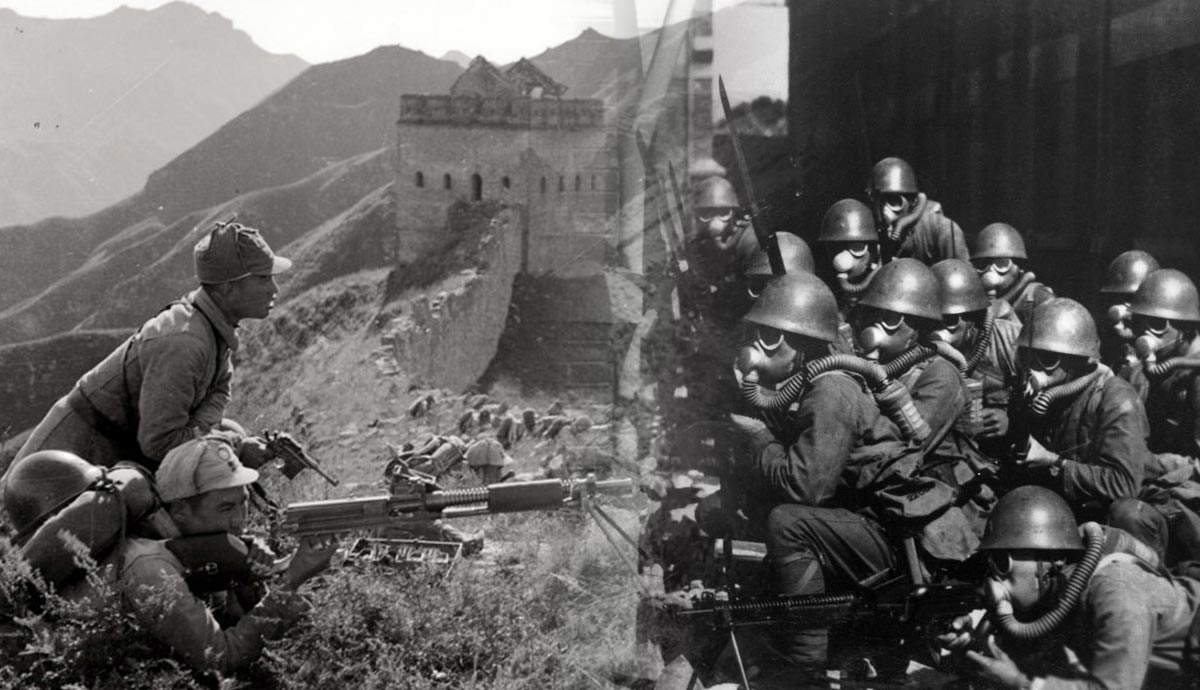
Starting in 1937 and ending almost ten years later, the Second Sino-Japanese War was a devastating conflict. Not only did millions lose their lives, but it also reshaped the inherent political and social structures of East Asia for generations to come. The brutal struggle between Japan and China merged into the global context of World War II and left behind a devastating legacy of inhumane atrocities and unspeakable war crimes that are still debated in Asia today. From the Mukden incident to Operation Ichi-Go, this is the story of the Second Sino-Japanese War.The First Sino-Japanese War and Japans Colonial AmbitionsPeace Conference at Shimonoseki by Nagatochi Hideta 1929. Source: Wikimedia CommonsThe causes of the Second Sino-Japanese War can be traced back to the early 19th and 20th centuries. This was a period characterized by the modernization of Japanese society, which occurred in parallel to Chinese internal conflicts and a decline in its regional influence. Moreover, during the late 19th century, the restoration of the Meiji Emperor in Japan triggered a movement of nationalist expansion that led to an inevitable conflict with major East Asian powers, particularly Qing Dynasty China.A key milestone in Japans expansionist policies was the First Sino-Japanese War, which began in 1894 and ended a year later. This was a brief conflict that saw the newly modernized Japanese military roundly defeat Chinese forces to gain a foothold in Korea. The war ended with the treaty of Shimonoseki which granted Japan de-facto control over the island of Taiwan, increased influence in Korea, and paved the way for the realization of Japans colonial ambitions.With the treaty of Shimonoseki, Japanese diplomats had initially intended to seize control of large areas of Chinas Liaodong Peninsula in order to gain a foothold in the resource-rich region of Manchuria. However, this was prevented by the intervention of other powers, notably Russia, who saw this as an unacceptable encroachment on Chinas national borders. Nevertheless, after Moscows defeat in the Russo-Japanese War (1904-1905), Japan secured a foothold in the Liaodong Peninsula, which allowed them to begin exploiting the region.Japans Invasion of Manchuria and the Marco Polo Bridge IncidentJapanese experts inspect the scene of the railway sabotage on the South Manchurian Railway, 1931. Source: Wikimedia CommonsThe Mukden Incident in 1931, Japans subsequent military intervention, and the Marco Polo bridge incident that followed in 1937 were three major events that led to the Second Sino-Japanese War. The South Manchuria Railway was the focal point of the Mukden Incident. On September 18, 1931, just outside present-day Shenyang, a section of the railway track was damaged in an explosion. Today, new evidence has come to light that officers in Japans Kwantung Army, the military force guarding Tokyos interests in Manchuria, had planned the bombing as a pretext for an invasion of Manchuria.After the bombing, the Kwantung Army quickly seized Mukden and other key locations in Manchuria under the pretext that they were looking for those responsible for the explosion. Little resistance was put up by the Chinese forces, who were unprepared for a full-scale invasion and were taken by surprise. Japanese forces seized control of several strategic sites in a matter of days, and Japans occupation of Manchuria began.The Second Sino-Japanese War officially began with the Marco Polo Bridge Incident, which took place on July 7, 1937. Under the pretense of conducting military exercises, the Japanese forces had moved into a position near the Marco Polo Bridge, just outside modern-day Beijing. After a Japanese soldier was allegedly reported missing, the Japanese army petitioned the Chinese garrison stationed at the town of Wanping for permission to search the area. They refused. What followed was an intense exchange of gunfire that rapidly escalated into an all-out war.The Chinese Response to Japans InvasionChinese soldiers in position on the Great Wall, photographed by Sha Fei, 1938. Source: Wikimedia CommonsWhile the internal political tensions in China had led to a fractured and nationally discordant response to Japans initial provocations in Manchuria, at the outset of the war, the Chinese Communist and Nationalist forces soon set aside their differences and formed a united front to fight the invading Japanese military. This Second United Front between the forces of the ruling Kuomintang and the Chinese Communist Party allowed China to assemble a coordinated defense against the highly aggressive and modernized Japanese army.To better defend against the Japanese forces, the Chinese Nationalist Government led by Chiang Kai-Shek ceded a number of key territories to Japan in order to give the defending forces more time to gather resources and organize a resistance. The Communist forces of China mobilized the peasantry into a nationwide resistance movement that employed guerilla tactics against Japanese forces as they moved across Japan. These two differing approaches to the Japanese assault proved vital in slowing down Tokyos forces. However, the guerilla tactics of the Communist forces greatly increased the popularity of Mao Zedongs forces among the people of China and would have lasting consequences long after the war.How the International Community Responded to the WarThe League of Nations in 1920. Source: National Library of NorwayIn contrast to the muted international response during the First Sino-Japanese War, the second conflict quickly drew the attention of the international community, which saw Japans invasion as a brazen assault against Chinese sovereignty. A key ally of China was the Soviet Union, which, under the Sino-Soviet Non-Aggression Pact, sent advisors, equipment, and financial support to help Chinas war effort.The United States also shifted its traditionally neutral stance and began to become more actively involved in Chinas war effort. Under the Lend-Lease program, the Roosevelt administration provided China with considerable economic and military aid. Moreover, a group of American volunteer fighter pilots known as the Flying Tigers helped the Chinese defend their airspace against Japanese assaults.The British Empire, increasingly threatened by Japans encroachment upon its imperial possessions within Asia and beyond, also lent considerable support to Chinas nationalist government. Moreover, through the use of economic sanctions, Britain and its allies attempted to isolate Japan and weaken their war effort in East Asia. However, faced with increasing isolation, Tokyo sought alliances with the Fascist governments of Germany and Italy, forming the Tripartite Pact in 1940. This pact essentially galvanized the three nations as the Axis powers in opposition to those aiding Chinas military. In 1941, after Japans surprise attack at Pearl Harbor, the United States entered World War II and officially declared war on Japan. As a result, the Second Sino-Japanese War became a part of the wider China-Burma-India Theater of World War II.Major Battles of the Second Sino-Japanese WarJapanese Navy troops during the Battle of Shanghai, 1937. Source: Wikimedia CommonsBetween 1937 and 1942, the Second Sino-Japanese War was fought in a series of fierce battles that saw Chinese forces fend off the aggressive and highly modernized Japanese military. After their early victories at the Battle of Shanghai in late 1937 and at the Battle of Xuzhou in May 1938, the Japanese continued their momentum with a string of military conquests in the province of Wuhan as well as Zaoyang-Yichang.To combat Japans rapid advance across China, the Chinese Communist Forces led by Mao Zedong launched the Hundred Regiments offensive in the middle of 1940. This underground assault was designed to sabotage Japanese railways and infrastructure in the occupied areas of China. While initially successful, Japanese forces responded to these guerrilla attacks with brutal reprisals against the civilian population and the massacre of Chinese prisoners of war.Perhaps the most brutal and oppressive episode during the Second Sino-Japanese War was the Battle of Nanjing and the subsequent massacre of the civilian population by Japanese forces. The Nanjing Massacre, also known as the Rape of Nanjing, took place over the course of six weeks and resulted in the deaths of approximately 300,000 Chinese civilians and POWs. Almost a century later, the actions of the Japanese military during their occupation of Nanjing remain a contentious issue in modern Sino-Japanese diplomatic relations, with Beijing frequently accusing Tokyo of attempting to carry out mass genocide.China Under Japanese Military RuleThe Japanese Army occupies Beijing, 1937. Source: Wikimedia CommonsWhile the atrocities of the Nanjing Massacre remain the most horrific example of Japanese violence during the Second Sino-Japanese War, life in the areas occupied by Tokyos forces was just as brutal. Major cities such as Beijing and Shanghai were ruled by the Japanese military with an iron fist. Daily life was strictly controlled, natural resources were exploited, and the murder of civilians was commonplace.In parts of occupied China, the Japanese military went so far as to adopt a scorched earth policy known as the three alls. This policy encouraged Japanese troops to loot, burn, and kill everything Chinese which they came into contact with. The result of this policy was mass civilian casualties as well as widespread poverty and famine.To legitimize their occupation of China, the Japanese set up a number of puppet states to increase compliance among the local population and suppress dissent. In Manchuria, the puppet state of Manchukuo was formed in 1932. The former Qing Emperor of China, Pu Yi, who had been ousted from power in the 1911 revolution, was made the leader of the newly created nation. Moreover, in Eastern China, the Reorganized National Government of the Republic of China, commonly known as the Wang Jingwei regime, was set up under the dictatorship of a former Chinese general, Wang Jingwei.Operation Ichi-Go and Japans RetreatSoviet troops liberate Harbin, 1945. Source: Public Domain / Warfare History NetworkA turning point in the Second Sino-Japanese War came in 1944 when Japan launched Operation Ichi-Go. The operation was planned as the largest military offensive of the war and aimed to capture key infrastructure in Southern China to hamper Beijings war effort. However, the sheer scale of Operation Ichi-Go stretched supply lines across a vast area and left Tokyos forces dangerously overextended, a vulnerability that China and the newly arrived Allied forces exploited to great effect.In response to Operation Ichi-Go, from late 1944 until 1945, Chinese Nationalist and Communist forces, bolstered by Allied supplies, mounted a series of successful counter-offensives against the overextended Japanese forces. After serious losses at Hubei, Hunan, and Tancheng, the Japanese position in China became increasingly unstable. Tokyos position became untenable not long afterward when the United States dropped atomic bombs on Hiroshima and Nagasaki, and the Soviet Union invaded Manchuria.The End of the Second Sino-Japanese WarJapanese Foreign Minister Mamoru Shigemitsu signs the Instrument of Surrender on behalf of the Japanese Government, 1945. Source: Naval History and Heritage Command / Wikimedia CommonsAfter years of brutal conflict, the Second Sino-Japanese War officially came to an end on September 2, 1945. However, victory was not celebrated in Beijing for long; China was devastated by the war, and the internal division that had been put on hold to fight the Japanese soon became impossible to ignore. From 1946 to 1949, the Chinese Civil War between Communist and Nationalist forces was fought bitterly across the nation until Mao Zedongs forces emerged victorious and declared the Peoples Republic of China in 1949.In the broader context of East Asian political history, the atrocities committed by the Japanese military during the Second Sino-Japanese War left a lasting effect on the diplomatic relations between the two nations. Despite recent efforts to resolve the wounds inflicted by Japanese troops during the war, there still remains deeply held animosities between Beijing and Tokyo.







 English
 Arabic
 French
 Spanish
 Portuguese
 Deutsch
 Turkish
 Dutch
Dutch
 Russian
 Romaian
 Portuguese (Brazil)
 Greek
Greek