


Living Cement: The Microbes In Your Walls Could Power The Future
Living Cement: The Microbes In Your Walls Could Power The Future
Cement has long been seen as one of the world’s dullest but most essential building materials. Sturdy and gray, this material can be found everywhere in cities, such as in roads, buildings, and statues. And now, scientists have found a way to engineer “living cement” with the ability to store energy.
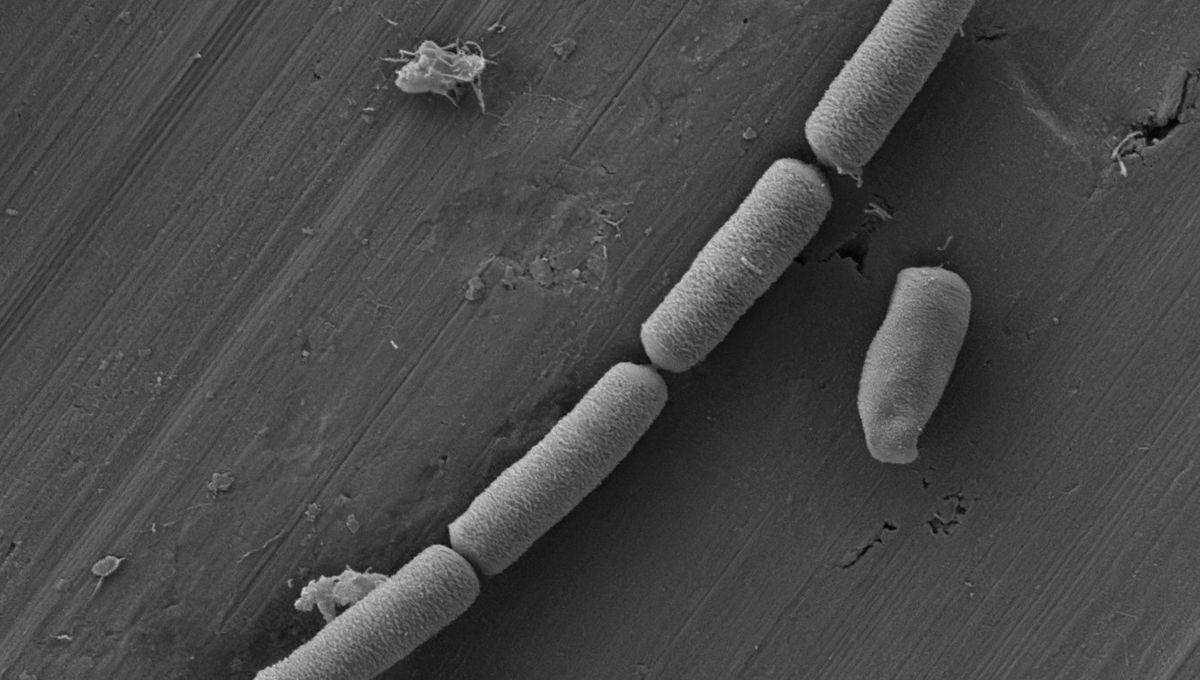
The rest of this article is behind a paywall. Please sign in or subscribe to access the full content. A team of researchers from Aarhus University and Chongqing Jiaotong University has successfully embedded the bacterium Shewanella oneidensis into hardened cement, creating what they describe as a “microbial-cement hybrid.” This living material does more than hold up buildings – it can act as a rechargeable energy storage system. This breakthrough points toward a future where the materials that make up our cities might also help power them. “We’ve combined structure with function,” said Qi Luo, lead researcher, in a statement. “The result is a new kind of material that can both bear loads and store energy – and which is capable of regaining its performance when supplied with nutrients.” The living cement was made by adding sodium sulfate powder (tasty electrolyte for the bacteria) into cement, and then adding the bacteria diluted in sterile deionized water. The cement slurry was poured into molds and cured at room temperature for 24 hours. S. oneidensis is an electroactive microorganism. This means it is a champion in the world of electron transfer, and it can naturally move electrons across surfaces like a biological conductor. By mixing these microbes with cement, the bacteria build an interconnected system that manages electrical charges. This living cement achieves 178.7 watt-hours per kilogram (Wh/kg) energy density. To understand the bigger picture, an LED lightbulb typically uses 4-18 W. So, one kilogram (2.2 pounds) of this new cement can power up to 44 LED lightbulbs. That’s a lot of energy produced by microscopic bacteria. After 10,000 cycles of energy usage, the cement was still able to retain 85 percent of its capacity, showing its potential for long-term use. However, like all living things, the bacteria can die. The researchers used tiny channels within the cement to supply nutrients to the bacteria and were able to revive the bacteria with 80 percent of the original capacity. This is a distinct leap from conventional batteries or passive energy storage, because the process is renewable, regenerative, and doesn’t rely on toxic heavy metals. Good news for sustainability and the environment. The living concrete remained functional under a wide range of conditions. Temperature tests showed that charge storage continued both at subzero temperatures (-15°C/5°F) and in typical room-temperature environments (20°C to 33°C/68°F to 91.4°F). This resilience could make microbial cement an attractive candidate for real-world applications, from cold climates to city centers. “This isn’t just a lab experiment,” said Qi Luo. “We envision this technology being integrated into real buildings, in walls, foundations, or bridges, where it can support renewable energy sources like solar panels by providing local energy storage. Imagine a regular room built with bacteria-infused cement: even at a modest energy density of 5 Wh/kg, the walls alone could store about 10 kWh - enough to keep a standard enterprise server running for a whole day.” While the concept is exciting, it’s far from ready to roll out into construction sites. Cement’s natural alkalinity poses a tough challenge for microbial survival, and the performance of electroactive microorganisms is sensitive to environmental conditions. Over time, microbes might decline or lose functionality, raising questions about longevity and reliability. The researchers are suggesting possible solutions such as engineering hardier microbial strains and tweaking cement’s porosity for better nutrient flow. The concept of “living cement” brings sustainable building materials one step closer to reality, blending biology and engineering for a future where the very walls around us could power the technologies inside. What a world to live in. This study is published in Cell Reports Physical Science.

 English
 Arabic
 Spanish
 Portuguese
 Deutsch
 Turkish
 Dutch
Dutch
 Italiano
 Russian
 Romaian
 Portuguese (Brazil)
 Greek
Greek