


Silky Anteater: The World’s Smallest Anteater Pulls Out A Surprising Power Move When Threatened
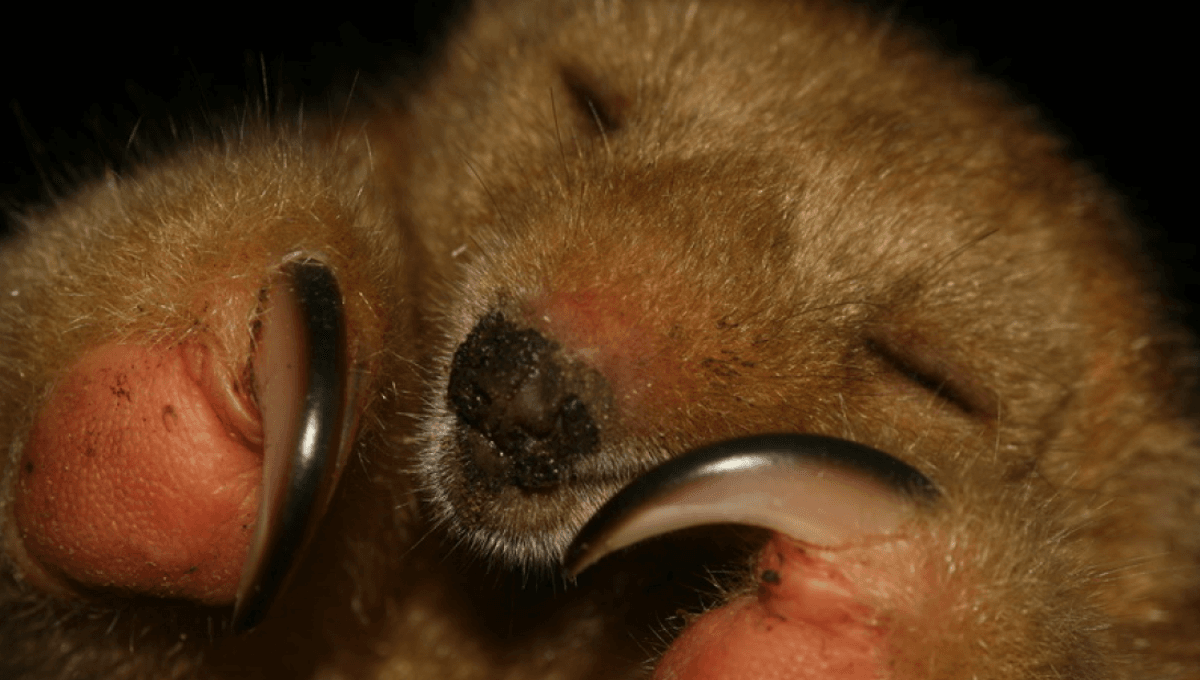
The Silky Anteater Is The World’s Smallest Anteater, But Don’t Be Fooled – It’s Surprisingly Badass
Rainforest life can be harsh. Sometimes, even for the predators, survival all comes down to how well you can hide. That’s certainly the case for silky anteaters, considered to be the world’s smallest anteaters, but these tiny, elusive hunters have a couple of tricks up their sleeves.
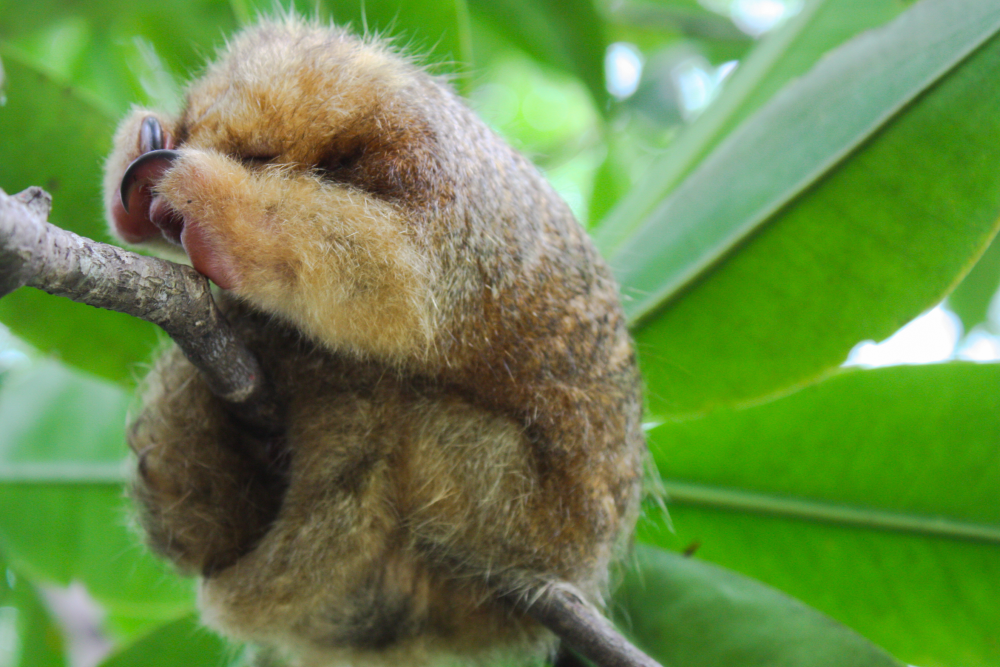
Unthinkably adorable with golden fuzzy fur, they hardly look fit for life out in the wild, but get on the wrong side of them and you’ll find yourself facing down two fierce claws. You might not have heard of them before, but be warned: you underestimate the silky anteater at your peril. Silky anteaters are elusive animals that like to spend their days snoozing, curled up in a ball hidden beneath tangles of vegetation. As such, they eluded close scientific study for some time, but we are slowly piecing together the puzzle of exactly what silky anteaters are, and where they live. Populations of silky anteaters have been found in Central and South America, from Southern Mexico to Brazil. In parts of the Amazon, silky anteaters are known as osito oro, or "tiny golden bear", but they’re not actually bears at all. So, what are they? Also know as pygmy anteaters, silky anteaters were once thought to represent just one known species: Cyclopes didactylus. However, scientists studying these little-known creatures noticed there were subtle differences between populations. A decade-long investigation gathered samples from 33 silky anteaters and examined 287 specimens of Cyclopes, including skins and skulls, housed in 20 natural history collections and 33 samples for molecular analysis. The results revealed that not only were the populations significantly different, but that there appears to be enough variation to support as many as seven different species. Unfortunately, now that we've identified the unique groups, we've also been able to identify which are at the most risk of extinction. “The results presented here have clear implications for the conservation status and management practices of the genus Cyclopes,” wrote the authors. “Although general deforestation is taking place over many parts of its range, Cyclopes remains widespread in the Amazon Basin.” “Some particular areas, such as the Madeira and Xingu regions of Brazilian Amazon, are subject to a more intensive exploration. These areas have faced an increasing pressure from large monocultures (particularly soybean and sugarcane) and livestock, especially in its southeastern range, resulting in locally high deforestation rates,” the authors continue. “In addition, wildfires, illegal roads, logging activities, mineral prospecting, subsistence hunting and the lack of proper sanitation and health care further increase the pressure on natural habitats, consequently increasing the risk of decline of the populations of C. rufus and C. xinguensis.” A silky anteater in ball formation. Image credit: Gypsy Sleuth Travel/Shutterstock.com Silky anteaters are masters at navigating their environment as they go in search of prey, eating up to 5,000 ants a day. They have evolved to meet the pressures of rainforest life, with a prehensile tail that’s longer than their body and can grab onto branches for stability. Something that comes in particularly handy when predators come knocking. Silky anteaters have very unusual forelimbs that, in place of a hand with digits, look like two pads topped with a singular, enormous claw. They use this to rip open ant, wasp, and termite nests, but also as a defense mechanism. When threatened, silky anteaters will rear up on their hind legs using their tails for support and assume a boxing position, squaring up to anyone who gets too close. Sounds pretty threatening, right? That is, until you learn that a silky anteater’s body is just 20 centimeters (7.9 inches) long with a tail around 16.5 to 29.5 centimeters (6.5 to 11.6 inches). Weighing between 155 and 275 grams (5.5 to 9.7 ounces) makes them swooping-size for predatory birds like harpy eagles, eagle hawks, and spectacled owls, hence their love of hiding. That such a small, fuzzy creature can live in the forest just goes to show that survival comes down to a lot more than incredible size or strength, and remember: it's all about perspective. To us, they look weeny and adorable, but to an ant, silky anteaters must look terrifying.Where do silky anteaters live?
What are silky anteaters?
Silky anteater habitat
Silk anteater size

 English
 Arabic
 French
 Spanish
 Portuguese
 Turkish
 Dutch
Dutch
 Italiano
 Russian
 Romaian
 Portuguese (Brazil)
 Greek
Greek