


Ole Schwander/Getty Images
We may receive a commission on purchases made from links.
You may have encountered boxed wine in the past. While perhaps not exactly the epitome of luxury and class, it has given many people a way to enjoy wine without shelling out big bucks for expensive vintage bottles. Just as you can now find affordable bottles of very decent wine, the quality of boxed wine has improved over the years. Don't believe us? Mashed spoke with Natalie MacLean, editor of www.nataliemaclean.com, winner of multiple awards in the world of wine writing and reviewing. If anyone were to know if boxed wines are worth drinking, it would be MacLean.
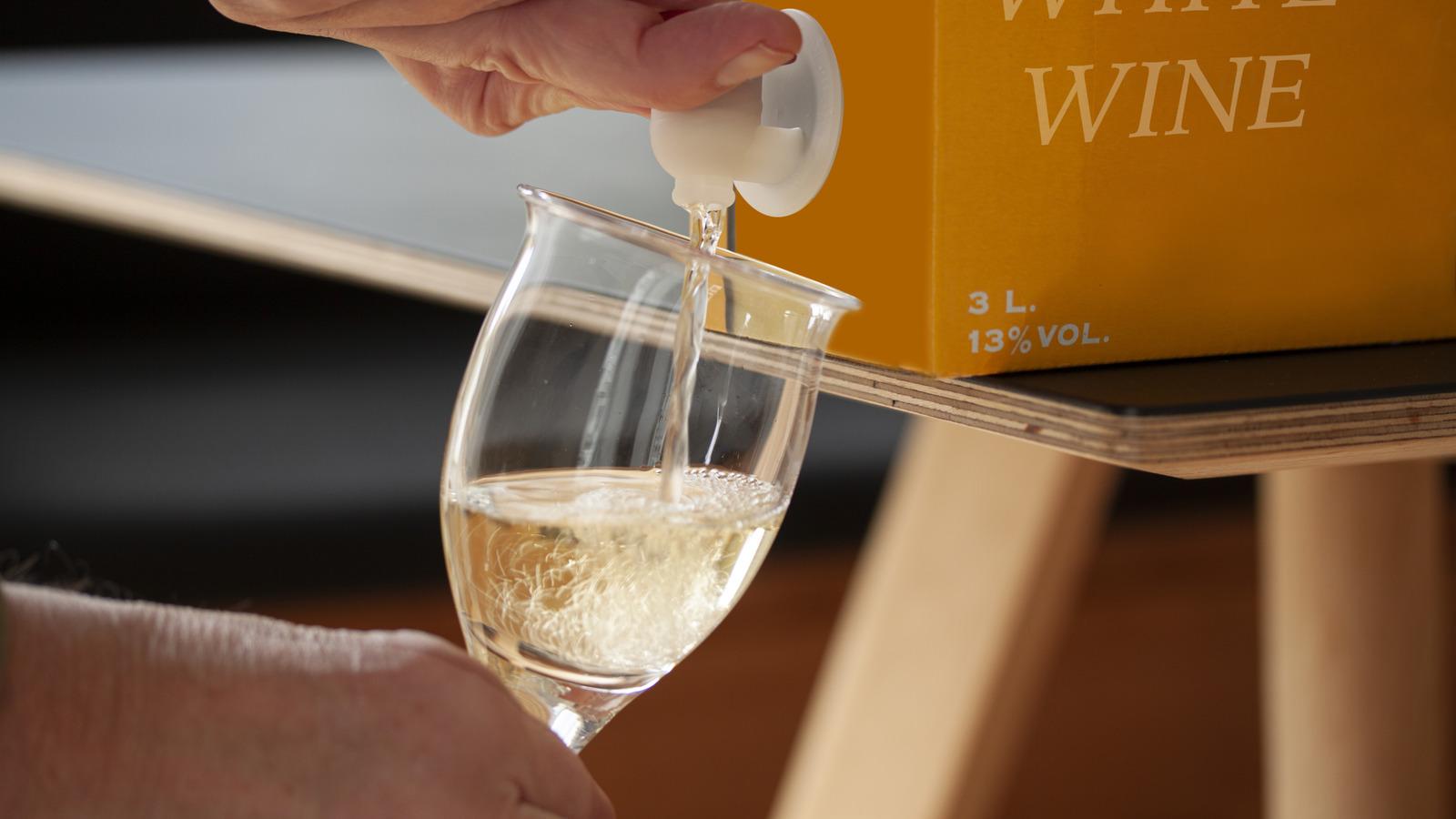
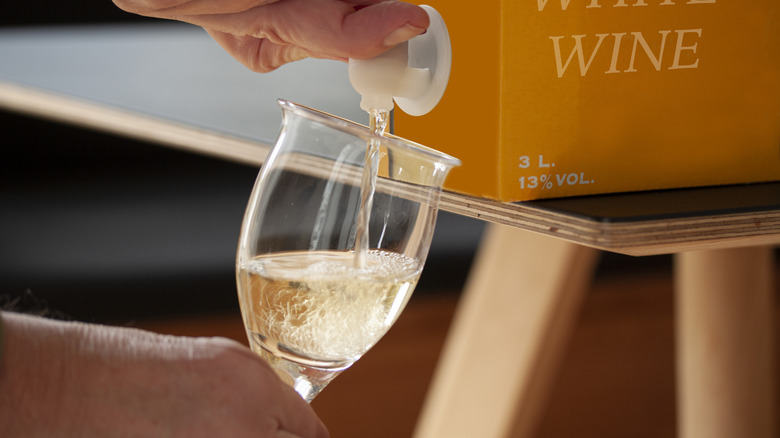
Boxed wine is also known as "bag-in-box" or "BIB". How it works is that there is a sort of "bladder" inside the box where the wine is packed. This bag is airtight, and when someone twists the tap to dispense the wine, ambient air pressure keeps the bag deflated as the wine pours out. MacLean points us in the direction of a fun fact she loves about the packaging's invention: "Boxed wine was patented by an Australian winemaker named Thomas Angove back in 1965. He borrowed the design from the bag-in-box that mechanics used to carry battery acid." The four ways MacLean identifies high quality in boxed wine are the presence of a best-by date, the fact that upper-tier boxed wines are on the market, the name of the grape (and region too) is on the box, and a good tap that is well sealed. Let's get into it one by one.
Look for the wine's best-by date
Renhue/Shutterstock
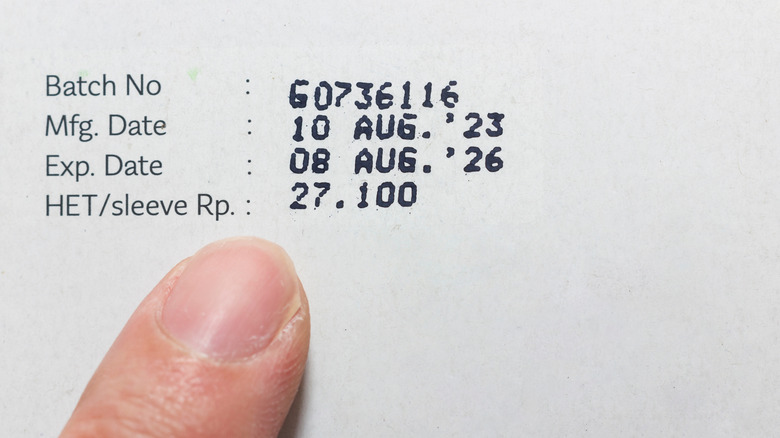
The first thing you should look for on a boxed wine label is its best-by date. While it may seem strange to treat wine the same way you would milk or fruit juice, most boxed wine is best consumed young, according to Natalie MacLean. This may break some mythical rule about wine, but an older wine does not necessarily make it better. Different wines serve different purposes. Some want something interesting to drink with their meals. Some want to explore wines produced in a specific year (also known as its "vintage"). But just as someone may prefer a fruitier wine to something with high tannins, many prefer young wines. Boxed wine is often made to be enjoyed within a year of purchase.
That said, like many other food items, boxed wine has a bit of a messy truth about expiration dates. Just because the label says it is within the best-by date does not necessarily mean it is still in peak condition. Look at other factors as well. MacLean warns, "If the box feels warm, or the label's faded from sun or heat damage, run far away." This is because wine can suffer from heat damage, making it taste sour. You could, however, experiment and turn the wine into wine vinegar — waste not, want not!
More upper-tier boxed wines are on the market
Franckreporter/Getty Images
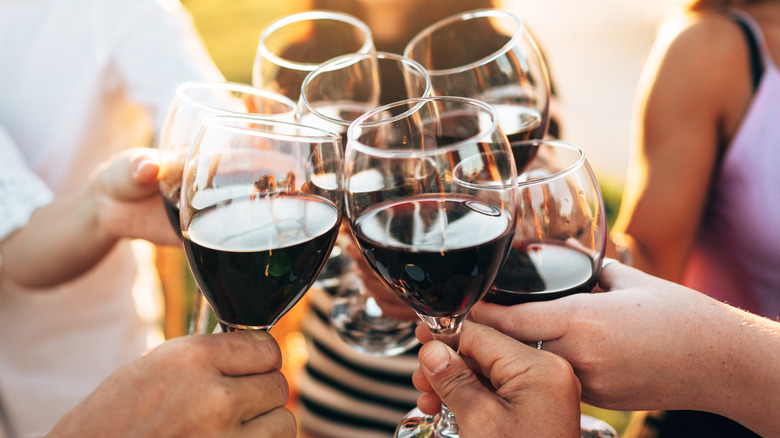
You may have felt slighted by boxed wine in the past, whether it be too sweet, too sour, or too much like jet fuel. But Natalie MacLean reassures us that "an increasing number of upper-tier boxed wines are entering the market." What that means is there is more choice than ever before, and "premium boxed" is a term that can actually be meaningful instead of just a marketing gimmick. For an everyday drink, MacLean recommends Bota Box, a brand out of Manteca, California. She sings the praises of its "terrific value, solid quality, and ripe dark fruit flavors." She also notes its affordability. Boxed wine often comes in 3-liter packaging, which works out to about four bottles per box. While you can generally get an affordable bottle of red wine for about $10, a 3-liter Bota Box costs $16.99 on Amazon, which is cheaper, easier to serve, and more environmentally friendly than a glass bottle.
Another boxed wine brand you can look out for is Kirkland Signature from Costco. Since we already know that name brands behind Costco's bottled wines are typically higher quality, you can trust that the boxed wines are worth a drink too. Just remember what MacLean says: "Even a good boxed wine can have a bad day, just like people." Issues during shipping and handling can compromise the quality of what is inside the box, but she recommends that you give it a second chance. "Try it again. If it lets you down twice, then forget it. Again, just like people."
Look for the name of the grape (and the region)
DUSAN ZIDAR/Shutterstock
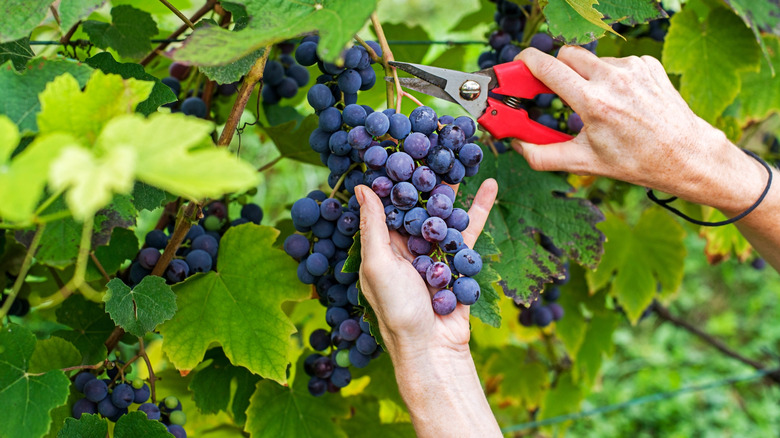
You probably know that the grapes used to make wine are not your normal store-bought variety. To that end, a good sign that the boxed wine is worth a try, is to see if the specific grape is named on the box or on marketing materials, like a website. Even wines that are made from different blends can (and should!) indicate the grapes used in the blend. Take La Vieille Ferme, for instance, also known as the "chicken wine" because of the illustrated hens on the label, with both boxed and bottled wines. La Vieille Ferme's white wine is a blend of Bourboulenc, Grenache blanc, Ugni blanc, and Vermentino, and Natalie MacLean recommends it as a "refreshing, lime-bright Rhône Valley white blend from France."
Speaking of the Rhône Valley and wine-producing regions, it is an even better sign if the region is noted on the box as well. For an option closer to home, MacLean recommends Jackson-Triggs, produced in Niagara-on-the-Lake, Ontario. Whether in a box or a bottle, the Canadian vineyard's Proprietor's Selection Pinot Grigio is "a crisp, easy-drinking white that's perfect for the deck, dock, or poolside," she describes.
Look at the tap for freshness
oleschwander/Shutterstock
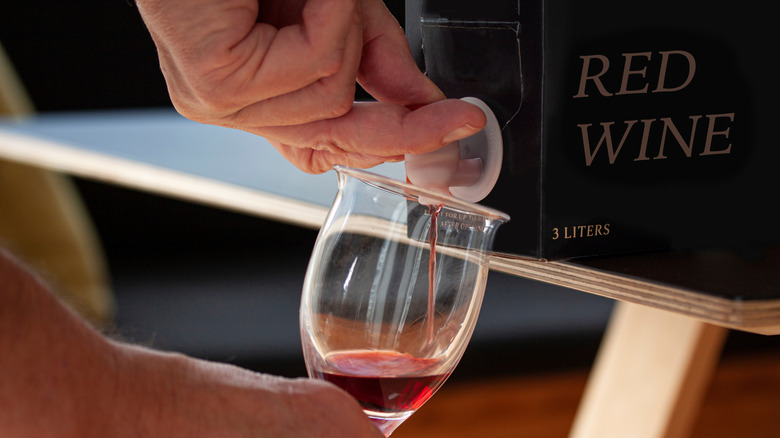
Natalie MacLean's last piece of advice for identifying quality boxed wine is to look at its tap. Granted, this is something you can only check for after purchasing the wine, but it is still important. Once you have opened the box at its designated perforations, pull out the tap and inspect it. If it is flimsy or leaking, it is a "no-go", says Maclean. Because of the bag-in-box's sealed design, it keeps the wine inside from oxidizing. Oxidized wine will both look and taste off; a red color will turn brown, for example, and it will taste vaguely vinegary.
On the subject of what you can only find out after you purchase wine, MacLean warns that "heavy sugar can mask a poorly made wine. Though if you like a sweet wine, then fill your boots, or your glasses." But if that seal is broken, the wine may turn even faster because of the sugar content, as the yeasts in wine love to feed on sugar. On the off-chance that the bag is leaking or the seal is broken, the reputable store where you bought it might be able to help with a refund or an exchange.
How to store and serve boxed wine
oleschwander/Shutterstock
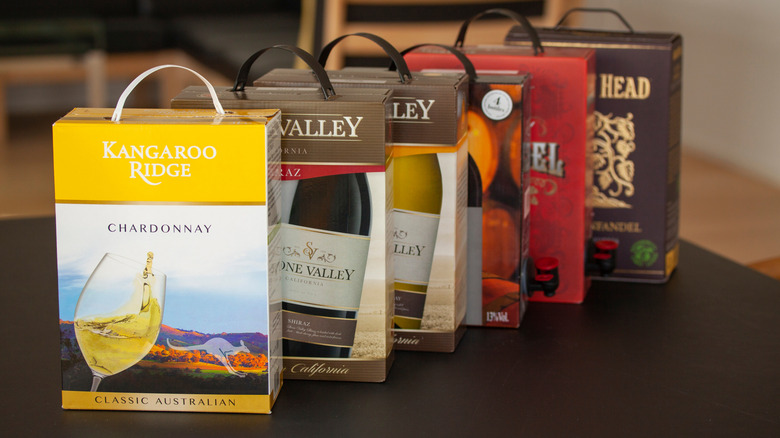
Now that you have researched, inspected, selected, and purchased your boxed wine, it is time to figure out how to store it at home. According to Natalie MacLean, storing boxed wine requires the same principles as storing bottled wine. That is to say, keep it in a cool and dark place away from heat and direct sunlight. You also need to avoid spaces prone to temperature swings, especially uninsulated spaces like the attic or the garage. "Just don't forget them because a box has a shorter shelf life," says MacLean, who recommends opening and drinking boxed wine within a few months of purchase.
What should you serve with boxed wine? Again, consider the same guidelines as you would with bottled wine. Different dishes pair better with different wines, so think about the meal you are going to serve. You should also pay attention to the temperature of the food, as it can affect the flavor of the wine. Once the bag-in-box is open, MacLean says to store the wine in the fridge, whether it is white, rosé, or even a red. While the seal at the tap will do what it can to prevent oxidation, MacLean notes that "cold slows down aging and oxidation" as well. For red wines, take the box out of the fridge about 20 minutes before serving so that it can warm up. Feel free to serve whites and rosés directly from the fridge, making it delightfully quick and easy to enjoy a glass with dinner.

 English
 Arabic
 French
 Spanish
 Portuguese
 Turkish
 Dutch
Dutch
 Italiano
 Russian
 Romaian
 Portuguese (Brazil)
 Greek
Greek