


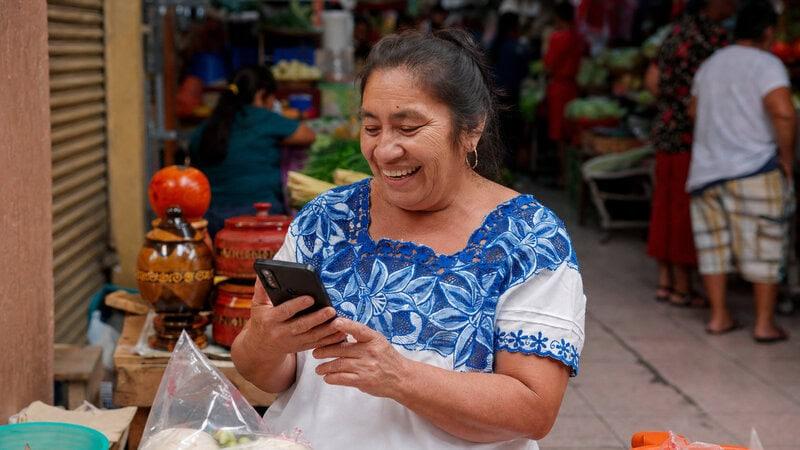

She is standing in the middle of a Mérida market in 2024, laughing at something on her phone, and she is speaking Yucatec Maya — a language older than the Roman Empire, older than the Colosseum, older than the concept of Europe itself. She types a reply, still in Maya, and sends it. The language that scholars once catalogued as dying is now traveling through satellites.
The Word That Infuriates Seven Million People

Every year, textbooks crack open to the same chapter. Documentaries queue up the same ominous narration. The Maya, they say, collapsed around 900 CE. Mysteriously. Inexplicably. Gone. And every year, roughly 7 million living Maya people — in Mexico, Guatemala, Belize, Honduras, and beyond — encounter that word and feel something between exhaustion and fury. Because collapse implies an ending. And they are very much not an ending.
The distinction that popular storytelling almost always loses is this: what historians are actually describing when they use the word “collapse” is a regional political and urban unraveling — the abandonment of specific southern lowland cities during a specific century. It was not the extinction of a people, a language, a religion, or a culture. It was not even, by most reasonable definitions, the end of Maya civilization. To understand why that difference matters so profoundly — to the historical record and to millions of living human beings — we have to start not at the alleged end, but at the very beginning: roughly 4,000 years ago, in the rainforests of Mesoamerica.
Four Thousand Years in the Making

Ancestral Maya society began forming around 2000 BCE. Pause on that number. When the first Maya communities were taking shape in the lowlands of what is now Guatemala and the Yucatán Peninsula, Egypt’s Middle Kingdom had barely ended. The Maya were already ancient by the time Rome was founded. They were ancient when the Greeks were composing the Iliad.
The Preclassic or Formative period — roughly 2000 BCE to 250 CE — was a slow, extraordinary ignition. Villages grew into towns and towns into cities. Trade networks stitched together communities separated by mountains and rivers. Sophisticated calendars emerged, carved from generations of careful naked-eye astronomical observation. This was not a civilization that appeared suddenly and vanished just as fast. It was one of the longest-running human experiments in urban life the world has ever seen.
The geographic reach of the Maya world was itself staggering. It stretched across what is now Guatemala, Belize, Honduras, El Salvador, and the southern states of Mexico — a mosaic of tropical rainforest, highland plateau, and Caribbean coastline. This was not a single homogeneous empire but a constellation of interconnected city-states, each adapting to its own terrain, each speaking its own dialect of a shared cultural language. National Geographic’s overview of Maya history describes this diversity as one of the civilization’s defining features — and one of the reasons simple narratives about it always fail.
Then, roughly 2,000 years ago, something happened that sets the Maya apart from virtually every other civilization in human history: they independently invented a fully functional writing system. Maya hieroglyphs — intricate, beautiful, ferociously complex — represent one of only a handful of writing systems ever created entirely from scratch, without borrowing from another tradition. That single achievement alone should place the Maya in the front rank of humanity’s intellectual accomplishments. That alone should make the word “collapsed” feel absurd.
The Classic Period: Forty Cities, Millions of People

The Maya Classic Period, running approximately from 250 CE to 900 CE, was the civilization’s extraordinary peak — six and a half centuries during which art, architecture, astronomy, and statecraft reached heights that would not be equaled in the Americas for generations. More than 40 cities flourished simultaneously, each housing between 5,000 and 50,000 people. They were connected by trade routes carrying jade, obsidian, cacao, and textiles; by political alliances sealed through royal marriages; and by shared ceremonial calendars that gave the whole vast network a common cultural rhythm.
Population estimates for the Classic Period suggest that up to 2 million people lived within the Maya world between 440 and 660 CE — a density that demanded sophisticated agriculture, elaborate water management systems, and layers of bureaucracy to sustain. This was not a society living lightly on the land. It was a society that had engineered the land itself, constructing raised fields in swampy lowlands, carving terraces into hillsides, and building reservoirs to survive the dry season.
At the symbolic heart of this era stood Tikal, in the Guatemalan lowlands — a city whose limestone pyramids punched above the rainforest canopy like stone fingers reaching for the sky. Tikal’s political reach touched cities hundreds of miles away. Its astronomers tracked the movements of Venus with documented precision. Its artisans produced stone carvings of such refinement that modern scholars still debate their meaning. If you want a single image to hold in mind when someone asks about Maya civilization at its peak, Tikal is that image: vast, green-draped, alive with the noise of a city that did not know it was supposed to disappear.
What Actually Happened Around 900 CE — And What Didn’t

Between roughly 800 and 950 CE, something real and serious did occur. The great cities of the southern lowlands — Tikal, Copán, Palenque — were gradually abandoned. New monument carving stopped. Populations relocated northward into the Yucatán and upward into the highlands. This was not nothing. It was a genuine, wrenching transformation, and researchers are still working to understand its full causes.
The leading explanations are not mysterious — they are sobering and recognizable. Prolonged drought cycles, revealed by isotopic signatures preserved in lake-bed sediment cores, placed severe stress on agricultural systems already pushed to their limits by centuries of intensive farming. Escalating warfare between rival city-states drained resources and destabilized political order. There is evidence, too, of social strain from below — the tensions that accumulate when elite classes extract too much from the people who feed them. The southern lowland cities may have been abandoned partly because ordinary people chose to stop sustaining them.
But here is the line the popular narrative consistently fails to draw: none of this describes the disappearance of Maya people. It describes the contraction of a particular political system in a particular region during a particular century. And while that contraction was unfolding in the south, something the documentaries rarely mention was happening in the north: Chichén Itzá and Uxmal in the Yucatán were entering their own periods of remarkable power and monumental construction. The Maya story did not end. It relocated and continued.
How a Colonial Fantasy Became a Textbook Fact

To understand why the collapse myth persists, you have to travel to 1839, when American explorer John Lloyd Stephens and British artist Frederick Catherwood hacked through Honduran jungle and stood before the ruins of Copán. Their subsequent bestselling account framed the ruins through an unmistakably colonial lens: a lost civilization, mysterious and vanished, with no living heirs. The ruins were romantically tragic precisely because they appeared to belong to no one — no one whose claims needed to be acknowledged or respected.
That framing calcified over the following century and a half into textbooks, museum exhibits, and eventually the internet’s endless appetite for “mysterious ancient civilizations.” Each retelling subtly reinforced the idea that the Maya were historical rather than contemporary, archaeological rather than political. The ideological convenience of this framing has not been lost on scholars or on Maya communities themselves. A people declared extinct cannot hold land. A culture declared dead cannot make claims on the present. The collapse narrative, whatever its origins in genuine archaeological puzzlement, has functioned as a tool of erasure — sometimes unconsciously, sometimes not.
Serious scholarship has been pushing back for decades. Researchers and Smithsonian programs dedicated to living Maya culture have worked to center the voices and demonstrated continuity of Maya communities alongside the stone record. Their argument is straightforward: the word “collapse” centers cities and elites while rendering invisible the millions of ordinary people who kept living, farming, speaking, and building — in smaller communities, yes, but without interruption. Archaeological and demographic research supports this reframing clearly.
Seven Million People Say Otherwise

Today, approximately 6 to 7 million people identify as Maya, speaking more than 30 distinct Maya languages across Mexico, Guatemala, Belize, and diaspora communities worldwide. Many of those languages are endangered — pressured by Spanish, by poverty, and by educational systems that historically punished children for speaking them. But endangered is not the same as dead, and communities across the region are fighting with remarkable energy to keep them alive. Language immersion schools, digital media produced in Maya languages, and legal challenges to monolingual education policies — this is not the behavior of a people who collapsed.
The cultural threads connecting modern Maya communities to the Classic Period are not merely metaphorical. They are concrete and specific. The 260-day ritual calendar — one of the civilization’s most remarkable intellectual creations — is still maintained by trained day-keepers in highland Guatemala, consulted for planting schedules, ceremonies, and the marking of life events. Jade still carries ceremonial significance. The agricultural system organized around maize, beans, and squash — the same system that fed the cities of the Classic Period — still structures the rhythm of many rural communities. Britannica’s entry on Maya people acknowledges this continuity explicitly, a meaningful recognition in reference literature that the Maya story has an active present tense.
Maya communities have also mounted sophisticated political campaigns that are inseparable from their identity as a continuous civilization. Land rights movements, campaigns for linguistic recognition in national school curricula, and constitutional protections for indigenous governance all leverage the unbroken presence of Maya people as their most powerful argument. We were here before the colonial state. We are here now. Our civilization did not end; it was interrupted, suppressed, and is now reasserting itself.
For millions of living people, the word “collapse” is not merely historically imprecise. It is an ongoing act of erasure — one they are actively, vocally, and increasingly effectively resisting.
Rewriting the Story We Tell About the Maya
The language shift that scholars and Maya advocates have been calling for — replacing “collapse” with “transformation” or “reorganization” — is not an exercise in political sensitivity. It is an exercise in accuracy. The evidence does not show a people disappearing. It shows a people changing, moving, adapting — as peoples have done across every continent and every century of human history.
Properly told, the Maya story is one of the most extraordinary in the human record. A civilization that raised dozens of cities in tropical jungle without iron tools or wheeled vehicles. That independently invented a fully functional writing system. That tracked the movements of Venus and calculated the length of the solar year with naked-eye precision that still commands the respect of modern astronomers. That survived not only agricultural stress and political fragmentation in the ninth century, but the far more violent ruptures of Spanish conquest, forced religious conversion, the deliberate burning of their written records, and centuries of colonial suppression — and came through all of it still speaking, still practicing, still present.
Think again of that woman in the Mérida market, speaking Yucatec Maya into her phone. She is not a relic. She is not a ghost. She is not a curiosity at the end of a tragic story. She is the latest chapter of a 4,000-year narrative that is still being written — in markets and courtrooms and classrooms and community radio stations and legislative chambers across southern Mexico and Central America.
The Maya didn’t collapse. They endured. And they would like the record corrected.

 Arabic
 French
 Spanish
 Portuguese
 Deutsch
 Turkish
 Dutch
Dutch
 Italiano
 Russian
 Romaian
 Portuguese (Brazil)
 Greek
Greek