


Tom Kelley Archive/Getty Images
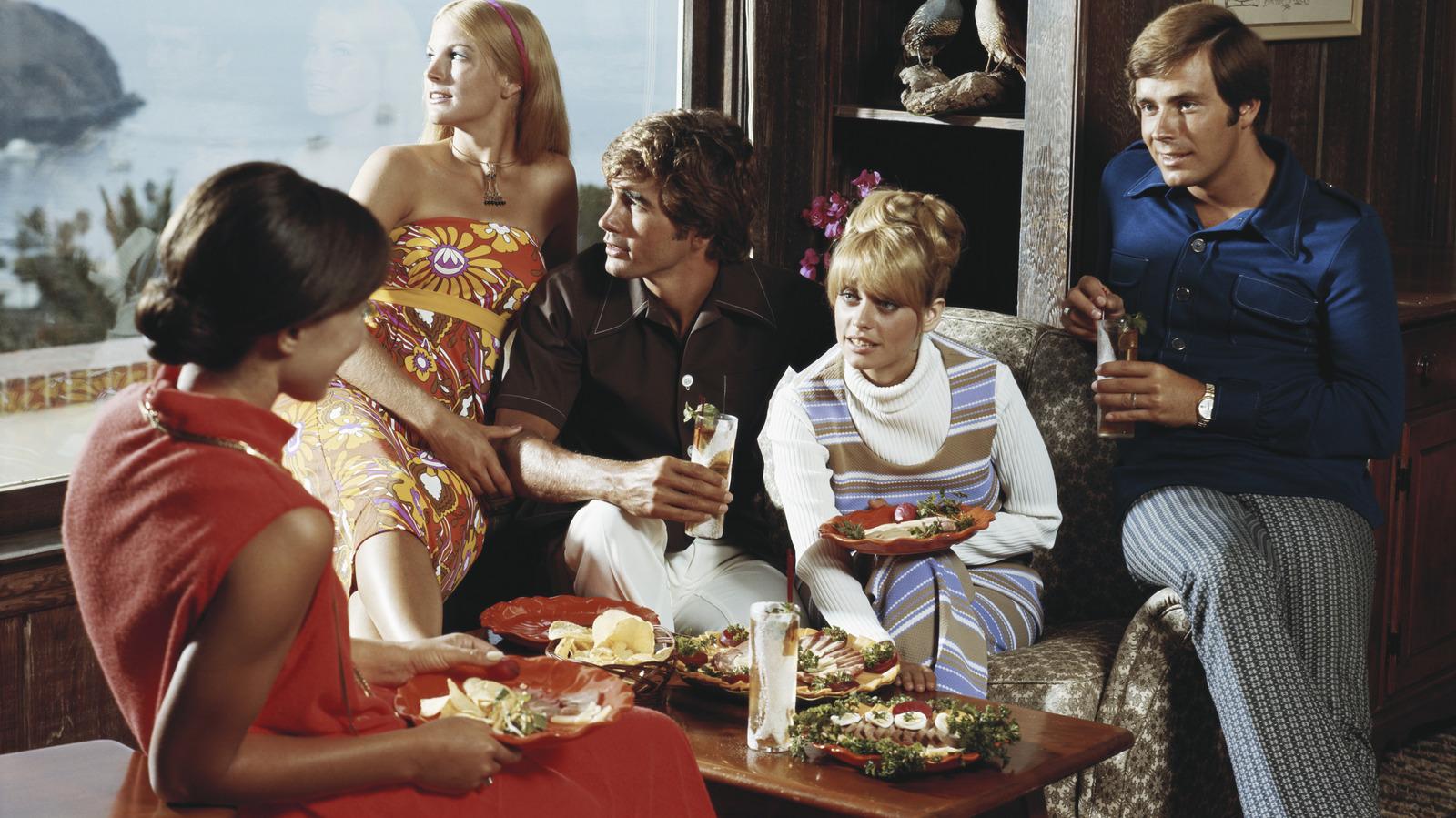
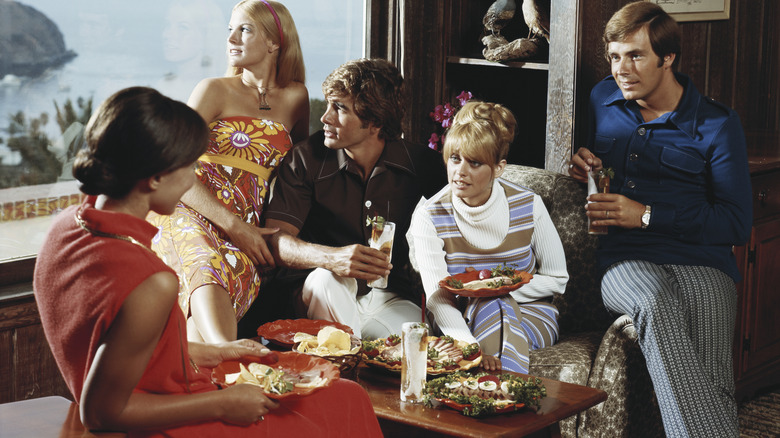
The 1970s can certainly be considered America's golden age of home entertaining. Dinner parties, cocktail hours, and backyard parties were an important part of the social lives of many — and of course, food played a central role at these gatherings.
While the entrée may be the centerpiece of the dinner party, the appetizers were the real stars of the show in the 1970s. They weren't just made as pre-meal snacks, either — they were an important component of entertaining that impressed guests, and satisfied their hunger at the same time.
Convenience, taste, and appearance all mattered when a dish rose to the top of a host's must-make list. Several recipes gained extreme popularity, and made regular appearances on buffet tables throughout the decade. Though some of these appetizers have since faded into obscurity, others have remained mainstays. Some of them have even made a comeback, like other pop culture items from this era of grooviness. Maybe you'll recognize some of these appetizers that were staples at 1970s parties.
Deviled eggs
Bhofack2/Getty Images
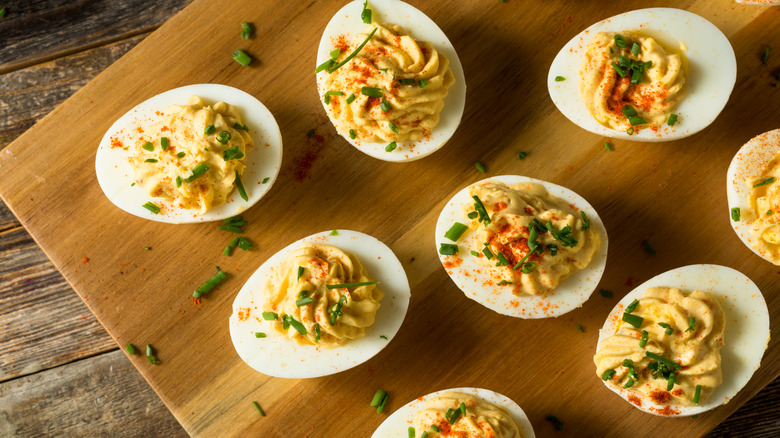
There are several reasons deviled eggs are a popular party food. They're handheld, versatile, and full of flavor. Though we can trace this iconic finger food's lengthy history to ancient Roman times, deviled eggs were introduced in the United States around the late 19th century. The appetizer's popularity started to take off in the 1950s and '60s, when people started putting mayonnaise in a lot of dishes.
The deviled egg has remained a top guest on the party circuit. Though eggs have increased in price, they were considered economical in the 1970s, making deviled eggs an inexpensive yet high-impact dish. Plus, classic deviled eggs only require a few ingredients, so they're fast and easy to whip up, too.
If you're looking to spice up your next party menu, you can get really creative with your deviled eggs. Instead of the usual dusting of paprika, consider topping your eggs with ingredients like pickled onion, capers, or even a dollop of crab dip. Not only can this add to the retro flair of the dish, but it also introduces some unexpected — and delicious — flavors.
Cheese balls
Photokitchen/Getty Images
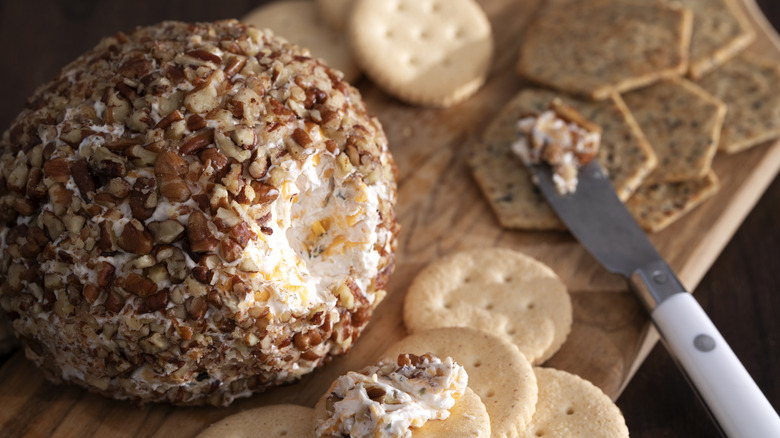
What is one of the best old-school snacks we all forgot about and need to bring back? The classic cheese ball. This memorable appetizer consists of creamy cheese that's been mixed with herbs and spices, and rolled into a ball, that is then rolled into chopped nuts, or other toppings. The finished product is usually plopped atop a serving platter, and surrounded by buttery crackers.
Though this dish is mostly associated with soirées of the '70s, the first variation on record was created in 1801 by the citizens of Cheshire, Massachusetts, as a gift for then President-elect Thomas Jefferson. The Mammoth Cheese, as it came to be called, was around 4 feet in diameter, with a 13-foot circumference. Of course, this gigantic cheese ball — which traveled over 500 miles to be eaten at The White House (over the next year!) — was most likely different from the ones we served in the '70s. Rather, the modern cheese ball entered the scene in a 1944 cookbook called "Food of My Friends." The recipe became ubiquitous in the decades that followed, showing up as an hors d'oeuvre at countless get-togethers.
Cheese balls may have fallen out of fashion for the most part, but some culinary experts say they are making a comeback. While the traditional recipe is a go-to classic, there are some reinvented recipes using updated ingredients that are giving the cheese ball a modern makeover.
Shrimp cocktail
Klsbear/Getty Images
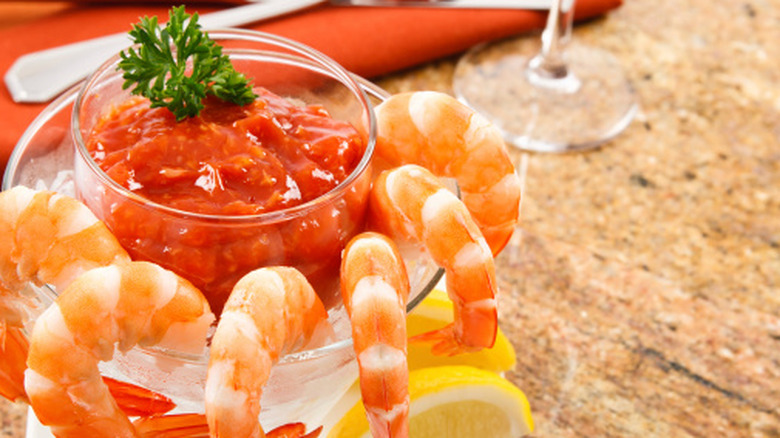
Juicy shrimp cocktail can conjure images of supper clubs filled with tables dressed in white, linen tablecloths, or servers carrying trays of it at fancy parties. But this iconic appetizer actually had much more humble beginnings. Originating on the West Coast of the U.S. during the Gold Rush, oysters, clams, and eventually, shrimp, were easy and plentiful to serve to the miners at saloons. The shellfish was accompanied with spices, horseradish, vinegar, and ketchup, and served in stemware. The name "cocktail" implied that the seafood was simply dressed with these accompaniments.
During Prohibition, restaurants searched for dishes to make their spaces feel fancy without alcohol — and shrimp cocktail became a go-to, with it gaining popularity into the post-World War II era, during the rise of supper clubs. One in particular, at the Golden Gate Hotel & Casino in Las Vegas, offered shrimp cocktail to those in landlocked Nevada for 50 cents in 1959 — and just like that, Nevada popularized the shrimp cocktail. Alongside deviled eggs and clam dip, shrimp cocktail was a regular on the guest list at 1970s parties, and still shows up quite a bit in the 21st century.
Cheese fondue
Kuppa_rock/Getty Images
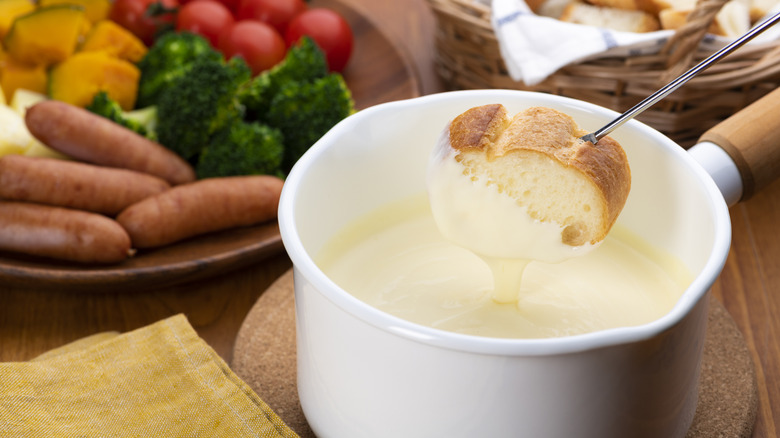
While passed hors d'oeuvres and finger foods reigned supreme during the 1970s era of entertaining, sit-down dishes that allowed for socializing were also in high demand — which is where fondue joins the party. This melting pot of bubbling, delicious cheese offered an opportunity for dinner guests to not only indulge, but also interact.
One origin story says fondue — which means "melted" in French — was first created out of necessity by Swiss peasants. Regardless of who first made it, fondue quickly became widespread, and eventually was named a national dish by the Swiss Cheese Union in the 1930s. When the '70s rolled around, it seemed like every dinner party had a fondue pot, front and center. The dish was so popular, a restaurant with fondue as its focus, The Melting Pot, debuted in 1975, outside of Orlando, Florida.
So, what is fondue and how do you eat it? Classic cheese fondue is made using a mix of shredded cheese — often including Swiss — flour or cornstarch, white wine, lemon juice, and spices. There are two other main ways fondue is presented: as a chocolate fondue, served with fruit or pieces of cake, or fondue bourguignonne, which involves a hot pot of oil for cooking high-quality cuts of beef. Once the cheese or chocolate is melted, you can dip a bite-sized piece of anything, from vegetables to breads to meats, into the decadent mixture.
Rumaki
Popular throughout the mid-20th century, rumaki is an unusual combination of bacon, water chestnuts, and chicken liver, skewered on a toothpick. Though you rarely see this vintage bacon-wrapped appetizer anymore, it symbolized the height of sophistication from the 1940s through the 1970s.
Popularized by Trader Vic's restaurant in the 1950s and '60s, rumaki is a Polynesian-inspired dish that incorporates sweet, spicy, and savory in a single bite. The chicken liver and water chestnuts are marinated in a soy sauce, ginger, and brown sugar mixture, and then wrapped in bacon, and secured with a toothpick, before cooking.
Rumaki hasn't really been spotted on the party circuit in the modern era. But there are a lot of recipes that exist for bacon-wrapped water chestnuts, which is pretty much rumaki, without the chicken liver. Wrapping things in bacon continues to be a popular method of preparing food, so we wouldn't be too shocked if nostalgia will one day cause party planners to make way for a rumaki return.
Stuffed celery
Mariha-kitchen/Getty Images
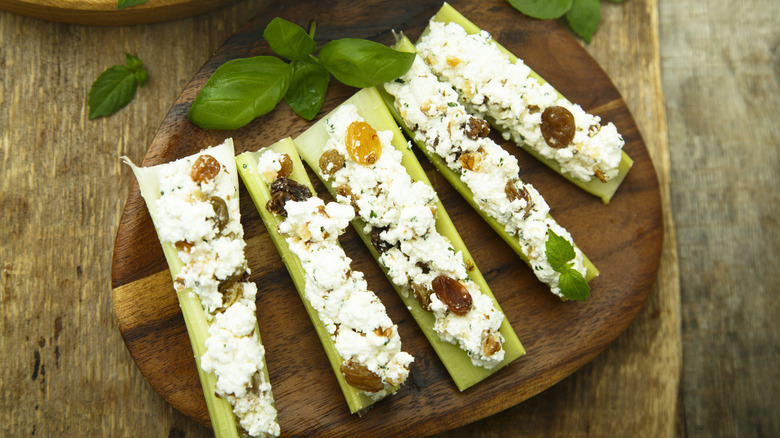
If you want to turn celery from drab to fab, look no further than the vintage appetizer, stuffed celery. This mid-century nosh, found on buffets, or as passed party hors d'oeuvres, could be stuffed with anything that would complement the creaminess of cream cheese, which often provided the base for the filling. Other add-in ingredients ranged from cheddar and bacon bits to blue cheese to pimento-stuffed olives. The crisp, refreshing celery provided the perfect contrast to the usually-rich stuffing, balancing the bite, in both flavor and texture.
Stuffed celery rose to popularity during the 1920s, when it was served as an appetizer, or alongside a soup or salad course. It remained a soirée staple through the 1970s, due to its affordability, ease of preparation and versatility. These weren't just served at adult parties in the 1970s — perhaps you recall eating ants on a log, or if you grew up in the South, celery filled with your grandmother's homemade pimento cheese. The creation possibilities are endless.
Stuffed mushrooms
Brebca/Getty Images
In her 1975 bestseller, "Superwoman," British author Shirley Conran said, "Life is too short to stuff a mushroom," referring to the perfectionist standards housewives were held to in the 1950s and '60s. By the mid-1970s, it's true, many women were burning bras and ditching domesticism for discos. But at the same time, domestic divas still had to entertain, and stuffed mushrooms was something that was served quite a bit.
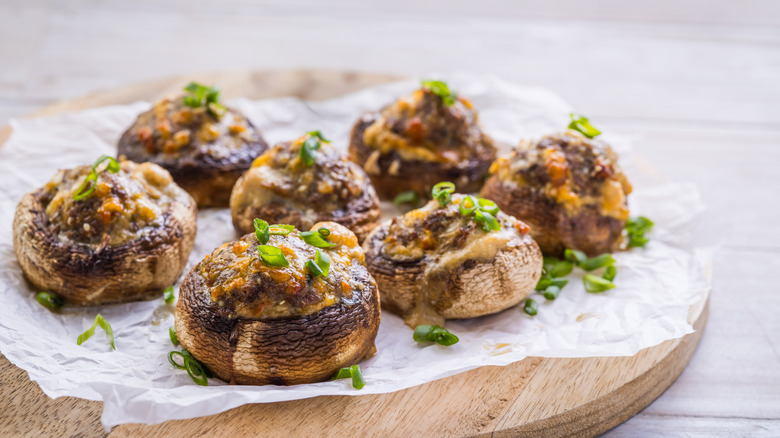
The recipe has roots in 18th century Europe, where the French filled mushrooms with seasonings that grew locally, like thyme, rosemary, and a Mediterranean herb called savory. The appetizer eventually evolved to its midcentury iteration, in which the filling was most often made from a mixture of herbs, cheese, and breadcrumbs, with the saltiness from the cheese and the freshness of the herbs offsetting that umami flavor and meaty texture of the mushroom caps.
Stuffed mushrooms may not be as popular as they once were, but that doesn't mean they've faded away completely. They can still be found, served at dinner parties, and even on restaurant appetizer menus. While button mushrooms were used in the traditional appetizer version, due to their one-bite size, you can also make easy stuffed mushrooms using larger fungi, such as portobello, for a more filling alternative.
Clam dip
Bhofack2/Getty Images
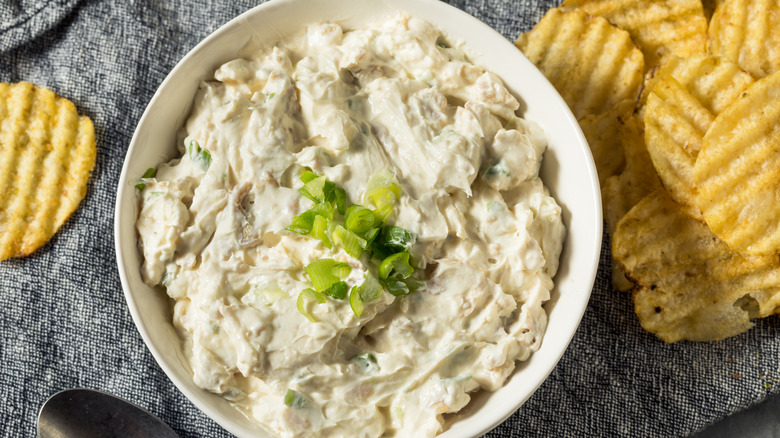
In the United States, midcentury hosts seemed to really love their dips. French onion dip, seven-layer dip, and cream cheese shrimp dip were often found gracing buffet tables during the decade. But a favorite that was on repeat in the '70s party circuit was clam dip. The recipe gained popularity after it was introduced on the Kraft Music Hall television show in the 1950s, but some versions can be found in older cookbooks.
Traditionally made with cream cheese, canned clams, Worcestershire sauce, and a mix of lemon juice, hot sauce, and spices — the dip was a triple threat: creamy, clammy, and salty, and was often served with buttery crackers, fresh crudités, or even crunchy potato chips.
It seems like clam dip has been usurped on most menus by other dips like spinach and artichoke, Buffalo chicken, or guacamole. But if you're curious, perhaps try this updated baked clam dip recipe.
Oysters Rockefeller
Jlende/Getty Images
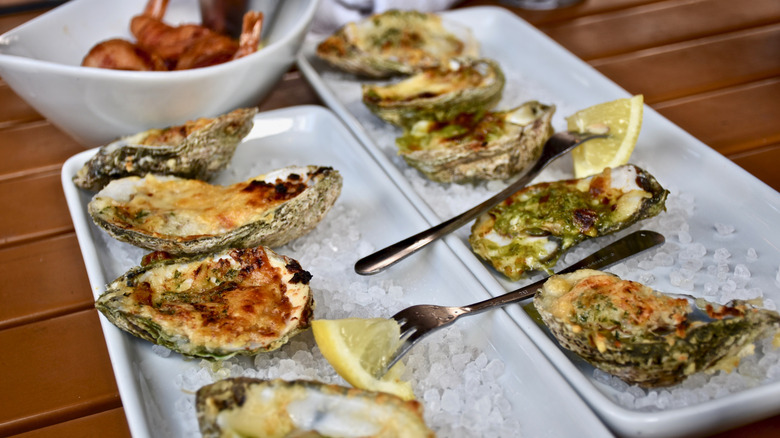
Though Oysters Rockefeller was created in 1899, it remained popular throughout much of the 20th century, and was viewed as a glamorous guest on the fancy party circuit. It was named for the richest man in the world at the time of its creation, John D. Rockefeller, because of its equally rich ingredients: live oysters, loads of butter, breadcrumbs, and fresh herbs and aromatics, served piping hot on a half shell. It's an indulgent bite, to say the least.
The original Oysters Rockefeller recipe, created by Jules Alciatore at his New Orleans restaurant, Antoine's, still remains a secret, but that didn't stop professional and home chefs from attempting to recreate the dish. Variations on the recipe appeared in professional and community cookbooks, and some included adding ingredients like spinach and watercress. Though this old-school dish was once considered fancy, it's still a classic that appears on Antoine's menu, with versions being served in restaurants around the country, over a century later.
Cheese straws
Zi3000/Getty Images
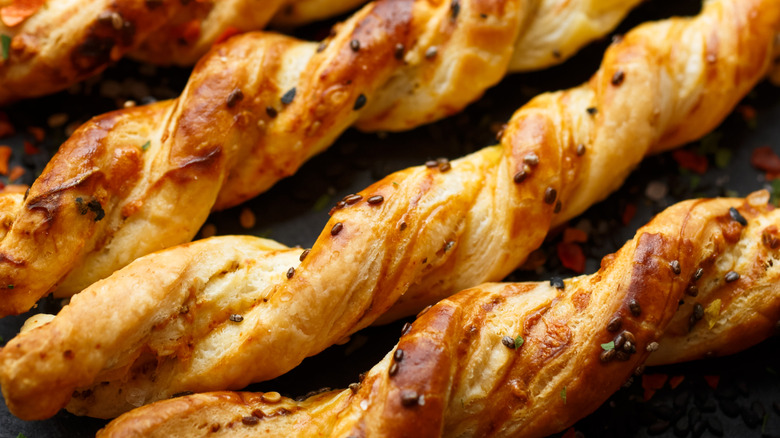
Cheese straws weren't an invention of the 1970s, as the first-known printed recipe for Cayenne Cheese Straws can be found in "The White House Cookbook," published in 1887. Some claim this tasty snack is or European descent, while others say its roots are strongly Southern, as folks in that region would bake cheese with flour to preserve it before the days of refrigeration. While its history may be murky, it's fairly undisputed that cheese straws are a crowd-pleasing snack, and pretty simple to make. It's no wonder they found their way to gatherings in the 1970s.
The snack was found everywhere, it seemed: at weddings, holiday get-togethers, baby showers, and dinner parties, and eventually, showing up in magazine articles, on foodie shows, and in general food culture. The basic formula mixes cheese, butter, flour, and spices, but you can personalize your own version by adding extra ingredients or spice. For those with limited time on their hands, or less expertise in the kitchen, there are many prepackaged versions available online.
Pickled shrimp
Like cheese straws, pickled shrimp is an appetizer you can find often on Southern tables. Because shellfish is plentiful in the Gulf, and on the Atlantic coast, you'll most likely find versions of it in the Southern states that make up that region. Hosts in the hot and humid summertime would favor serving the cold dish that showcased the bounty of the sea, while utilizing fresh herbs and vegetables from the garden. Pickled shrimp increased in popularity as households all across the U.S. started serving it at cocktail parties in the 1970s, an alternative to the also-popular cocktail shrimp.
The basic process of making pickled shrimp is simple — cooked shrimp is added to jars with liquid, spices, and aromatics to create a zesty appetizer that can be eaten alone, with crackers, on top of salads, or on toast for a powerful appetizer. Many different versions of the recipe are found in vintage midcentury Southern cookbooks, and can be found online as well.
Chicken liver mousse
sweet marshmallow/Shutterstock
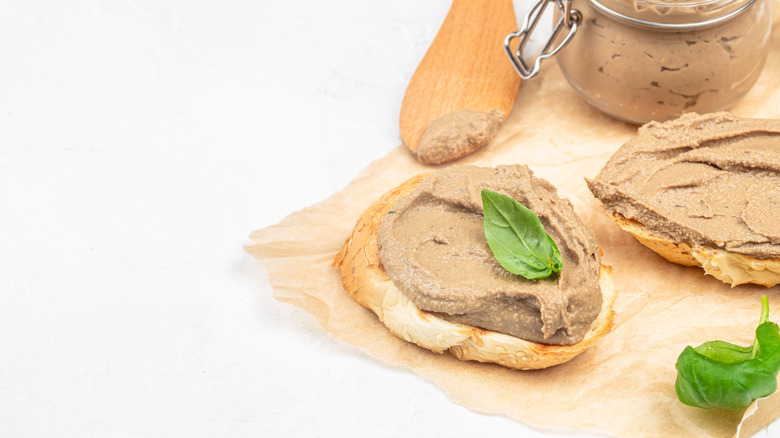
Chicken liver is filled with nutrients, being high in iron, protein, vitamins, and potassium. In French cuisine, making liver mousse is common, as is making use of all parts of the animal. Over time, chicken liver mousse developed into somewhat of a status symbol as an exclusive delicacy, as it was seen gracing fine dining menus and making regular appearances at fancy parties.
Chicken liver was popularized in the 1970s, thanks to Julia Child, who aired a recipe for chicken livers on the first season of her show, "The French Chef," in 1963. She also had a chicken liver mousse recipe in her iconic cookbook, "Mastering the Art of French Cooking," from which many drew inspiration for their dinner party menus. Though this dish has waned in popularity since, it can still be found on menus at some classic French restaurants. And with California's ban on foie gras — which is similar, but made from duck or goose liver, more expensive, and more controversial — some say chicken liver mousse may make a resurgence.

 English
 Arabic
 French
 Spanish
 Portuguese
 Deutsch
 Dutch
Dutch
 Italiano
 Russian
 Romaian
 Portuguese (Brazil)
 Greek
Greek