


Lulu Studio/Getty Images
There are only two ways a food business can go: succeed or fail. It's a risk that every entrepreneur faces. The reality is that most chain restaurants simply don't last long. The average lifespan of a restaurant is six years and roughly a quarter of food businesses last 20 years. Faced with these statistics, it is even more incredible that we still have many legacy fast food brands that are more than two decades old.
But many of the fast food chains that survived for a long time didn't have it easy. Many used to be highly profitable and had locations everywhere in the country, but sadly lost control of their growth and spiraled into obscurity instead. Others remained small, but developed a cult following and were expected to go huge, only they didn't.
But, several fast food chains that started disappearing in the last few years are finally getting back on their feet, opening new locations, and once again making noise on social media. Here's a look at the inspiring fast food chains that were once on the brink of going out of business, but are now making a comeback.
1. Cicis Pizza
JHVEPhoto/Shutterstock
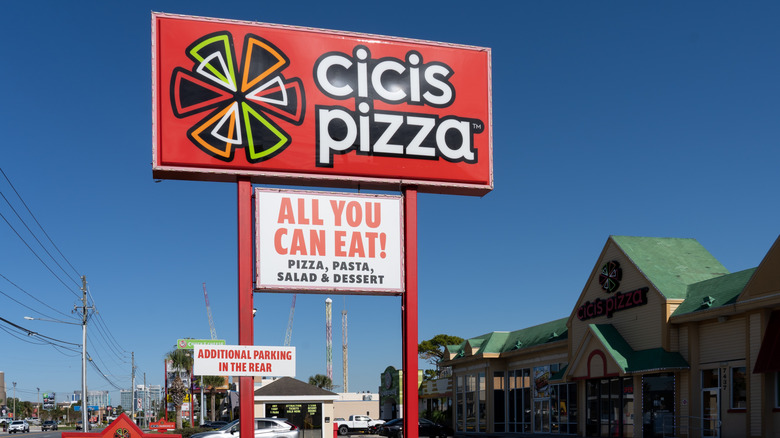
Cicis Pizza had an impressive rise as a pizza buffet chain in the '90s and early 2000s. It was a family-friendly restaurant famous for its unlimited pizza, salads, and pastas. It only took two years since opening for franchising to begin, and another 10 years for the chain to go from 10 branches to 345. Cicis peaked in the 2010s, when it had over 600 locations in 35 states. Eventually, franchising problems like alleged inconsistent food, dirty interiors, and health code violations dealt a huge blow to the chain's reputation. Revenues tanked, and branches closed en masse.
The company struggled to stay competitive over the next decade, but sadly the pandemic made things worse. As a buffet-concept pizza chain, Cicis' revenues suffered terribly as the months-long, mandatory quarantine kept customers away. By 2021, Cicis was millions in debt and its locations were down by half. The company filed for bankruptcy that year.
Today, Cicis is operational only in the Southeastern states, and nearly half of its branches are in Texas. To its credit, the pizza chain quickly recovered from bankruptcy and managed to keep the number of locations steady at around 300 in the following years (271 locations as of this writing with approximately 14 more under development). The company improved operational and cost efficiencies, aimed for quality and consistency, and expanded the games side of its restaurants. All these improvements, along with nostalgia, are bringing people back to Cicis Pizza.
2. Sonic
Scott Olson/Getty Images
Sonic is the quintessential drive-in fast food restaurant. It thrived in the late '60s and '70s, but by the '80s, the franchise's rapid growth was stunted by poorly-written franchising agreements. It led to alleged inconsistent menus, customer service, and food quality, which ultimately hurt Sonic's sales. The chain shrunk just as quickly as it grew — it only took five years to go from 200 locations to nearly 1,000, then just one year for 300 locations to shut down – and Sonic spent two decades ironing out its franchising troubles.
The 2008 recession also threatened the chain. Same-store sales were negative for the first time in 22 years in 2009 to 2010. The next six years were better, but sales dipped again in 2017 to 2018, when dollar menus from competitors like McDonald's and Taco Bell were rampant. It seemed like Sonic was done for by then. But then, the COVID-19 pandemic happened. Sonic thrived during this time while restaurants dependent on dine-in customers shuttered. The next six years were still fraught with challenges, but on the upside, nostalgia is making Sonic popular again. Millennials are reminiscing, and more people are happily trying it for the first time.
When Sonic first opened, its covered parking spots with menu boards and bellhops in roller skates felt new and exciting. Today, Sonic attracts old and new customers through social media marketing, leveraging its massive drinks menu, offering value meals, and staying on-brand with its fun advertising.
3. Clover Food Lab
Michael Moloney/Shutterstock
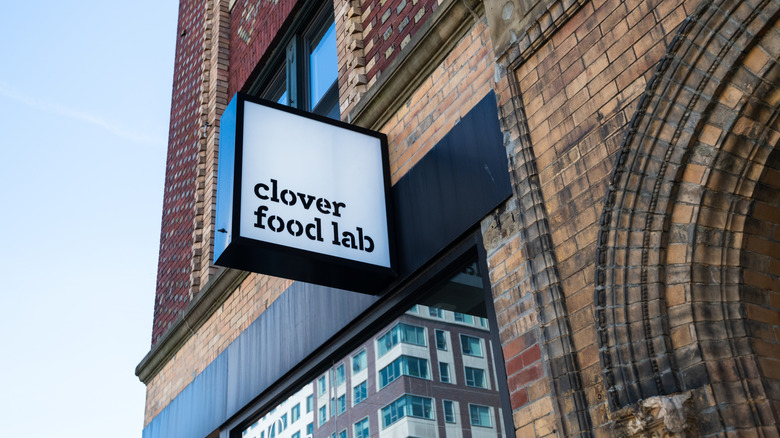
Clover Food Lab is the youngest fast food chain in this list having launched only in 2008. But the Massachusetts-based chain that started out as a food truck business quickly gained a large following thanks to its plant-based menu that boasted organic, fresh, seasonal ingredients sourced from local farms. Clover Food Lab appealed to vegetarians, health-conscious eaters, and people who cared for the environment. It now has 11 locations and at least two food trucks which it uses for marketing and catering services.
As a concept fast food business, Clover Food Lab faced many difficulties, including a waning interest in plant-based food products, which actually led to brands like Planta to file for bankruptcy. But the worst came during and after COVID-19. The chain managed to stay in business, but it ultimately had to file for bankruptcy in 2023. It underwent financial restructuring while continuing to invigorate the Clover Food Lab community. Unfortunately, the relentless inflation after the pandemic made ingredients 30% to 50% more expensive. Delivery fees, takeout packaging, and other operational costs also went up. On May 27, 2026, Clover Food Lab's CEO, Julia Wrin Piper, announced that the business would shut down for good the very next day.
In an exciting twist one often sees in movies, an investor stepped up days later, and Clover Food Lab was saved. Six locations have reopened as of this writing, and more are expected to follow suit soon.
4. Burger King
Justin Sullivan/Getty Images
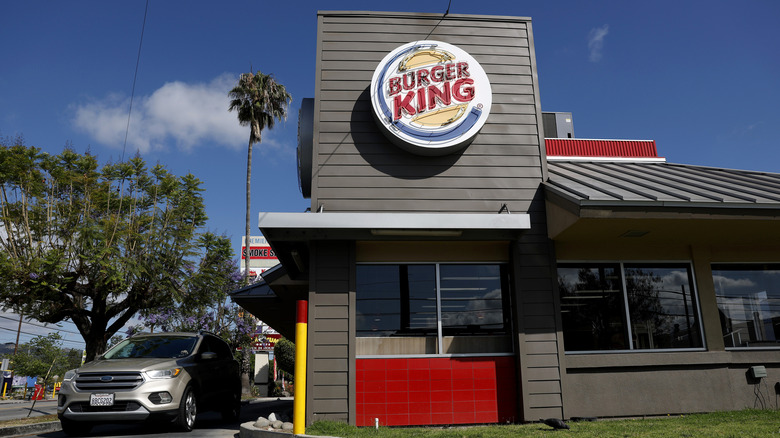
It's hard to imagine a world without Burger King, but did you know it was plagued with closures since 2023? Its parent company, Restaurant Brands International (RBI), closed 124 stores that year while several of its largest multi-unit operators shut down hundreds more before filing for bankruptcy protection. RBI said it was necessary to purge underperforming locations and streamline existing units, but it also gave the impression that Burger King was going to shut down for good.
Burger King's biggest problem is that franchisees earn way less than operators for Whataburger and other burger fast food joints. According to QSR 50, Burger King (26th place) stores each earned $1.47 million on average in 2025, while Whataburger (third place) averaged $3.64 million per store. Now, $1.47 million sounds like a lot of money, but running keeping up with corporate mandates on remodels, modernization, and marketing is not cheap. Franchisees are often left with very little profits, which explains the highly-publicized bankruptcies.
Fortunately, Burger King had a major image overhaul this year. Executives refocused on what customers wanted and went back to the drawing board with its signature Whopper. A simple change – serving Whoppers in a box – had social buzzing again with happy customers whose new-and-improved burgers are no longer squished in a paper bag. It signals a commitment to quality and customer service, and it's currently doing wonders for Burger King's image and marketing. Hopefully, these changes will improve long-term store sales.
5. Quiznos
Justin Sullivan/Getty Images
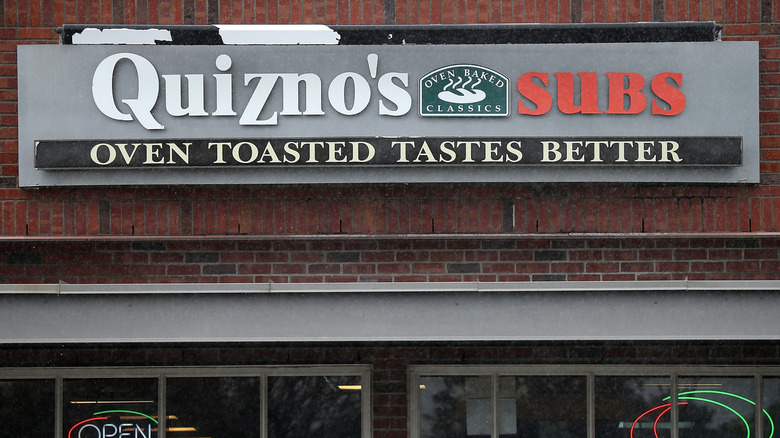
Quiznos hardly rings a bell among the younger crowd these days, but it once dominated the quick-service restaurant industry, specifically the subs category. It had 4,700 locations all over the country in 2007 and was the place to get high quality, tasty, and toasty Italian subs. Unfortunately Quiznos lost over 90% of its stores in the next 10 years, and by 2026, the chain is down to just 140 stores.
So what went wrong for Quiznos? Operators could only buy ingredients from just one company, which Quiznos also owned. Corporate ran promotions and discounts that shrank store sales further, accepted franchising fees but allegedly never approved new franchises, spied on franchisees, and terminated those who reportedly didn't follow policy on sandwich quality, and more. Eventually, some franchisees quit and shut down their stores, while the rest sued Quiznos. Between 2006 and 2020, Quiznos faced 13 individual and class-action lawsuits, then settled for hundreds of millions of dollars. By 2014, Quiznos filed for bankruptcy with up to $1 billion in liabilities.
Quiznos has had a long and painful fall, but a smaller portfolio and new leadership seem to have refreshed the chain. The recent openings have been hugely successful, loyal fans are seeking out existing locations, and corporate is finally more franchisee-friendly. Things are starting to look up for Quiznos. Who knows, the chain might one day return to its former glory.
6. Krystal
William A. Morgan/Shutterstock
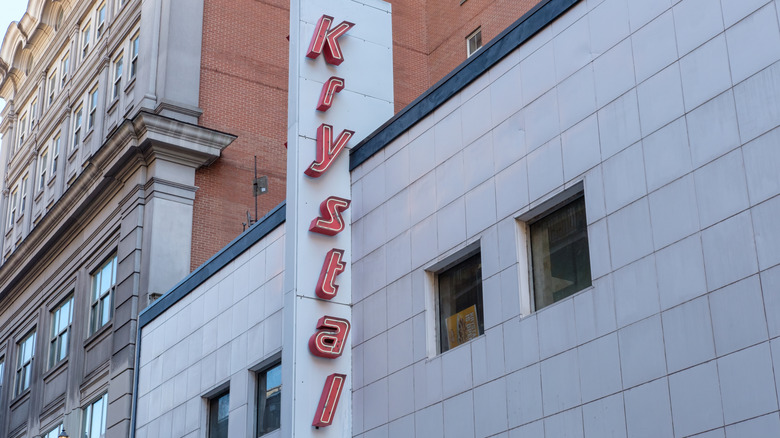
Known for its square sliders and cheese pups, Krystal was opened in 1932 as a direct competitor of White Castle. The founders did everything to live up to the brand's name and image. The first location had a porcelain and stainless-steel facade, and the food was served in porcelain dishes instead of cardboard takeout boxes. Interestingly, Krystal initially refused franchising and leaned into marketing instead, leveraging celebrities like Elvis Presley and Dolly Parton, who famously loved its burgers. This strategy worked, and Krystal became a force in the fast food industry.
Unfortunately, Krystal was slow to modernize and lagged after competitors. To boost sales, the company started issuing partial franchising licenses for Krystal drive-thrus in 1990. But just when things were starting to get back on track, Krystal faced a class-action lawsuit in 1994 from 7,000 employees who sued the chain for allegedly not paying overtime labor. Krystal settled for $13 million, but also ended up declaring bankruptcy in 1997. After over two decades of acquisitions, leadership changes, and revitalization attempts, Krystal once again had financial troubles and filed for bankruptcy for the second time in 2020.
Today, Krystal is owned by SPB Hospitality, which plans to open 200 new locations in the next few years. It introduced a rewards program, remodeled and digitized old stores, and leveraged social media for marketing. From a peak of 420 locations to 264 today, Krystal is determined to have a successful comeback.
7. Sbarro
Alex Wong/Getty Images
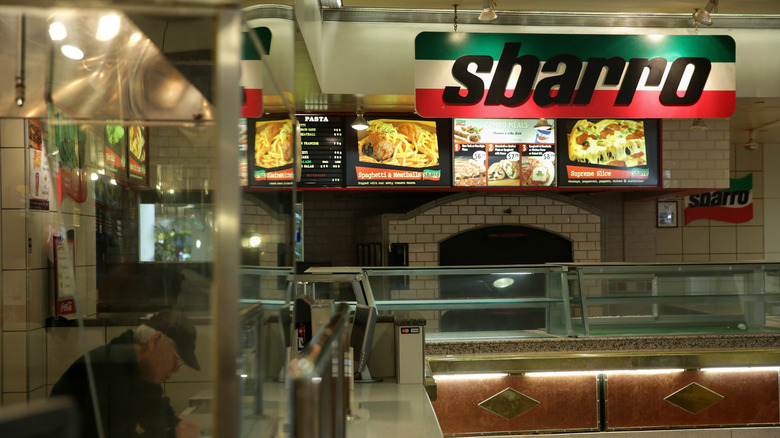
There was a time when you could find a Sbarro in every mall food court in the country. That's because Sbarro leaned into the then-growing popularity of shopping malls. The idea was that people spent hours in malls, and they inevitably looked for good places to eat. Sbarro filled that need, and more than that, grew a reputation for serving high-quality pizzas, cheesecakes, and other delicious food. The chain grew, went public, and expanded to over 700 locations in the '80s and '90s.
Unfortunately, U.S. malls gradually lost popularity and started declining in the 2000s. This put Sbarro in a tight spot, as it was highly dependent on the foot traffic in shopping malls. It didn't help that the company was millions in debt after the founding family wanted to go private again and bought Sbarro back from shareholders for $389.5 million in 1997. Its financial woes worsened during the 2008 recession, and the chain finally went bankrupt in 2011. It emerged a year later with a new investor, but with the continued stagnation of U.S. malls, declining quality of its food, and rise of food delivery, Sbarro went bankrupt again in 2014.
Today, Sbarro has learned from its past mistakes. It left the malls and relocated to convenience stores, gas stops, and even U.S. military bases. It now has over 700 locations worldwide, a clear indicator of its ongoing resurgence.
8. Hardee's
Jetcityimage/Getty Images
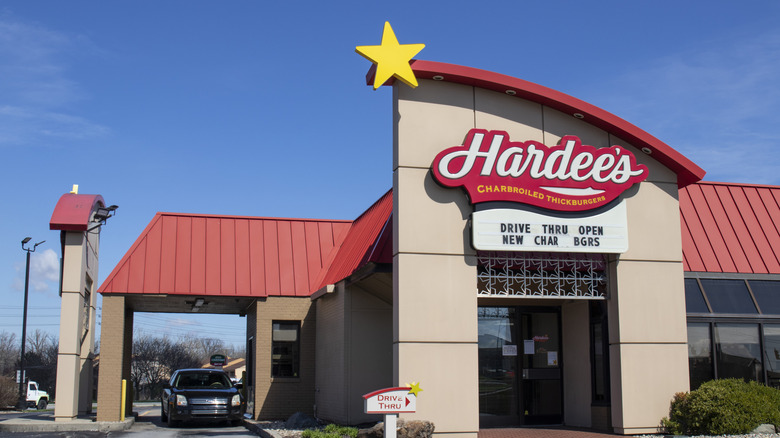
Hardee's was once one of the fastest-growing fast food chains in the country with over 4,000 locations at its peak. With its smiling star standing toe-to-toe with the golden arches in the '80s, it became one of the go-to fast food restaurants for people who wanted affordable, Southern comfort food.
In 1990, Hardee's then-parent company, Imasco, acquired Roy Rogers, a popular chain in the Midwest and Northeast. The plan was to leverage Roy Rogers and introduce Hardee's in these regions. Unfortunately, incorporating Roy Rogers' menu to Hardee's created a brand identity crisis, which displeased loyal customers. This problem happened again when CKE Restaurants, owner of Carl's Jr., acquired Hardee's in 1997 and attempted to marry the two brands. Once again, customers that loved Hardee's for what it is refused to bite, and sales slowed. Other factors contributed to the decline, like outdated systems, failing equipment, lower demand, and rising food costs. These problems led to bankruptcy filings of several major Hardee's franchisees.
Because of the successive closures of hundreds of locations, many people thought that Hardee's wouldn't be around much longer. And yet, the chain continues to operate in 31 states with over 1,800 corporate-owned and franchised stores. The company has also been acquiring units from bankrupted franchisees, bringing back old favorites, and introducing new menus. Its comeback is well underway, and it's going well so far.
9. Roy Rogers
Ablokhin/Getty Images
Roy Rogers started as Big Boy restaurants, an already-known franchise that then-owner Marriott rebranded to Roy Rogers Roast Beef Sandwich restaurants. Although some franchisees were initially reluctant to pay extra royalties to the "King of the Cowboys," star Roy Rogers' charm and effectiveness as brand spokesman helped the chain flourish. It grew to 648 locations by the '80s. But then, Imasco acquired it in 1990 with plans to use the chain to expand Hardee's footprint across the country.
Unfortunately, just as Hardee's fans didn't like seeing the Roy Rogers chicken on its menu, customers snubbed the Roy Rogers stores that were converted into Hardee's. Imasco's plans failed and it eventually sold 110 underperforming stores to McDonald's, Burger King, and Wendy's. In 2002, Jim and Pete Plamondon acquired Roy Rogers and all trademarks. By then, the chain had shrunk to around 40 stores.
Fortunately, the Plamondon brothers were inspired by their father's connection with the brand (Pete Plamondon Sr. was a former executive vice president at Marriott and Roy Rogers franchisee in the '80s) and wanted to return the chain to its former glory. They hired industry veterans to revive the business, put Roy Rogers on DoorDash, refined the menu, remodeled old locations, and basically updated the entire operations while staying true to the original Roy Rogers brand. As of 2026, 24 new locations and 16 franchises are well underway in seven states. This unexpected Roy Rogers chain comeback proves that revisiting one's roots is crucial for a struggling legacy brand.
10. Long John Silver's
JHVEPhoto/Shutterstock
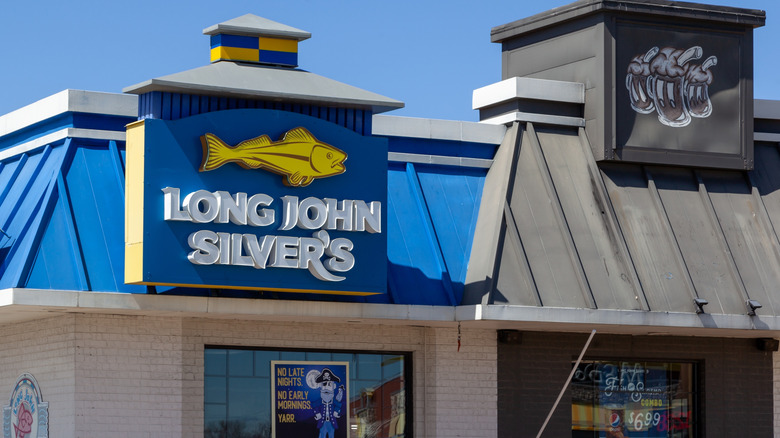
Long John Silver's was the leading fast fish chain in the '70s and '80s. It slowed a bit in the '90s when competitors like McDonald's and Burger King dominated quick-serve restaurants, but it pulled through and peaked with 1,081 units in 2007. Sadly, the 2008 recession halted its growth. Long John Silver's filed for Chapter 11 bankruptcy by 1998 after accruing $457.3 million in liabilities, including a $275 million debt from a leveraged buyout that same year.
Long John Silver's reorganized and underwent many acquisitions since then. The chain tried various approaches to attract more customers, such as adding new menu items like The Big Catch. Unfortunately, the Center for Science in the Public Interest (CSPI) called it "the worst restaurant meal in America" because it contained unhealthy amounts of trans fats, saturated fats, and sodium.
Long John Silver's isn't as huge as it once was, but the company claims things are finally looking up. After Four Oaks Partners acquired Long John Silver's in 2022, the chain shifted gears and focused on internal growth by improving franchises and cutting losses on low-earning stores. This is why, even though around 120 locations closed since then, the seafood chain's sales increased for 16 consecutive quarters. The company also rebranded and introduced a new logo in 2025, which has has a chicken in the center, allegedly to remind customers that it also has chicken on the menu.
11. Checkers and Rally's
Many people still remember a time when Checkers and Rally's were two separate fast food franchises. Both were racing-themed, had black-and-white checkerboard facades, and minimal menus (mostly burgers, fries, and shakes). They were so similar that after CKE Restaurants acquired both brands in 1996, it decided to merge the two brands. But unlike its failed attempt with Hardee's and Carl's Jr., Checkers and Rally's succeeded. The duo shared a menu, but the brands stayed in the regions where they originally thrived: Checkers in the Southeast and on the East Coast, Rally's from the Midwest to Western U.S.
Checkers and Rally's did well in the following years despite the stiff competition in the fast food industry. For instance, its sales doubled after it publicly challenged Burger King to a wiener war in 2016. In the years since, Checkers and Rally's expanded as quickly as it got acquired by private equity firms in rapid succession. This added to long-term debts that reached $300 million by 2023. It avoided bankruptcy thanks to a new investor, but many franchisees weren't so lucky. Post-pandemic inflation, health code violations, and external factors like leasing disputes led to multiple store closures.
Checkers and Rally's has 734 total locations to date. It got left behind by more aggressive and innovative fast food chains, but it's not giving up the race. With a revamped brand, and a renewed focus on restaurant improvements, Checkers and Rally's is gearing up for its most important comeback. The chain has already seen an increase in sales at its flagship location in Apopka, Florida after its remodel. So, things are definitely looking up.

 English
 Arabic
 French
 Spanish
 Portuguese
 Turkish
 Dutch
Dutch
 Italiano
 Russian
 Romaian
 Portuguese (Brazil)
 Greek
Greek