



Somewhere in British-occupied New York, in the autumn of 1778, a woman whose name history never bothered to record pressed a quill to paper and wrote a letter that looked completely ordinary — until George Washington held it over a candle and applied a chemical wash, and the invisible words swam into view, detailing the movements of British troops who had no idea their plans were already traveling south toward the General’s headquarters.
That woman, known only as Agent 355, is one of hundreds of people who kept the American Revolution alive and left almost no trace. The official cast — Washington, Jefferson, Adams, Hamilton — is real, but it is also a 19th-century editorial decision. Two centuries of textbooks, monuments, and Hollywood scripts installed those figures at the center of the story. Ken Burns’ 2025 documentary series The American Revolution arrives as a sustained argument against that narrowness, and the way it is constructed — who speaks, who is voiced, whose words are read aloud — reflects how much the historical understanding of the period has shifted.
The Documentary Cast and What It Argues

Josh Brolin voices George Washington in the series, anchoring it in the familiar, while Peter Coyote serves as narrator — a steady, authoritative presence threading the chaos into coherence. But the series reaches beyond American shores with its voice casting: Kenneth Branagh gives voice to both General Henry Clinton and General Friedrich Adolf Riedesel, commanders on the British and Hessian sides respectively. That choice is a deliberate signal that this was never simply an American story told from one direction.
The documentary’s deeper move is what it does with Adam Arkin. Arkin voices seven distinct figures — James Parker, Ashbel Green, Andrew Hunter, Samuel Shaw, Enoch Anderson, Timothy Dwight, and Robert Morris — ordinary and extraordinary men whose diaries and letters survived but whose names most Americans could not pick out of a lineup. That casting choice is the whole argument in miniature: the Revolution was not a drama performed by a dozen giants. It was lived, recorded, and shaped by hundreds of people who wrote everything down precisely because they knew they were witnessing something enormous, even if no one would remember their names.
The most revealing accounts of the Revolution often come from people who were not supposed to be making history — which is exactly why they wrote everything down. What follows is an attempt to reconstruct some of what they recorded.
The Women Who Ran the War Nobody Wrote Down

Mercy Otis Warren picked up a pen years before Jefferson composed a syllable of the Declaration and used it like a weapon. A satirist and playwright working in Massachusetts, Warren produced political writing that humiliated loyalist officials, mocked royal governance, and helped shape the intellectual mood of rebellion. Her three-volume History of the Rise, Progress and Termination of the American Revolution, published in 1805, was one of the first serious accounts of the war written by anyone who had lived through it — yet she rarely appears in standard surveys of the period, perhaps because satire is harder to enshrine in bronze than a battlefield moment.
Deborah Sampson’s story sounds too dramatic to be true and is too meticulously documented to dismiss. In 1782, Sampson disguised herself as a man named Robert Shurtliff, enlisted in the 4th Massachusetts Regiment, and served through multiple engagements. When she was wounded, she reportedly removed a musket ball from her own thigh rather than allow a surgeon to discover her identity. She was eventually honorably discharged and later granted a pension — one of the very few women in American history to receive one for military service.
Esther De Berdt Reed organized the Ladies Association of Philadelphia in 1780 and went door to door raising funds for Washington’s freezing, unpaid troops. The campaign collected the equivalent of hundreds of thousands of dollars in today’s money. Washington wrote her a personal letter in recognition. Reed died of dysentery that same year, at thirty-three, before she could see the outcome of the war she had helped fund.
Then there were the unnamed thousands: camp followers — wives, daughters, free Black women, indentured servants — who cooked, nursed, laundered, and carried water under fire at engagements like Monmouth. Their labor appears in almost no official account. Without it, the Continental Army would have been far less able to function.
Spies, Codes, and the Shadow War

In 1778, Washington gave Benjamin Tallmadge a direct order: build an intelligence network. What Tallmadge created was the Culper Ring, America’s first systematic spy operation — a chain of operatives moving information out of British-occupied New York through coded numbers, invisible ink developed by James Jay, and dead drops hidden inside the routine cover of commerce and correspondence. Washington himself was assigned the code number 711. The network was so carefully compartmentalized that most of its members never knew each other’s identities.
At the center of one of the war’s most durable mysteries sits Agent 355 — designated only by the Culper code word for “lady.” She is believed to have moved through loyalist social circles in Manhattan, positioned to hear what British officers said when they assumed no one significant was listening. Her real name has never been confirmed. She may have been arrested and died in British custody. The Culper operatives left, by design, almost no trace — and 355 left less than any of them.
Hercules Mulligan was less invisible. An Irish-born tailor in New York, he dressed British officers while quietly feeding their plans to the Culper network. He was ideally placed: close enough to power to overhear strategy, unremarkable enough to be ignored. After the British evacuation of New York, Washington made a point of publicly breakfasting with Mulligan — a quiet, deliberate act of recognition for a man who could never be publicly honored for what he had actually done.
The shadow war had its most dramatic crisis in September 1780, when Benedict Arnold’s carefully constructed defection nearly handed West Point — and with it, control of the Hudson River — to the British. The plot unraveled almost by accident when Major John André, Arnold’s British contact, was captured by militia with incriminating papers concealed in his boot. Arnold escaped to British lines. André was tried by a military board and hanged. The episode haunted Washington, who had trusted Arnold implicitly, for the rest of the war.
The Hessians: Villains, Victims, or Something More Complicated?
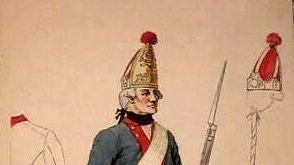
Patriot propaganda turned the German soldiers fighting for Britain into straightforward monsters, and the image stuck. The reality was considerably more tangled. Roughly 30,000 German soldiers — called Hessians though they came from six different German states — were contracted out to Britain by their princes, often with little meaningful choice in the matter. Many were conscripts with no clear idea where they were sailing when they boarded ships in 1776.
Kenneth Branagh’s casting as General Friedrich Adolf Riedesel in the Burns documentary carries historical weight. Riedesel commanded German forces at the engagements at Bennington and Saratoga, where Hessian losses helped tip the war’s momentum decisively toward the Americans. His wife, Frederika von Riedesel, followed him into captivity and later wrote a detailed memoir of the campaign — one of the more remarkable first-person accounts of the war, written from the perspective of someone who was neither American nor straightforwardly the enemy.
After Yorktown, an estimated 5,000 to 6,000 Hessian soldiers chose to remain in America rather than return home. They settled in Pennsylvania, Maryland, and New York, married locally, and became, quietly, Americans — a forgotten immigration story folded inside the Revolution itself. Soldiers who were cast as monsters in the pamphlets of 1776 were, in many cases, as trapped by the conflict as any colonial farmer who never wanted a war either.
Loyalists and the Revolution’s Civil War

Between fifteen and twenty percent of colonists were active loyalists — people who believed the rebellion was illegal, reckless, or simply wrong — and the violence between patriots and loyalists in the Carolinas and New York was, by any honest measure, a civil war running inside the larger Revolution. Neighbors informed on neighbors. Property was burned. People were tarred, feathered, and driven from towns they had lived in for generations.
Joseph Brant, known to the Mohawk as Thayendanegea, led raids through the New York and Pennsylvania frontier as a British ally. He had been educated in colonial schools, had met King George III in London, spoke multiple languages, and worked to translate scripture into Mohawk. He defies any simple categorization. His people were fighting their own war for survival alongside the British, calculating — not unreasonably — that a British victory was more likely to preserve Haudenosaunee lands than a patriot one.
Among the Revolution’s most persistently overlooked stories: the Black loyalists. When Virginia’s Royal Governor Lord Dunmore issued his 1775 proclamation offering freedom to enslaved people who escaped patriot masters and joined the British forces, more than 20,000 people responded over the course of the war. They represent a separate liberation movement running parallel to the patriot one — people for whom the question of which side to join was not abstract but existential, and for whom the patriots’ language about liberty and tyranny carried an obvious and unspoken irony.
After Yorktown, roughly 60,000 loyalists were driven from their homes, their property confiscated, their communities destroyed. They relocated to Canada, the Caribbean, and Britain in what amounted to one of the largest forced migrations in North American history at that point — and their departure shaped Canadian identity in ways that remain visible today.
Why Expanding the Cast Still Matters in 2025

The decision to give Adam Arkin seven voices in the Burns documentary — ordinary diarists alongside statesmen — reflects something important about how historical understanding has changed. The letter from a freezing soldier. The memoir of a German officer’s wife in captivity. The coded dispatch from a woman whose name we will probably never recover. These sources do not merely add texture to a story already understood. They change the story.
A Revolution populated only by Founders looks like an ideological awakening, clean and inevitable in retrospect. A Revolution populated by spies who nearly got caught, German conscripts who chose to stay, enslaved people who gambled on a British promise of freedom, and women who fundraised door to door in the Philadelphia summer — that looks like what it actually was: a chaotic, violent, morally ambiguous conflict with no guaranteed outcome and no consensus about what it was even for.
The documentary format — voices, music, the cadence of a letter read aloud — does something a textbook cannot easily replicate. It restores contingency. The sense that nothing was inevitable. That Agent 355 could have been caught at any moment. That Hercules Mulligan could have been exposed over a coat fitting. That Deborah Sampson’s secret could have unraveled on any given morning. History was lived in that uncertainty. We have mostly edited it out.
The real cast of the American Revolution is not twelve faces on a monument. It is closer to the full, teeming, contradictory population of a nation being improvised in real time — by women fundraising door to door, by men writing in invisible ink, by German soldiers who decided that the country they had been sent to fight was the country where they wanted to live. The more of them we recover, the more honest our understanding becomes of what was actually won, what was lost, and what — for too many of the people who made the Revolution possible — was left entirely unfinished.

 English
 Arabic
 French
 Spanish
 Portuguese
 Deutsch
 Turkish
 Dutch
Dutch
 Italiano
 Russian
 Romaian
 Greek
Greek