


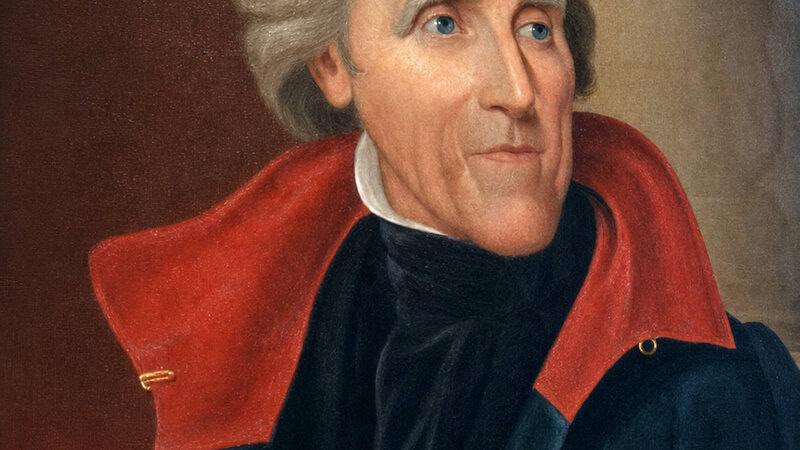

In the winter of 1829, physicians attending the newly inaugurated seventh President of the United States could detect something unusual when they pressed a stethoscope to his chest: a faint, wet rasp beneath the normal sounds of breath and heartbeat, the acoustic ghost of a lead ball that had been sitting a fraction of an inch from Andrew Jackson’s heart for nearly twenty-three years. The bullet wasn’t going anywhere. Neither, it turned out, was the man.
The President Who Rattled When He Breathed

The shot had been fired on a muddy Tennessee field on May 30, 1806, and the surgeon who examined Jackson afterward delivered a grim verdict: the ball was lodged so deeply near his heart that any attempt to cut it out would likely kill him faster than leaving it alone. So Jackson did what Andrew Jackson always did — he ignored the counsel of caution and kept moving. He kept moving through the War of 1812, through the swamps of Florida, through two assassination attempts inside the White House, and through eight of the most turbulent years any president has ever governed. The bullet stayed until he died.
That image — a man absorbing a near-fatal wound and continuing to fight — is not merely biographical color. It is the organizing principle of Andrew Jackson’s entire life. Understanding how he ended up in that duel, and how he survived it to reshape a nation, requires going back to a hardscrabble borderland settlement where the idea of backing down simply did not exist.
Born Fighting: The Waxhaw Settlement and a Boyhood Forged in War
Andrew Jackson was born on March 15, 1767, in the Waxhaw Settlement, a rough community of Scots-Irish immigrants straddling the border of North and South Carolina. His father died before he was born. By the time Jackson was fourteen, the Revolutionary War had taken his mother and both of his brothers as well, leaving him a penniless orphan whose fury toward the British he would nurse — and act upon — for the rest of his life.
The formative wound came when he was thirteen. Captured by British soldiers during the war, he was ordered by a British officer to clean the man’s boots. Jackson refused. The officer drew his sword and slashed the boy across the hand and face, leaving scars that Jackson carried into old age as physical proof of everything he believed about power, arrogance, and the obligation to resist both. That refusal — stubborn, reckless, and ultimately costly — became the template for nearly every major decision he would ever make.
This origin story sits at the emotional core of Andrew Jackson’s biography: a man forged entirely by loss and defiance, with no inheritance except grievance and will. It is the source of the outsider identity that would eventually remake American politics from the ground up. You can trace a direct line from that British officer’s boot to the Bank of the United States veto, if you know where to look.
What is often underappreciated is how unusual this trajectory was. The early American republic was largely governed by men of inherited standing — lawyers from established families, planters with deep roots in colonial society. Jackson was none of those things. He arrived in the political world as a genuine intruder, and the established order never quite forgave him for it, which suited him perfectly.
The Duel That Should Have Killed Him

The duel between Andrew Jackson and Charles Dickinson in 1806 began over a disputed horse-racing wager and escalated, fatally for Dickinson, when the insults extended to Jackson’s wife, Rachel. In Jackson’s moral universe, debts of honor were negotiable; slights against his wife were not. The matter would be settled with pistols at twenty-four feet.
The problem was that Dickinson was widely regarded as the finest pistol shot in Tennessee. Jackson’s friends understood this. Jackson understood this. His strategy — if it deserves so calm a word — was to let Dickinson fire first, to absorb whatever damage the shot caused, and then, with whatever remained of his body and his nerve, to take careful aim and end it. It was the plan of a man who had decided that winning mattered more than surviving.
Dickinson fired. The ball cracked two of Jackson’s ribs and buried itself so close to his heart that blood began soaking through his coat almost immediately. Jackson barely moved. He raised his own pistol and shot Charles Dickinson dead where he stood. Only when the duel was over did Jackson’s seconds notice how badly their man was hurt; Jackson had clenched his jaw and held his position through a wound that would have dropped most men instantly.
The bullet near Jackson’s heart never properly healed. It caused chronic infection, periodic hemorrhaging, and a cough that plagued him through military campaigns, political battles, and the presidency itself. He treated it, when he treated it at all, with a stoicism that contemporaries found either heroic or alarming depending on their proximity to him. That the duel was also widely condemned at the time — dueling carried real social and legal risk even in Jackson’s Tennessee — only added to the portrait of a man who operated by his own code regardless of consequence.
Old Hickory: From Frontier Lawyer to National Hero

Jackson taught himself law in the manner available to young men without money or connections in the late eighteenth century: by reading whatever he could find and absorbing what he could from practicing attorneys. He rode the Tennessee circuit, established a reputation for directness that juries appreciated and opposing counsel feared, and rose to serve as both a congressman and a senator. But the courtroom never really held him. What held him was the battlefield.
As a U.S. Army general, Jackson drove his men harder than almost any commander of the era, and they loved him for it in the complicated way soldiers love commanders who demand the impossible and then somehow achieve it. They called him Old Hickory because, they said, he was as tough as the wood. The nickname stuck because it was accurate.
His campaigns before New Orleans were themselves remarkable and, in retrospect, troubling. The Creek War of 1813 to 1814 ended with the Treaty of Fort Jackson, which stripped the Creek Nation of roughly 23 million acres of land in present-day Alabama and Georgia — land belonging not only to the hostile Red Stick Creeks but also to those Creek communities that had fought alongside Jackson as allies. It was an early and revealing demonstration of how Jackson understood loyalty when it competed with expansion.
His crowning military achievement came in January 1815 at the Battle of New Orleans, where a force assembled from regular troops, militia, pirates, and free Black soldiers routed a seasoned British army that had recently burned Washington. The victory made him the most celebrated American since George Washington. The irony was almost literary: the man who had been slashed by a British officer at thirteen and who carried a bullet near his heart from a duel fought over his wife’s honor had just handed Britain its most decisive defeat of the entire war. The nation, understandably, was enchanted.
The Road to the White House: The “Corrupt Bargain” and the 1828 Election

Jackson first ran for president in 1824, in a four-way race that none of the candidates won outright. He finished first in both the popular vote and the Electoral College, but without a majority, the decision fell to the House of Representatives. Speaker Henry Clay — himself a candidate and constitutionally ineligible to be chosen by the House — threw his support to John Quincy Adams. Adams won. Clay was subsequently appointed Secretary of State, the office then understood to be the stepping stone to the presidency.
Jackson called it a “corrupt bargain,” and whether or not there was an explicit deal, the optics were damning enough to poison Adams’s presidency and fuel Jackson’s organizational fury for the next four years. The 1828 campaign that followed was among the ugliest in American history: Jackson’s opponents attacked Rachel’s honor over the complicated circumstances of her earlier marriage, and Jackson’s supporters responded in kind. Rachel Jackson died of a heart attack shortly after the election, before her husband’s inauguration. Jackson blamed his enemies for her death and never forgave them. He carried that grief, alongside the Dickinson bullet, into the White House.
The People’s President: Remaking American Democracy

When Andrew Jackson rode into Washington for his inauguration in 1829, thousands of ordinary Americans came with him. They flooded the White House, stood on silk furniture in boots caked with mud, and consumed the refreshments meant for dignitaries. To the Eastern establishment, it looked like mob rule. To Jackson — and to the people who had voted for him — it looked like democracy finally arriving at a door it had been knocking on for fifty years.
Andrew Jackson served as president from 1829 to 1837, and the facts that define his presidency are facts about power and who holds it. He dramatically expanded voting participation among white men, benefiting from state-level reforms that had already begun removing property requirements from the franchise. He vetoed the rechartering of the Bank of the United States in a message so scorching it reads less like a legal document than a declaration of war against concentrated wealth and privilege. He built the Democratic Party into a national political machine organized around the idea that ordinary citizens deserved representation from a government that had long been managed by elites for elites.
Historians have consistently identified Andrew Jackson as the dominant actor in American politics between Thomas Jefferson and Abraham Lincoln. He was the man who invented the modern presidency’s executive muscle — who demonstrated that the president, as the only official elected by the entire nation, could claim a popular mandate that Congress could not match. That argument still shapes how American presidents understand their own authority.
He also wielded that authority in ways that tested constitutional limits from the other direction. His handling of the Nullification Crisis of 1832 — when South Carolina declared federal tariff laws void within its borders — revealed a Jackson few of his states’-rights supporters had anticipated. He threatened military force, secured a Force Bill from Congress authorizing him to collect the tariffs at gunpoint if necessary, and stared South Carolina down until it backed away. The man who railed against federal overreach was perfectly capable of deploying federal power when he judged it necessary. Consistency was never his virtue.
The Darkest Chapter: Indian Removal and the Trail of Tears
No honest accounting of Andrew Jackson can avoid the Indian Removal Act of 1830, and no honest accounting should try. The act authorized the forced relocation of Native nations — primarily the Cherokee, Choctaw, Chickasaw, Creek, and Seminole peoples, the so-called Five Civilized Tribes — from their ancestral homelands in the Southeast to territory west of the Mississippi River.
What followed was catastrophic. The Cherokee removal of 1838 to 1839, carried out largely after Jackson left office but set in motion by his policies and his defiance of a Supreme Court ruling in Worcester v. Georgia (1832) that had upheld Cherokee sovereignty, resulted in the deaths of thousands of Cherokee men, women, and children along routes that came to be called the Trail of Tears. Jackson was aware of what removal would mean in human terms. He pursued it anyway, framing it publicly as benevolent and privately as necessary for the expansion he saw as the nation’s destiny.
The standard defense — that removal was an era-appropriate policy reflecting the assumptions of the time — does not survive scrutiny. There were contemporaries who opposed removal on moral grounds, including members of Congress who voted against the act and missionaries who lived among the Cherokee and documented what was happening. Jackson’s position was not the only position available to a man of his era. It was a choice, and the consequences of that choice fell on people who had done nothing to deserve them.
This is the place where the split-screen quality of Jackson’s legacy becomes impossible to avoid. The champion of the common man was the common man only if you were white. The opponent of elite power was perfectly willing to exercise overwhelming power against those with no political recourse. Both of these things are true simultaneously, and neither cancels the other.
The Bullet and the Man: Living with Pain, Living for Power
For thirty-nine years after Charles Dickinson’s shot, the lead ball near Jackson’s heart continued its quiet work. Contemporary accounts describe persistent infection, fluid collecting in his lungs and legs, and coughing fits severe enough to leave him temporarily incapacitated. Doctors managed to extract a bullet lodged in his arm in 1832 — a separate injury from a separate violent episode, because Jackson’s biography accumulates wounds the way other men’s biographies accumulate achievements — but the Dickinson ball remained. He reportedly offered it to Dickinson’s family; they declined.
He survived two assassination attempts while president. The first, in January 1835, involved a man named Richard Lawrence whose two pistols both misfired at close range; Jackson, then sixty-seven years old and visibly unwell, reportedly went after Lawrence with his walking cane and had to be restrained by bystanders. He governed through the Nullification Crisis, the Indian Removal Act, the Bank War, and a dozen other conflicts that would have exhausted a healthy man. He did all of it while managing chronic pain that he largely refused to discuss.
The bullet had become something beyond a medical problem. It had become part of him, a piece of the man as fundamental as the scar on his hand or the portrait of Rachel he kept wherever he slept. There is a dark metaphor available here that Jackson himself might have appreciated: something lodged deep in the American body politic, too close to vital organs to remove safely, causing persistent damage but never quite proving fatal. Jackson understood, better than most, that some things could not be cleanly extracted. You learned to live with them, or they killed you.
Legacy and Last Breath: June 8, 1845
Andrew Jackson died on June 8, 1845, at the Hermitage, his Tennessee plantation, at the age of seventy-eight. He had outlived Dickinson by nearly four decades, outlived most of his enemies, and outlived the lead ball’s original purpose by the entire length of a consequential life. His legacy remains one of the most genuinely contested in American history — a split screen that cannot be resolved into a single image no matter how hard you try.
On one side: a man born with nothing in the Waxhaws who became a military hero, a champion of ordinary citizens against entrenched privilege, and the architect of the modern executive presidency. On the other: the man who signed the Indian Removal Act, defied a Supreme Court ruling protecting Native sovereignty, and set in motion the Trail of Tears — the forced displacement of Native peoples from their ancestral lands in one of the darkest episodes in American history. Both of these men are the same man. That is the difficulty, and the debate over how to weigh those two sides shows no sign of resolution because the contradictions that defined him are contradictions that still run through the country he helped build.
His face on the twenty-dollar bill — a placement that has itself become a subject of ongoing national argument — is a reminder that the nation has never quite settled its account with him. He has been celebrated, condemned, reconsidered, and debated in every generation since his death. He was invoked by Franklin Roosevelt as a model of executive courage. He has been cited by presidents across the political spectrum as a precedent for acting without waiting for congressional approval. He was removed from the front of the twenty-dollar bill by Treasury Department announcement in 2016, a decision that has since stalled, which is its own kind of fitting ambiguity.
The final image, though, belongs to that Tennessee field in 1806. A man takes a bullet that should stop him, stands still long enough to finish what he came to do, and then spends the next thirty-nine years proving that the shot had missed everything that mattered. Whatever else you conclude about Andrew Jackson — and there is much to conclude, and not all of it is admirable — you cannot say he was a man who did not know how to take a hit and keep walking. The question history keeps returning to is not whether he was strong. It is toward what ends, and at whose expense, that strength was spent.

 English
 Arabic
 French
 Spanish
 Portuguese
 Deutsch
 Turkish
 Italiano
 Russian
 Romaian
 Portuguese (Brazil)
 Greek
Greek