


Andrei Iakhniuk/Getty Images
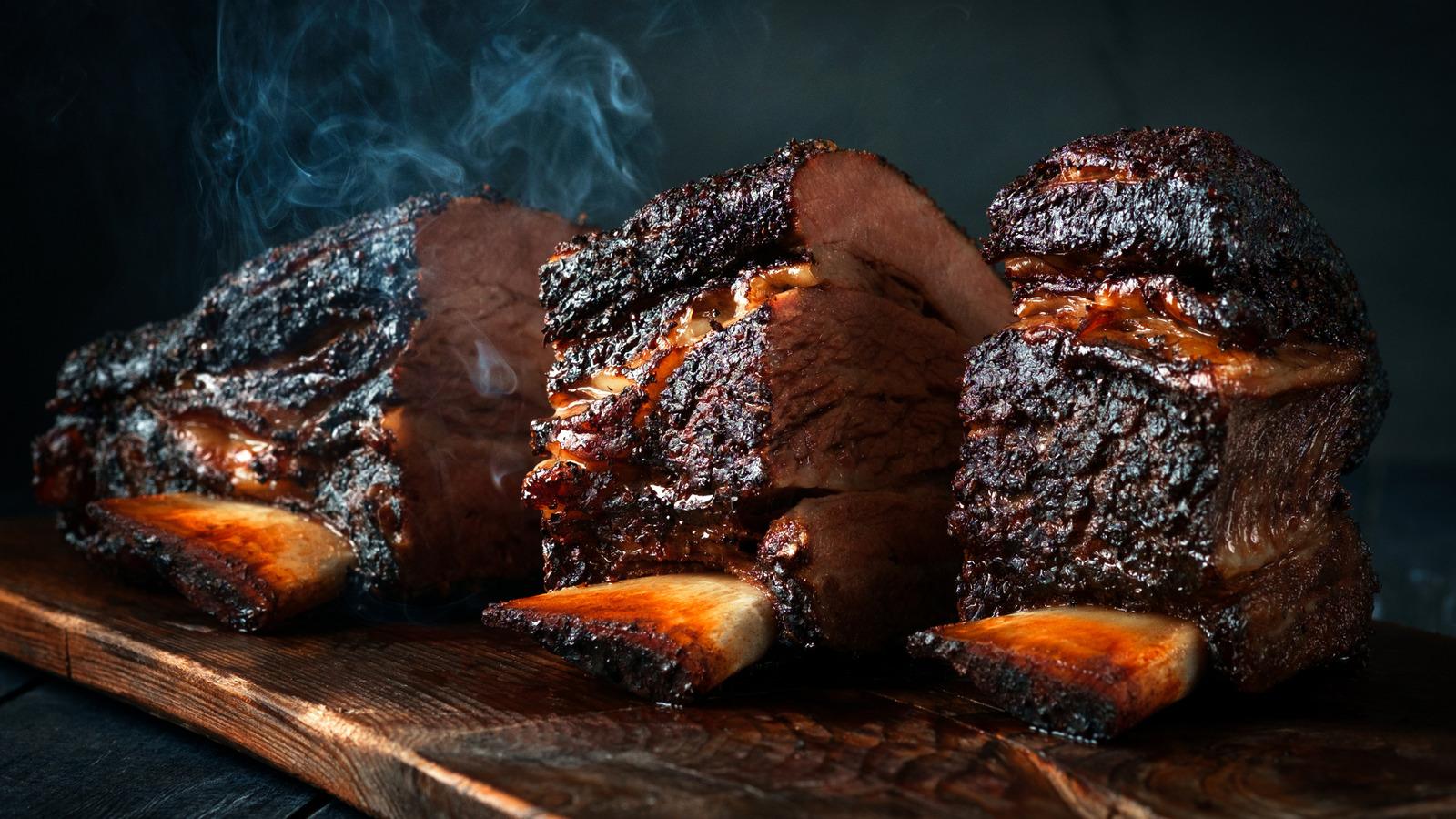
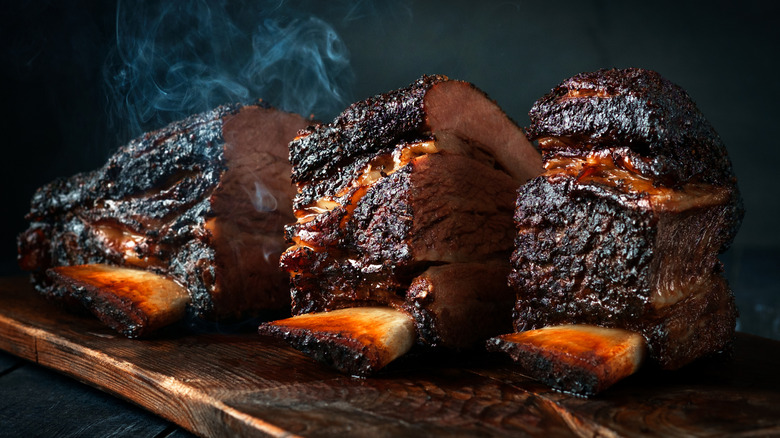
Brisket is a barbecue favorite, and for good reason. Classic smoked brisket is deeply flavored, tender, and easily upgrades anything from chili to tacos. It's best cooked low and slow, allowing the tough cut of meat time to tenderize and absorb the smoky aromas. If you're not careful, though, brisket is easy to dry out. You can spritz it periodically with apple cider vinegar or a seasoned basting spray to keep areas like the edges from getting too dry over the long cook time, but don't make the mistake of spraying liquid over the entire cut of beef.
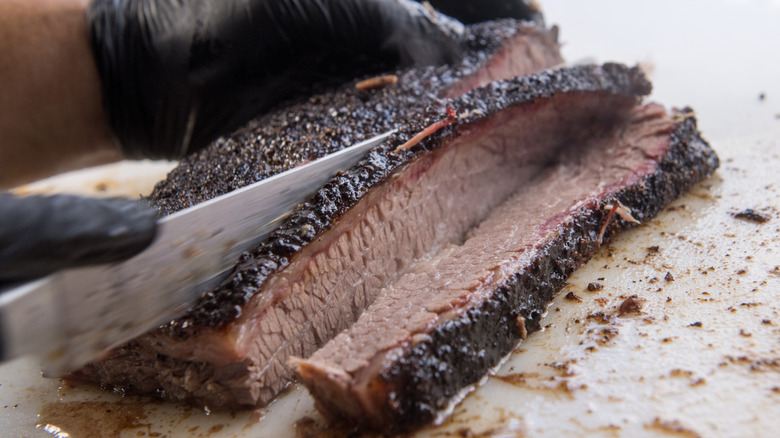
One particular area of the brisket you should avoid spritzing is the fat cap. As you add moisture, make sure it's aimed at the meat rather than the thicker fatty parts around the outside. Otherwise, you risk preventing the fat cap from fully rendering, or at the very least, you're wasting that flavorful spritzing liquid. Fat rendering is a crucial part of smoking brisket that improves the flavor and texture of its crusty outer layer, known as the bark.
Fats are hydrophobic. If you've ever tried to mix olive oil, a fat, with water or a water-based liquid like vinegar, you've seen fat's water-repelling properties in action. Any water-based spritzes you apply to the fat cap of a brisket will simply stay on the outside or run off rather than soak in. The liquid is absorbed far better when you spray the meat directly.
A moist brisket needs rendered fat
John Anderson/Getty Images
As a brisket cooks, the fat renders, or breaks down, from a firm, white texture to a liquid that can keep the whole cut juicy. Fat won't render during quick cooking methods like searing because it requires prolonged exposure to heat to become soft and melt into the beef. That's why you need to smoke the meat for a long time (around an hour per pound) to achieve brisket's classic texture.
A spritz of liquid on the fat cap may prevent even rendering, or at least slow it down. Brisket smokes at around 225 degrees Fahrenheit – much hotter than a room-temperature spray. Every time you spritz, you lower the temperature of the meat and fat. The cooler liquid sits on the fat cap's surface without being absorbed, interrupting the natural rendering process. Continuous spritzing may unintentionally keep the fat cap solid and prevent a beautiful smoky bark from forming on the brisket's outer layer.
If these are the risks of spritzing fat, is it necessary to spritz the brisket at all? It's up to personal taste. When done thoughtfully, a light spray can help the appetizing flavor and aroma developed in the smoker adhere to the meat while retaining moistness on the edges. Those who prefer to leave the smoker (mostly) alone may want to try a special method of wrapping the brisket with butcher paper or aluminum foil once it reaches around 165 degrees Fahrenheit to lock in moisture.

 English
 Arabic
 French
 Spanish
 Portuguese
 Deutsch
 Turkish
 Dutch
Dutch
 Russian
 Romaian
 Portuguese (Brazil)
 Greek
Greek