


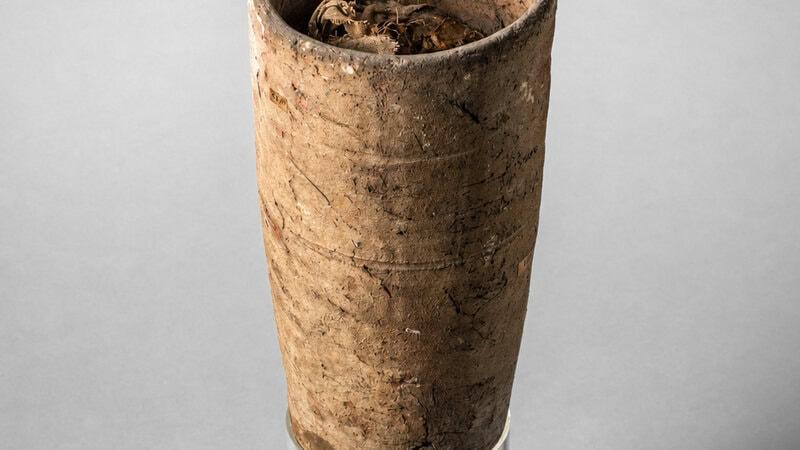

Imagine the scene: a pilgrim dusty from weeks of travel finally reaches the sanctuary gates at Saqqara, and there — arranged on stone ledges and wooden trestles in the shadow of the great temple — are thousands of small, linen-wrapped bundles, each one shaped unmistakably like a bird, each one waiting to carry a prayer to the gods. This was not a curiosity or a rarity. It was an industry, a faith, and one of the most astonishing logistical enterprises the ancient world ever produced.
Why Birds Held the Highest Symbolic Power in Ancient Egypt

To understand why millions of mummified birds ended up stacked in subterranean catacombs beneath the Egyptian desert, you first have to understand what birds meant to the people who put them there. Ancient Egyptians regarded birds as living symbols of fertility, life, and regeneration — creatures uniquely blessed because they moved freely between the earth and the sky, between the human world and whatever lay beyond it. A bird in flight was, in a very literal sense, a messenger already halfway to heaven.
No deity made this connection more powerfully than Horus, the falcon-headed god of kings and just rule. His iconography was not invented at a scribe’s desk — it was observed. Egyptians watched real falcons: the terrifying speed of a peregrine in a stoop, the cold, unblinking precision of those amber eyes, the absolute dominance a raptor commanded over every creature below it. These were qualities worthy of a god, and so the falcon became one, or rather became the face through which a god chose to be known. The relationship between avian behaviour and divine attribution ran deep in Egyptian religious thought, shaping theology from the earliest dynasties onward.
With the possible exception of cats, no other animal occupied as charged a position in ancient Egyptian religion as birds. Two species rose above the rest. The sacred ibis — that long-legged, curved-billed wader now locally extinct in Egypt — was the earthly embodiment of Thoth, god of wisdom, writing, and the moon. To see an ibis picking through the shallows of the Nile was, for a devout Egyptian, to glimpse Thoth himself going about his business. The falcon, meanwhile, carried the presence of both Horus and Ra, the sun god, whose daily journey across the sky was imagined as a great bird riding the celestial currents. These were not metaphors. They were articles of faith.
Other birds carried divine weight too. The ba — the aspect of the human soul understood to survive death and move between worlds — was almost always depicted as a human-headed bird, capable of leaving the tomb by day and returning to the body by night. The bennu, a heron-like creature associated with the sun god and the moment of creation, is widely considered a likely origin of the Greek phoenix myth. Ducks, geese, and vultures each carried their own symbolic freight, appearing in hieroglyphic script, tomb painting, and temple relief as shorthand for concepts ranging from maternal protection to the eternal cycles of the cosmos. Egypt was, in the most literal sense, a civilisation that thought in birds.
The Mummy Trade: Pilgrimage, Piety, and a Booming Sacred Market

The votive offering system that grew around this theology was elegant in its simplicity. A worshipper travelling to a major cult centre — Saqqara, Hermopolis, Abydos — was expected to bring a gift for the god whose sanctuary they were visiting. The gift needed to be appropriate, ritually correct, and ideally a physical manifestation of the deity in question. A mummified ibis for Thoth. A mummified falcon for Horus. The logic wrote itself.
What made the system so commercially powerful was that temple priests solved the supply problem for the pilgrim. You did not need to catch, kill, and prepare your own sacred bird before undertaking a weeks-long journey through the desert. By the time you arrived at the sanctuary gates, the priests had already done it for you. For a coin or a measure of grain, you could purchase a ready-made mummified bird, present it at the altar, and trust that your contracted prayer — your petition for health, fertility, justice, or a safe journey home — would be carried directly to the god by the preserved body of his own sacred animal. Think of it as the ancient world’s version of lighting a votive candle at a cathedral, except the candle was a carefully wrapped dead bird, and the cathedral sold them by the million.
At Saqqara alone, excavated catacombs have yielded the remains of an estimated four million ibis mummies. Four million. The number forces the imagination to work harder than usual. These were not accumulated casually over a few generations. They represent a demand so relentless and so vast that sustaining it would have required something resembling a modern supply chain: breeders, keepers, mummifiers, wrappers, storage managers, and salespeople, all working year-round to keep the shelves stocked. The scholarly literature on birds in ancient Egypt makes clear that this was one of the most sustained and organised religious-commercial enterprises in the ancient Mediterranean world.
The practice flourished most visibly during the Late Period and Ptolemaic era — roughly the seventh century BCE through the first century CE — when animal cults reached their greatest institutional scale. Dedicated cult centres drew pilgrims from across Egypt and, increasingly, from the wider Greco-Roman world. Saqqara served the cults of Thoth and the Apis bull. Hermopolis, deep in Middle Egypt, was Thoth’s mythological home and another epicentre of ibis veneration. Each site developed its own catacomb infrastructure, its own corps of specialist mummifiers, and its own economy built around the exchange of sacred birds for cash and grain.
What Was Really Inside the Wrappings?

In 2019, researchers using CT scanning and other non-destructive imaging techniques examined large collections of ancient Egyptian bird mummies — including specimens held at major international institutions — and made a finding that complicated the pious picture considerably. When scientists analysed the data on Egypt’s sacred bird mummies, they discovered that a significant proportion of the beautifully wrapped bundles contained something other than a complete, carefully preserved bird.
Some held only partial skeletons. Others contained little more than feathers stuffed around a core of mud and sticks. A notable number contained no bird remains at all — just wrapping, shaped to suggest a bird beneath. To a modern eye, this looks straightforwardly like fraud: priests selling empty packages to credulous pilgrims at a holy markup. And some scholars do argue for deliberate deception on a mass scale, a priestly con sustained across centuries.
But other researchers push back firmly on that reading. In ancient Egyptian ritual logic, the wrapping itself — the act of mummification, the linen, the resin, the careful shaping — may have carried the sacred charge independently of the biological contents. A bundle that looked like a mummified ibis, prepared with the correct ritual intention and the appropriate invocations, might have been considered every bit as spiritually valid as one containing a complete bird. The line between symbol and substance was drawn very differently in the ancient Egyptian mind than it is in ours, and projecting modern notions of consumer fraud onto a Bronze Age and Iron Age ritual economy risks misreading the evidence entirely. The debate remains genuinely unresolved, and it is one of the reasons bird mummies continue to fascinate researchers decades after the catacombs were first systematically excavated.
Farming the Sacred: Where Four Million Birds Actually Came From

Even setting aside the incomplete mummies, the genuine bird remains still number in the millions across Egypt’s sacred sites. Which raises the question that archaeologists and ecologists have wrestled with ever since the scale of the industry became apparent: where did all those birds actually come from?
The evidence increasingly points to organised, large-scale captive breeding. Archaeologists have found remains of enclosures and feeding stations near major cult centres, consistent with what we might recognise today as intensive animal husbandry — except that the animals in question were living embodiments of a god. Isotope analysis of ibis bones from mummy collections has revealed signs of nutritional stress and reduced genetic diversity characteristic of animals kept in crowded, managed conditions across multiple generations. The sacred ibis of ancient Egypt was not, it seems, being reverently gathered from the wild and offered up in a state of natural dignity. It was being bred in captivity, probably in conditions of considerable squalor, to meet a commercial demand driven by religious obligation.
There is a particular irony in this. The ibis was venerated precisely because it embodied Thoth — wisdom, cosmic order, the elegant precision of the divine mind. And yet the actual ibises being mummified by the millions were essentially farm animals, born into crowded enclosures, raised on whatever priests could afford to feed them, and killed before their time to satisfy a pilgrim economy. Whether wild birds were also heavily hunted to supplement farmed stocks remains debated, but researchers believe both sources were used, and that the cumulative pressure — farming stress, habitat change, and possibly direct hunting — may have contributed to the eventual disappearance of the sacred ibis from Egypt entirely. A god, in a sense, consumed by its own worship.
The raptors tell a somewhat different story. Falcon mummies, associated with Horus and Ra, appear in smaller but still substantial numbers. DNA analysis of hawk and falcon mummies has identified multiple species in the collections, suggesting that cult centres may not have been particularly discriminating about which raptor species ended up wrapped and labelled as sacred — a finding that again raises questions about the gap between theological ideal and commercial reality.
The Science Now Unlocking 2,500-Year-Old Secrets

What saves these birds from being merely a cautionary tale about religious commerce is what modern science can now read in their remains. CT scanning, X-ray fluorescence, isotope analysis, and ancient DNA extraction have transformed the study of animal mummies from a niche Egyptological curiosity into a rich, multi-disciplinary field. Researchers can now examine a two-and-a-half-thousand-year-old bird mummy without unwrapping a single layer of linen, preserving both the artefact and the information locked inside it.
What the scans reveal is often unexpectedly moving. Even when the bird inside was farmed rather than wild, even when its life was short and crowded, the hands that wrapped it worked with genuine care. The linen was applied in layered, overlapping bands. Wings were sometimes positioned with deliberate symmetry. Small resin beads were placed over the eyes. Whoever did this work — and there must have been thousands of people across Egypt whose entire professional lives were spent preparing bird mummies — brought craft and ritual attention to every bundle, regardless of what it contained.
Recent scientific reporting on ancient Egyptian bird mummies has helped bring this story to a wide public audience, and rightly so. Each mummy represents a real person’s act of faith: someone who walked for days, handed over what they could afford, and believed with complete sincerity that this small wrapped creature would carry their most urgent hopes to a god with the face of a falcon or the curved bill of an ibis. The fraud question, the farming question, the incomplete-mummy question — all of these matter. But so does that person, standing at the altar, letting go.
What Four Million Bird Mummies Tell Us About Being Human

Zoom out far enough, and the ancient Egyptian bird mummy industry stops looking exotic and starts looking deeply familiar. From medieval European relic markets — where fragments of saints’ bones were bought, sold, and occasionally fabricated to meet demand — to the souvenir shops outside shrines in Lourdes and Varanasi today, the human impulse to purchase a tangible object that connects you to something transcendent is one of the most durable habits our species possesses. The pilgrim at Saqqara, handing over grain for a linen-wrapped ibis, was doing something recognisably similar to a tourist buying a rosary in Rome or a prayer flag in Kathmandu. The theology differs. The underlying psychology does not.
What the bird mummy industry ultimately reveals is not cynicism masquerading as religion, but something more complicated and more human: a society that genuinely believed the boundary between the mortal and the sacred could be crossed through ritual, through commerce, through the preserved body of a creature that had once moved between earth and sky. Whether the mummy contained a whole bird, a partial bird, or nothing at all, the faith that animated the transaction was real. The demand that drove the industry was real. And the cost — ecological, ethical, theological — was real too.
Somewhere beneath the sands of Saqqara, in catacombs that stretch for kilometres through the limestone bedrock, millions of linen-wrapped birds still wait in the dark — each one a small, preserved prayer from a person whose name we will never know, offered to a god with the face of a falcon. As new scanning technology reaches more museum collections around the world, researchers say the full story of Egypt’s sacred bird mummies — fraud, faith, farming, ecology, and all — is only beginning to be told.

 Arabic
 French
 Spanish
 Portuguese
 Deutsch
 Turkish
 Dutch
Dutch
 Italiano
 Russian
 Romaian
 Portuguese (Brazil)
 Greek
Greek