


New Africa/Shutterstock
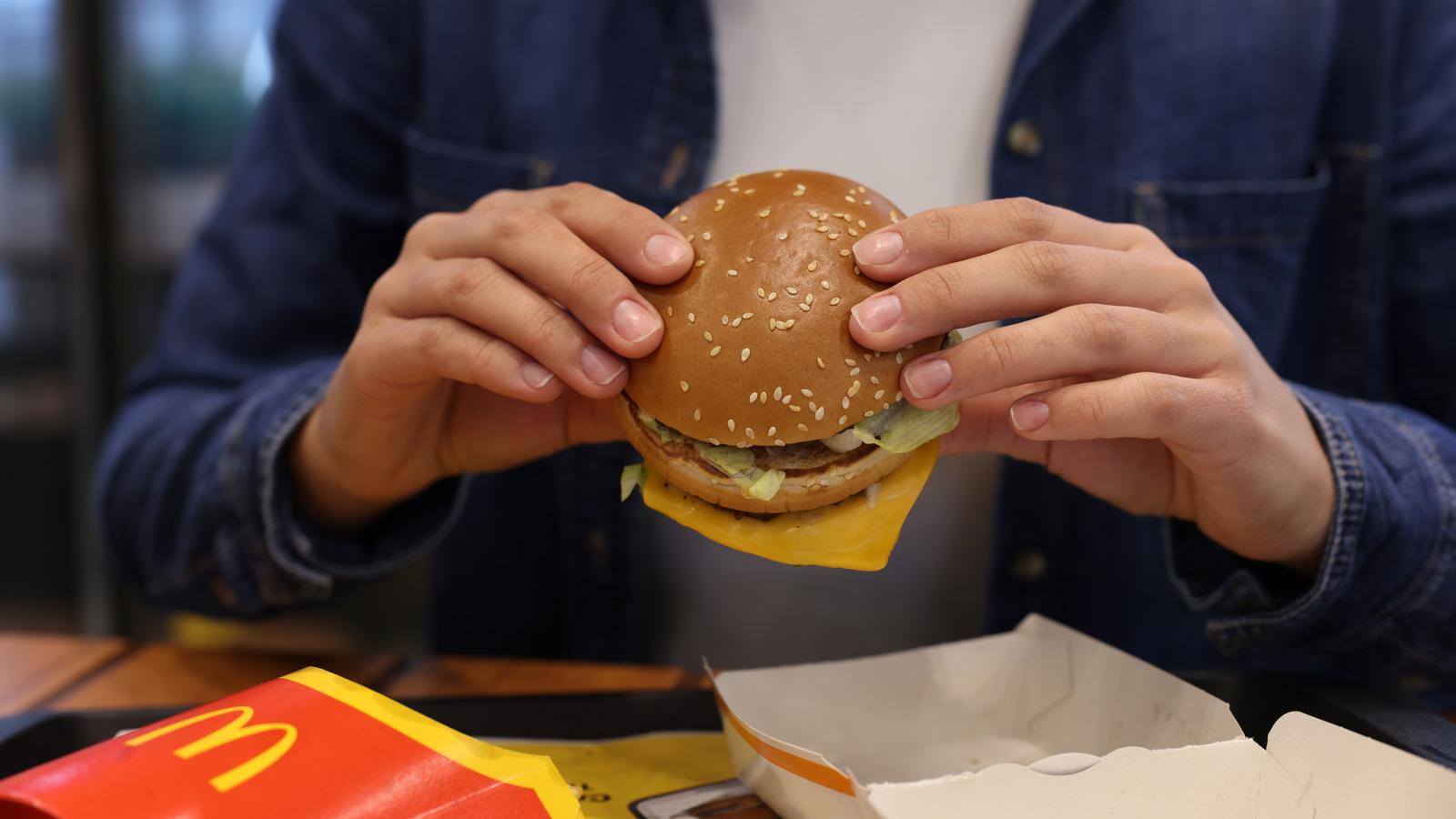
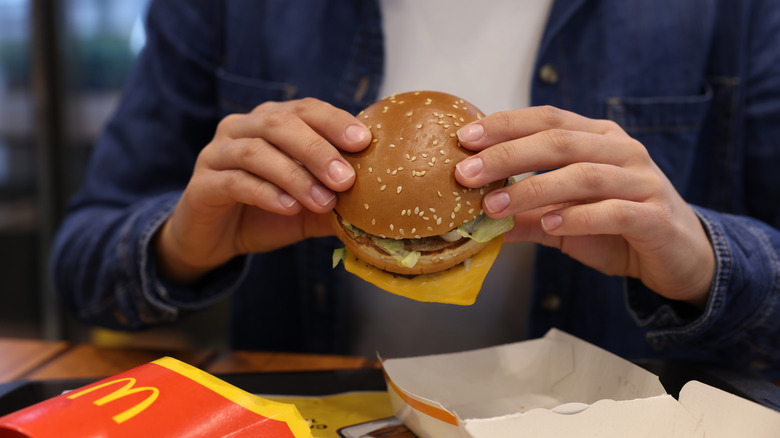
For anyone who's tempted to indulge in a daily Big Mac at McDonald's, it's worth considering the health ramifications. That's why we reached out to Kelsey Kunik, Registered Dietitian Nutritionist at Graciously Nourished, a website dedicated to balanced eating, wholesome recipes, and wellness. In an exclusive chat with Mashed, Kunik explained what could happen with a daily Big Mac habit. According to the RDN, your collective eating habits play a significant role in the outcome.
"If a daily Big Mac is part of a diet that also includes other processed foods high in sodium, saturated fat, and added sugars," Kunik said, "it will likely increase the risk of chronic disease and weight gain." On the other hand, eating the burger on a regular basis will be less impactful if the meal "is part of a diet that's full of whole foods, plenty of fruits and vegetables, and whole grains." A balanced diet ensures intake of essential nutrients, while also supporting digestion and other bodily functions.
An excess of sodium can impact heart health
Yau Ming Low/Shutterstock
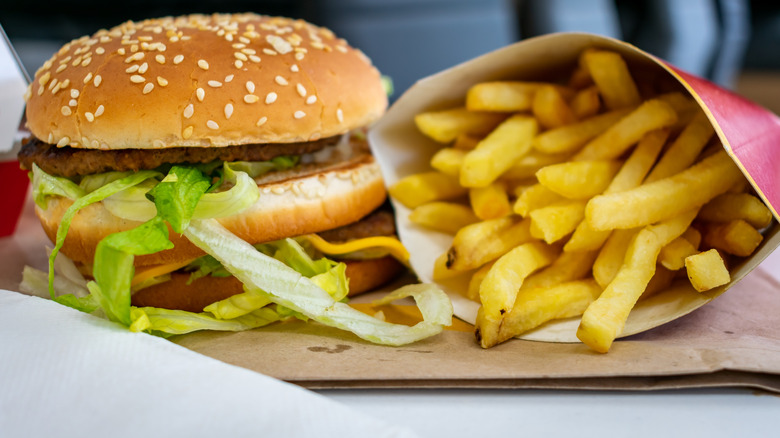
When it comes to sodium consumption in America, most people get entirely too much in their diets. If an already high amount gets coupled with a daily salt bomb like Big Macs, it raises the chances that a person's heart will be negatively affected. Kelsey Kunik stated, "A Big Mac has just under half the recommended daily amount of sodium." For the record, the burger contains 1,060 milligrams of sodium, which is 46% of a person's daily value (based on a diet of 2,000 calories per day).
As for what happens to the body when a person eats too much salt, the RDN cautions, "Too much [sodium] causes blood volume to increase in the blood vessels, raising blood pressure and straining the heart." For people with existing high blood pressure, the dynamic is even more problematic. Kunik told us that some sodium is needed to support bodily functions, but daily intake must not exceed 2,300 milligrams according to the American Heart Association. When it comes to people with heart conditions or those that want to substantially overhaul their salt consumption, the recommended daily limit is 1,500 milligrams or less.
Fat and cholesterol also pose a heart disease risk

Jessicaphoto/Getty Images
According to Kelsey Kunik, "A Big Mac has 34 grams of fat, or 43% of the recommended daily value." However, the meal's 11 grams of saturated fat are especially problematic from a health perspective. The RDN said, "Too much saturated fat and trans fat both raise LDL (bad) cholesterol, which builds up in the arteries and increases the risk of heart disease and stroke." While Big Mac's also have a high concentration of cholesterol, Kunik said this metric is less worrisome. "High levels of saturated and trans fats will do more to raise blood cholesterol than dietary cholesterol itself," the dietitian explained.
There are a few scientific reasons that people crave fatty foods like burgers. That desire could be an evolutionary throwback to a time when meals were few and far between. Fat also contributes to flavor, which explains why us humans are still enraptured by Big Macs and other juicy hunks of beef. According to Harvard Health Publishing, you should prioritize the healthier forms of fat (mono and polysaturated) found in avocados, olive oil, salmon, and other foods. Saturated fats should be greatly limited, while trans fats should be avoided. Here's how to check food labels for the presence of trans fat (hint: It might be called hydrogenated oil).
When it comes to calorie count, Big Macs fare ok (on their own)
8th.creator/Shutterstock
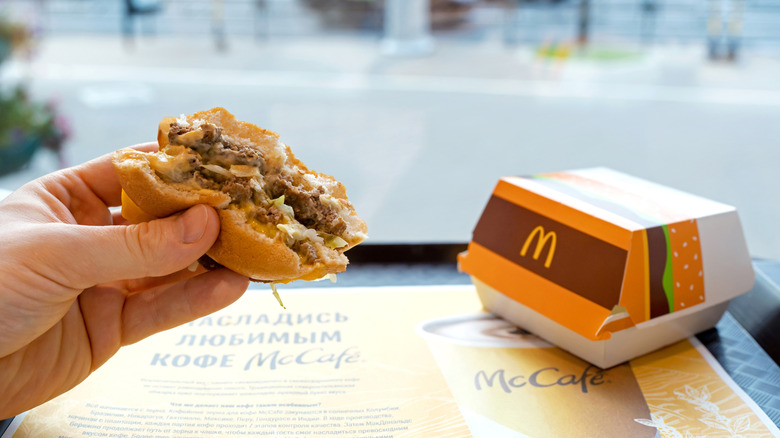
Calories are vital to a healthy mind and body. However, taking in an excess of calories with low or moderate physical activity can be problematic for some. This is especially true with weight gain that occurs around the midsection, which carries a greater risk of health problems. The good news is that on its own, a Big Mac isn't likely to drastically increase your caloric intake. As Kelsey Kunik told us, "A Big Mac has a quarter to a third of the amount of calories many people need in a day, with 580 calories in one burger." As a result, "The calories themselves [are] the least concerning part of a Big Mac," the dietitian explained, unless you're enjoying a daily meal of Big Mac, large fries, and a beverage.
A large fry at McDonald's has 480 calories, while a large Coke has 380 calories. When combined, all three items total a staggering 1,440 calories, which is approximately 72% of one's daily caloric intake for a 2,000 calorie diet. Based on Kunik's input, a moderate intake of Big Macs isn't likely to derail your health when paired with a balanced diet. You can also check out these healthy food options at McDonald's if you want some wholesome alternatives to the chain's famous burgers and fries.

 Arabic
 French
 Spanish
 Portuguese
 Deutsch
 Turkish
 Dutch
Dutch
 Italiano
 Russian
 Romaian
 Portuguese (Brazil)
 Greek
Greek