


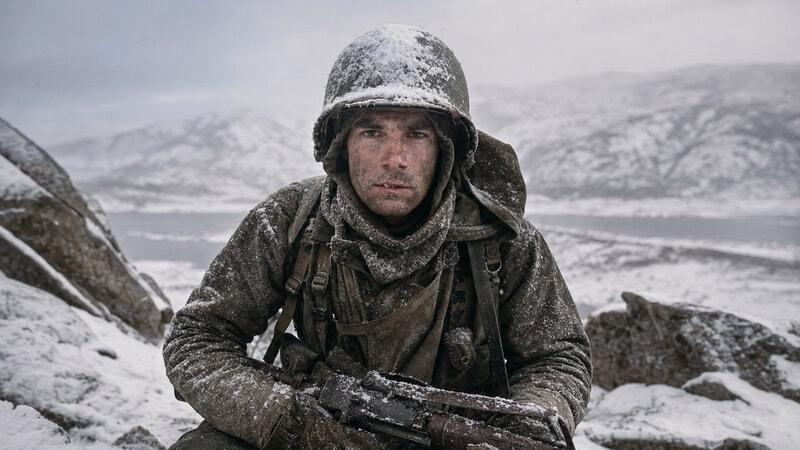

The temperature at the Chosin Reservoir in late November 1950 dropped to minus-35 degrees Fahrenheit — cold enough to freeze the oil in rifle mechanisms and turn frostbitten fingers black. Nearly 15,000 U.S. Marines and soldiers found themselves encircled by Chinese forces in the mountains of North Korea, fighting a brutal retreat through ice and ambush that became one of the most harrowing episodes in American military history. Most Americans today could not locate it on a map, let alone describe what happened there.
The War That Disappeared Between Two Louder Wars

The Korean War began on June 25, 1950, when North Korean forces crossed the 38th parallel and swept south with speed and violence that stunned the world. It ended — not in victory, but in armistice — on July 27, 1953, a draw that satisfied no government, honored no clear winner, and produced no triumphant homecoming parade. Sandwiched between World War II’s towering mythology and Vietnam’s cultural explosion, the conflict killed an estimated 36,574 Americans in theater and millions of Koreans and Chinese, reshaped the geopolitical map of East Asia, and then somehow slipped through the cracks of collective memory.
World War II had Spielberg. Vietnam had Apocalypse Now and a generation of writers who refused to let the country look away. Korea got silence. Its veterans came home to an America already pivoting toward Eisenhower-era prosperity, and a public that had never fully committed its imagination to the conflict. The phrase “The Forgotten War” was coined not as a tribute but as an indictment — a recognition that something significant had been willfully mislaid.
The stakes of that forgetting are not merely sentimental. The Korean peninsula remains technically at war today; the 1953 armistice was a ceasefire, never a peace treaty. The division of the peninsula, the permanent American military presence in South Korea, North Korea’s nuclear isolation, the entire architecture of East Asian geopolitics — all of it was born in those three years of fighting. Understanding how the conflict began, who shaped it, and who paid for it is not historical housekeeping. It is essential for reading the present.
What makes the forgetting especially inexcusable is that serious books have always existed to correct it. A rich shelf of Korean War histories and memoirs has been quietly fighting the amnesia for decades. Taken together, they reveal a war of staggering complexity — Truman against MacArthur, Mao calculating losses in the hundreds of thousands, Stalin watching from a careful distance, and millions of ordinary people ground between them. The reading list below moves from frozen foxholes to White House war rooms to the interior lives of prisoners and civilians, demonstrating that the story of Korea is anything but small.
The Essential Starting Point: David Halberstam’s The Coldest Winter

For the general reader arriving at this war for the first time, David Halberstam’s The Coldest Winter: America and the Korean War (2007) is the natural gateway. Published posthumously, it reads less like conventional military history and more like a political thriller with a death toll attached — braiding battlefield narrative with the Washington power struggles that sent men to die in circumstances that better decisions might have prevented.
The book’s central achievement is its refusal to separate strategy from suffering. Halberstam moves the reader from freezing foxholes to White House strategy sessions within the same chapter, making the war feel immediate and morally urgent rather than ancient and abstract. His portrait of Douglas MacArthur — brilliant, vain, catastrophically overconfident — is among the most devastating character studies in American nonfiction. MacArthur had promised the troops they would be home by Christmas 1950. Instead, they were encircled at Chosin, dying of cold and surprise in equal measure, victims in part of a commander whose ego could not accommodate the possibility of Chinese intervention.
The Coldest Winter is consistently cited among the most highly rated Korean War books on Goodreads and earns that reputation on every page. Pair it with Max Hastings’s The Korean War (1987), which offers a British historian’s wider sweep and gives fuller weight to the Korean and Chinese experiences that American-centric accounts tend to minimize. Together, the two books form something close to a complete portrait of the conflict from both the inside out and the outside in.
Hampton Sides and the Battle That Defines the War

If Halberstam provides the political and strategic frame, Hampton Sides’s On Desperate Ground (2018) provides the visceral, bone-deep experience. His account of the Battle of Chosin Reservoir is essential reading for anyone who needs to feel a war before they can understand it. Sides is a master of immersive narrative nonfiction, and he rebuilds the encirclement of Allied forces by Chinese troops in late November 1950 with the pacing of a survival thriller and the moral gravity of a tragedy.
What Sides achieves that pure military history rarely manages is genuine individual humanity. His soldiers are not tactical units or casualty statistics — they are people with specific fears and specific courage, enduring specific cold. The frostbitten retreat that followed the Chinese encirclement becomes, in his hands, something the reader does not forget precisely because it cannot be abstracted away into numbers. This is why the book belongs on every Korean War reading list not just as drama but as moral argument: a rebuke, in human detail, to the word “forgotten.”
The battle itself also matters as a historical hinge point. Chosin was the moment American military assumptions about the war — and about the willingness of Mao’s China to intervene at catastrophic cost — collapsed entirely. MacArthur’s Christmas promise died in those mountains, and with it the possibility of a quick resolution. Everything that followed, including the grinding stalemate that produced the armistice, traces a line back to that frozen reservoir.
The Scholar’s Shelf: Bruce Cumings and the War’s Deep Roots

Narrative and drama can carry a reader deep into the experience of the Korean War. But understanding why it happened — the long historical fuse that led to June 1950 — requires a different kind of reading. For that, the work and recommendations of Bruce Cumings, one of America’s foremost academic authorities on Korea, are indispensable.
Cumings curated a landmark selection of the best books on the Korean War for Five Books, and his choices push past battlefield narrative into the terrain of politics, media, ideology, and long historical memory. Among the titles he highlights: John Merrill’s Korea, which excavates the civil conflict roots of the war; Steven Casey’s Selling the Korean War, which examines how the Truman administration managed public opinion during an unpopular and poorly understood conflict; and Ha Jin’s novel War Trash, which Cumings singles out for its rare, humane perspective from inside the Chinese experience.
Cumings’s central historical argument — woven through his recommended reading — is that the Korean War was not a sudden Cold War skirmish that erupted from nowhere. It was the violent culmination of decades of Japanese colonialism, Korean civil conflict, and superpower rivalry, context almost entirely absent from American popular memory. To understand the war as Cumings frames it is to understand it not as an episode but as an origin story, one whose consequences — the division of the peninsula, the nuclear standoff, North Korea’s hermetic isolation, South Korea’s economic transformation — continue to shape the twenty-first century.
Casey’s Selling the Korean War deserves particular attention for readers interested in the domestic American dimension. An unpopular war managed by a politically embattled president, sold to a public that never fully understood what it was fighting for — the parallels to later American conflicts are uncomfortable and entirely intentional.
Fiction, Memoir, and the Human Cost

History books account for armies. Fiction and memoir account for people. Ha Jin’s War Trash (2004) — a National Book Award finalist — tells the Korean War from the perspective of a Chinese prisoner of war, a vantage point almost invisible in Western accounts and devastating in its intimacy. Ha Jin writes in English with surgical precision, and his novel restores individual interiority to people who exist in most Western accounts only as the faceless forces that encircled the Marines at Chosin.
Personal memoirs round out the human dimension in equally important ways. Explore the Archive’s curated list of Korean War books includes firsthand accounts that anchor abstract casualty numbers in individual and family survival stories — the kind of specificity that makes history inhabitable rather than merely informative.
The Wikipedia list of books about the Korean War surfaces additional titles worth pursuing across multiple perspectives and formats, a useful index for readers who want to move beyond the standard Western canon and encounter accounts that treat all combatants as human beings with their own fears, their own orders, and their own dead.
A Korean War Reading List: Where to Start, Where to Go Deep

For readers arriving at this subject for the first time, the entry point is clear: Hampton Sides’s On Desperate Ground for visceral, ground-level immersion, followed immediately by Halberstam’s The Coldest Winter for the full political and military portrait. Two books read back-to-back that together replace a lifetime of forgetting with something genuinely unforgettable. Both are widely available alongside dozens of other essential titles in the broader Korean War books catalog.
For wider context and global perspective, Max Hastings’s The Korean War adds the British and Asian dimensions that American accounts tend to underweight. Steven Casey’s Selling the Korean War opens the domestic political dimension — essential for understanding why a war this consequential failed to grip the public imagination it deserved. Any of the titles from Bruce Cumings’s curated Five Books list will supply the deep historical roots that transform the conflict from a Cold War episode into a civilizational hinge point.
For the human dimension that statistics cannot provide, Ha Jin’s War Trash is simply required — a novel that does what the best Korean War books always circle back toward: restoring individual consciousness to people who have been reduced to the arithmetic of attrition. Supplement it with soldier testimonies and personal memoirs from Explore the Archive’s recommended list, and with History.com’s selection of five essential Korean War books for a curated shortlist from a different editorial angle.
The final argument is not complicated. Calling Korea “The Forgotten War” was always a failure of attention, never a verdict on significance. The war shaped the modern world in ways that still govern headlines: the DMZ that divides a peninsula and a people, the nuclear brinksmanship that keeps diplomats awake at night, the South Korean democracy and prosperity that stand in such stark contrast to the North’s sealed totalitarianism. All of it traces back to three years of fighting that ended without a parade, without a settled peace, and without the cultural reckoning the scale of the conflict demanded. The books have always existed, waiting for the attention the war was owed from the beginning. The forgetting was never inevitable. It remains, today, a choice — and one that any of these titles can help a reader stop making.

 Arabic
 French
 Spanish
 Portuguese
 Deutsch
 Turkish
 Dutch
Dutch
 Italiano
 Russian
 Romaian
 Portuguese (Brazil)
 Greek
Greek