


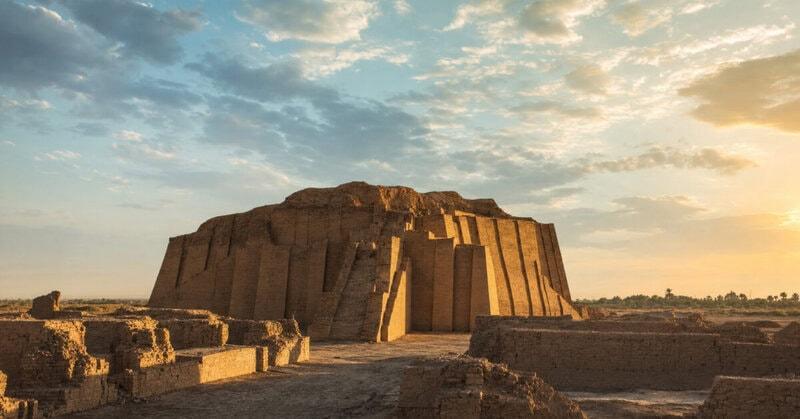
Somewhere beneath the streets of modern Basra, under the highlands of southeastern Turkey, and in the reed marshes of southern Iraq where water buffalo still wade at dusk, the world’s first civilization is not a memory — it is a layer of soil waiting to be turned. The myths surrounding ancient Mesopotamia are as thick as the silt the Tigris and Euphrates once deposited every spring, and most of them are wrong in ways that matter.
Myth 1: Mesopotamia vanished from the map when its empires fell

It is tempting to think of Mesopotamia the way we think of Atlantis — a place that existed and then simply ceased to. But Mesopotamia was never a political state to begin with. It was, and remains, a geographic description: the territory shaped by the Tigris and Euphrates river system, a real corridor of land that still runs through real countries, can be photographed from satellites, and can be walked across on a Tuesday afternoon. The civilizations that rose there — Sumerian, Babylonian, Assyrian — collapsed in turn. The land beneath them did not.
Those same river valleys, alluvial plains, and ancient marshes exist today in forms recognizable to anyone who has studied the ancient maps. Archaeologists drive out to dig in them. Farmers irrigate from the same rivers. The civilizations ended; the geography is stubbornly, gloriously intact.
Myth 2: Ancient Mesopotamia was located entirely inside modern Iraq

Iraq holds the largest share of what was ancient Mesopotamia, and that association is not wrong — it is just incomplete. Britannica describes the region as encompassing modern Iraq alongside portions of Iran, Syria, and Turkey, which means four sovereign nations today share the territory that a schoolbook might label with a single name. The upper Euphrates, for instance, originates in the Anatolian highlands of present-day Turkey, hundreds of miles from the Iraqi border.
Northeastern Syria contains major Mesopotamian archaeological sites. Southeastern Turkey shelters some of the most significant early settlements in the river system’s upper reaches. Western Iran borders the territory where Elamite and Mesopotamian cultures overlapped for millennia. Pinning ancient Mesopotamia exclusively to modern Iraq quietly erases those borders — and the archaeological treasures on the other side of them.
Myth 3: “Mesopotamia” is a poetic ancient name, not a literal description

There is nothing romantic about the etymology. The name is blunt, functional Greek: meso, meaning “middle” or “between,” joined to potamos, meaning “river.” Together they produce “the land between the rivers” — a description so precise it functions less like a proper noun and more like a set of coordinates. The two rivers in question are the Tigris and the Euphrates, and the region sits in the corridor between them with cartographic exactness.
Ancient place-names are often assumed to carry layers of mythology, and Mesopotamia has plenty of mythology attached to it. But the name itself is almost bureaucratic in its clarity. It is an ancient coordinate encoded in language — which means every time someone says “Mesopotamia,” they are, without knowing it, accurately describing where the place actually is.
Myth 4: Mesopotamia was the homeland of a single great civilization

The phrase “Mesopotamian civilization” implies a tidy, singular thing, but the river valley was more like a stage with a rotating cast of civilizations spanning roughly three thousand years. The Sumerians built the earliest cities and gave the world cuneiform writing. The Babylonians produced the Code of Hammurabi and made Babylon one of antiquity’s great capitals. The Assyrians assembled one of the ancient world’s first great libraries and built an empire that stretched across the Near East. These were separate peoples, with separate languages, separate capitals, and distinct cultural achievements that sometimes built on each other and sometimes destroyed each other.
Flattening that span into “one civilization” is the equivalent of describing two thousand years of European history as a single culture. The archaeology of the region reflects layer upon layer of change — burned cities rebuilt on top of ruined ones, new scripts replacing old, new gods promoted and old ones absorbed. The diversity is the story.
Myth 5: The burning of Mesopotamia’s great library destroyed its texts forever

When Nineveh fell in 612 BC, the Library of Ashurbanipal — containing roughly 30,000 tablets — burned in the sack of the city. It sounds like an irreversible catastrophe, the ancient equivalent of the loss of Alexandria. But the tablets were clay, and the fire did not destroy them — it baked them, firing them like pottery and locking the inscribed text permanently in place. The attackers who torched the palace inadvertently became the world’s first archivists.
Because of that accidental preservation, Mesopotamian poetry, royal annals, medical texts, and astronomical observations that survived the conflagration can be read and studied today. The Epic of Gilgamesh, widely regarded as the world’s oldest surviving work of literature, owes its preservation in part to the people who tried to burn it. The tablets are there, in museums, catalogued and translated — durable proof that destruction is not always final.
Myth 6: Ancient Mesopotamian languages are too dead to study comprehensively

Sumerian, the world’s oldest written language, went extinct as a spoken tongue roughly four thousand years ago. For a long time, the assumption was that such antiquity placed it beyond comprehensive scholarly recovery. Then a team of researchers spent ninety years building a complete dictionary of Sumerian — a project so painstaking it became something of a legend in academic linguistics. That dictionary is now freely available online, making Sumerian one of the more thoroughly documented ancient languages on earth.
Far from inaccessible, Mesopotamian texts are actively translated and published by scholars worldwide. The range of what survives is extraordinary: royal hymns and administrative grain receipts, astronomical observations and school exercises written by students learning cuneiform for the first time. The picture those texts paint is not a collection of fragments — it is a civilization talking, at length, about itself.
Myth 7: We have no real idea what ancient Mesopotamians ate

Reconstructing ancient diets usually means inference — pollen samples, animal bones, carbonized seeds. Mesopotamia is a notable exception. Researchers have decoded four-thousand-year-old recipes inscribed on clay tablets, and the results are specific enough to cook from: particular stews, broths made with certain birds, roasted meats seasoned with recognizable herbs. The tablets describe ingredients, preparation steps, and the order of cooking — not approximations, but actual culinary instructions preserved by accident of medium.
The agricultural picture has grown more detailed as well. Beyond the wheat and barley that long defined the textbook account of Mesopotamian farming, archaeologists have identified millet in Bronze Age Mesopotamian contexts — a discovery that broadened understanding of what early farmers actually cultivated and how resilient their food systems may have been. The Mesopotamians were not eating mystery food. They were eating dinner, and they wrote down how to make it.
Myth 8: The “Cradle of Civilization” label is romantic exaggeration

The phrase sounds like the kind of thing inscribed on a tourist brochure, and perhaps that is why it invites skepticism. But the label is backed by a convergence of independently documented firsts that is difficult to match anywhere else on earth. Mesopotamia produced the world’s earliest known cities, the first writing system, and some of history’s first codified laws — not as isolated achievements but as part of an interconnected urban revolution that unfolded over centuries in the same river valley.
The Code of Hammurabi, inscribed around 1754 BC, established principles of contract, property, and punishment that echo in legal traditions studied to this day. You can also see surviving artifacts from this civilization firsthand: the Getty Museum has exhibited Mesopotamian objects drawn from that long arc of invention. Calling Mesopotamia the cradle of civilization is not sentiment — it is, if anything, understatement dressed in a memorable phrase.
Myth 9: Southern Iraq’s ancient marshes have fully recovered and are thriving

The story of the Mesopotamian marshes looked, for a moment, like a rare environmental triumph. After Saddam Hussein systematically drained the vast wetlands of southern Iraq in the 1990s — a campaign designed to displace the Marsh Arab communities who had lived there in reed-house villages for thousands of years, in a way of life stretching back to Sumerian times — reflooding efforts after 2003 brought a genuine ecological rebound. Birds returned. Buffalo returned. The Marsh Arabs came back to rebuilt homes on the water.
But the recovery is now under serious threat. Drought and accelerating climate change are drying the marshes a second time, and reduced water flow from upstream dams compounds the pressure. The wetlands, inscribed as a UNESCO World Heritage Site in recognition of their ancient and ecological significance, remain endangered — not restored, not stable, but in ongoing jeopardy. The marshes survived Saddam Hussein. It is less certain they will survive the century.
Myth 10: Iraq has moved on from its ancient heritage in favor of modernization

The reality is closer to the opposite: Iraq is in a race, and time is not on its side. Looting that surged after 2003 stripped irreplaceable archaeological context from countless sites before scholars could document them. The illegal antiquities trade funneled objects that had rested undisturbed for four millennia into private collections, severing them from the stratigraphic layers that give them meaning. Urban expansion, dam construction, and decades of conflict have all taken tolls still being fully assessed. Iraq is actively racing to save what remains — not celebrating what has been lost.
And yet the excavations continue, and the ground keeps giving. New tablets, new architectural remains, new evidence of ancient trade networks are regularly announced from sites that have barely been touched. Adding to the picture, recent research suggests that tidal dynamics along the southern river system may have played a significant role in shaping where early urban civilization took root — a reminder that the foundational story of Mesopotamia is still being written. The ancient ground beneath modern Iraqi cities is, archaeologists will tell you, mostly unexcavated. Mesopotamia is not a closed chapter. It is an ongoing dig, and the next shovel’s depth might change everything.
The land between the rivers is not a ruin or a memory — it is a living landscape still yielding the secrets of the civilization that invented writing, law, and the city itself, one clay tablet at a time.

 Arabic
 French
 Spanish
 Portuguese
 Deutsch
 Turkish
 Dutch
Dutch
 Italiano
 Russian
 Romaian
 Portuguese (Brazil)
 Greek
Greek