


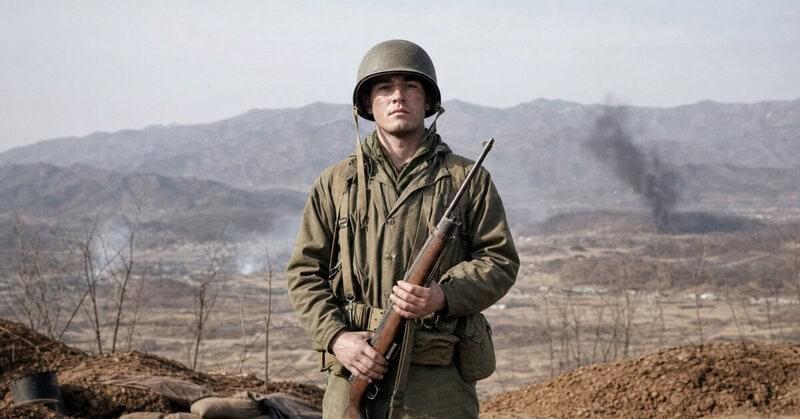
At 4:30 on a quiet Sunday morning in June 1950, one of the twentieth century’s most consequential wars exploded into life — and more than seventy years later, by a peculiar twist of international law, it has never officially stopped. This is the story of how a conflict born from Cold War rivalry and Korean civil grievance burned for three years, killed millions, and then refused to end — leaving an entire peninsula suspended, to this day, between war and not-war.
Why Korea Was Already a Powder Keg Before 1950

To understand the war, you have to rewind to August 1945, when two U.S. Army colonels — working from a National Geographic map in the immediate aftermath of Japan’s surrender — drew a line across the Korean peninsula in roughly thirty minutes to divide American and Soviet occupation zones. That improvised boundary, the 38th parallel, became the fault line of a nation. It split families, severed rail lines, and imposed an arbitrary border on a people who had never chosen one.
Beneath the Cold War framing, the conflict was always something rawer and more personal: a civil war, pitting two rival Korean governments — each claiming to be the sole legitimate heir to the entire peninsula — against each other. Decades of Japanese colonial rule from 1910 to 1945 had fractured Korean society along deep ideological lines, and the sudden vacuum left by Japan’s defeat filled rapidly with competing visions of what Korea should become. Kim Il-sung’s Soviet-backed government in the north and Syngman Rhee’s U.S.-backed government in the south each denounced the other as illegitimate. Armed confrontation, in retrospect, felt almost structurally inevitable. Britannica’s overview of the Korean War traces this colonial and Cold War inheritance in useful detail.
4:30 a.m., June 25, 1950 — The Attack That Shattered a Sunday Morning

The timing was no accident. When approximately 75,000 soldiers of the North Korean People’s Army surged across the 38th parallel in a coordinated general assault, many South Korean and American officers were off-base, enjoying a weekend. The attackers rolled through the first defensive lines within hours, exploiting the gap between peacetime routine and wartime readiness with ruthless efficiency.
The speed of the collapse was staggering. Within three days, Seoul — the capital of the Republic of Korea — had fallen. For the soldiers and civilians scrambling southward, the world had changed permanently in the span of a single weekend. The Eisenhower Presidential Library’s primary source documents on the Korean War illustrate the scale and coordination of the invasion and the crisis atmosphere it immediately produced in Washington.
June 27, 1950 — Washington’s Cold War Reflex Pulls America Into the Fight

President Harry Truman moved with striking speed. Within 48 hours of the invasion, he authorized U.S. air and naval support for South Korea, framing the crisis not as a Korean civil conflict but as Soviet-directed communist aggression — a test of American resolve that could not go unanswered. Whether or not that framing was fully accurate, it drove the decision that would ultimately commit tens of thousands of American lives to a peninsula most Americans could not find on a map.
The United Nations provided the legal umbrella. The Security Council voted to authorize member states to repel the North Korean attack, a resolution made possible only because the Soviet Union was boycotting the Council at the time and could not exercise its veto — a fateful diplomatic accident that shaped everything that followed. General Douglas MacArthur was appointed commander of the resulting UN coalition, which eventually drew troops from 16 nations, though the fighting burden fell overwhelmingly on American and South Korean forces. History.com’s account of the Korean War captures how rapidly Washington’s Cold War calculus transformed a regional crisis into an international confrontation.
September 15, 1950 — MacArthur’s Inchon Gamble Reverses the War Overnight

By late summer, UN forces had been compressed into a desperate defensive perimeter around the southeastern port city of Pusan, their backs against the sea. MacArthur proposed something that made most of his military colleagues deeply uneasy: an amphibious landing at Inchon, a port notorious for extreme tidal variations — among the highest in the world — that could strand landing craft on mud flats for hours. The logistical obstacles seemed prohibitive, which is precisely why North Korean forces had left it lightly defended.
The landing on September 15 succeeded beyond almost any reasonable expectation. North Korean supply lines were severed, their forces suddenly caught between UN troops pushing northward out of the Pusan Perimeter and the fresh Inchon landing force advancing from the west. Seoul was recaptured by late September. The reversal was so complete that within weeks UN troops were pushing deep into North Korea toward the Yalu River — a triumphant advance that was about to invite a catastrophe no one in Washington had adequately planned for.
October 1950 — China Enters the War and the Calculus Changes Forever

As UN columns pressed toward the Yalu River — the border between North Korea and the People’s Republic of China — Beijing delivered its response in silence and darkness. Roughly 300,000 Chinese People’s Volunteer Army troops crossed secretly into Korea and launched massive surprise offensives beginning in late October 1950. The effect was devastating. A war that had seemed all but won collapsed into a desperate winter retreat, with American and allied forces fighting their way out of encirclements in temperatures that plunged to extreme lows. The Battle of the Chosin Reservoir, where U.S. Marines and Army soldiers fought their way through multiple encircling Chinese divisions across frozen mountain terrain in late November and early December 1950, became one of the most grueling engagements in the history of American arms.
China’s intervention fundamentally transformed the character of the war. What had been a near-victory became, within months, a grinding struggle to reclaim ground already won and lost once before. By mid-1951 the front had stabilized near the original 38th parallel — almost exactly where the war had started — meaning that every death and every yard of scorched hillside that followed would be contested over the same earth where it had all begun. The Wikipedia entry on the Korean War provides a detailed breakdown of the Chinese intervention’s scale and strategic consequences.
1951-1953 — The Stalemate That History Struggled to Remember

After the front lines hardened near the 38th parallel in mid-1951, the war entered a phase that defied easy narration but that the men who endured it never forgot. Trench lines snaked across Korean hillsides in configurations that would have looked familiar to veterans of the Western Front three decades earlier. Battles over places with grimly evocative names — Heartbreak Ridge, Pork Chop Hill, the Hook — cost thousands of lives for gains measured in hundreds of yards, gains that were often surrendered within days. It was attritional warfare at its most brutal and its least comprehensible to the publics watching from afar.
Armistice negotiations began at Kaesong in July 1951 and later moved to Panmunjom, raising hopes that the killing might stop quickly. Instead, talks dragged on for two agonizing years, stalling most critically over the question of prisoner repatriation: North Korea and China insisted all prisoners of war be returned; the UN Command insisted that prisoners be allowed to choose whether to return. That single issue extended the negotiations — and extended the dying — by more than a year. Meanwhile, the conflict was already receding from American public consciousness, sandwiched between the triumphant memory of World War II and the oncoming cultural storm of Vietnam. The label that eventually attached itself — the Forgotten War — is as accurate as it is mournful.
The human cost of those three years was staggering. Estimates vary, but the war killed an estimated 36,000 American service members, roughly 137,000 South Korean military dead, and hundreds of thousands of North Korean and Chinese soldiers. Korean civilian deaths on both sides of the parallel numbered in the millions, a toll that the “forgotten” label has too often obscured. The Association for Asian Studies’ Korean War overview addresses the war’s enormous human costs alongside its geopolitical dimensions.
July 27, 1953 — An Armistice Is Signed, but Peace Never Arrives

After years of negotiations, the Korean Armistice Agreement was signed at Panmunjom on July 27, 1953. The guns fell silent twelve hours later. But the document the delegates signed was a ceasefire — a military instrument to halt the shooting — not a peace treaty. It established a roughly 160-mile-long, 2.5-mile-wide Demilitarized Zone approximately along the 38th parallel and created oversight machinery to monitor compliance, but it left the fundamental question that had ignited the war entirely untouched: who governs Korea, and where does one Korean state end and the other begin?
One detail in the signing ceremony carried particular significance. South Korea’s President Syngman Rhee refused to sign the agreement, furious that it enshrined Korea’s division rather than resolving it. The armistice was signed by the UN Command, North Korea, and China — leaving the government of the country most directly affected formally outside the document intended to end its suffering. That legal anomaly has echoed through every diplomatic effort since. The Association for Asian Studies’ analysis unpacks the armistice’s terms and their lasting diplomatic implications with particular clarity.
The Legal Limbo — Why “Is the Korean War Over?” Has No Clean Answer

Here is where history turns into a puzzle that lawyers and diplomats are still arguing over today. An armistice is, by definition, a suspension of hostilities — a pause, not a conclusion. Because no peace treaty has ever been negotiated or signed, the state of war between the relevant parties has never been formally terminated under international law. Two states remain technically in a condition of unresolved conflict more than seven decades after the last major battle, held in place by a document designed from the outset to be temporary.
The absence of a peace treaty means there is no agreed framework for what normalcy between North and South Korea would even look like — no treaty-level diplomatic recognition, no formally demarcated permanent border, no mechanism to address the underlying division that two colonels sketched on a map in 1945. Diplomatic efforts have repeatedly flickered and faded: the 1994 Agreed Framework on North Korea’s nuclear program collapsed by the early 2000s; the inter-Korean summits of 2000 and 2007 produced declarations but no durable agreements; the 2018 Singapore summit between President Donald Trump and Kim Jong-un raised expectations that went unfulfilled. Each effort opened the possibility of formally closing the Korean War file; none did. The Imperial War Museum’s history of the Korean War places this unresolved status in the broader context of Cold War legacy conflicts.
The DMZ Today — The Most Militarized Border on Earth

The Demilitarized Zone is one of the great dark ironies of the modern world: a strip of land named for the absence of military force that is, in practice, among the most heavily armed borders on earth. Large numbers of land mines are buried beneath its soil — estimates run into the hundreds of thousands, though precise figures are difficult to verify. Artillery massed on both sides could threaten Seoul, a metropolitan area of roughly ten million people located approximately 35 miles south of the DMZ, within a very short time. North Korea’s development of nuclear weapons — confirmed by its first nuclear test in October 2006 — transformed what had been a conventional military standoff into a nuclear flashpoint, raising the stakes of the unresolved armistice to a categorically different level of risk.
And yet the DMZ contains one final, darkly poetic detail. Its enforced, decades-long emptiness has inadvertently created one of the more significant wildlife refuges in the region. Endangered species including the Amur leopard, white-naped crane, and Asiatic black bear have been documented within or near the zone, thriving precisely because human activity has been excluded for so long. The world’s most dangerous border has become, against all logic, an accidental nature sanctuary — a fact that captures something essential about the Korean War’s unfinished condition: a landscape preserved by the threat of annihilation, a conflict suspended rather than concluded, a peninsula still waiting, more than seventy years on, for a peace that was never written.
The Korean War began with a single Sunday morning’s violence and settled into a legal ambiguity that no subsequent generation has been able to fully resolve. It is a reminder — pointed and still relevant — that wars are far easier to start than they are, in every meaningful sense, to end. For a comprehensive reference overview, the Wikipedia article on the Korean War and Britannica’s Korean War entry both offer well-sourced starting points for deeper reading.

 English
 Arabic
 French
 Spanish
 Portuguese
 Deutsch
 Dutch
Dutch
 Italiano
 Russian
 Romaian
 Portuguese (Brazil)
 Greek
Greek