


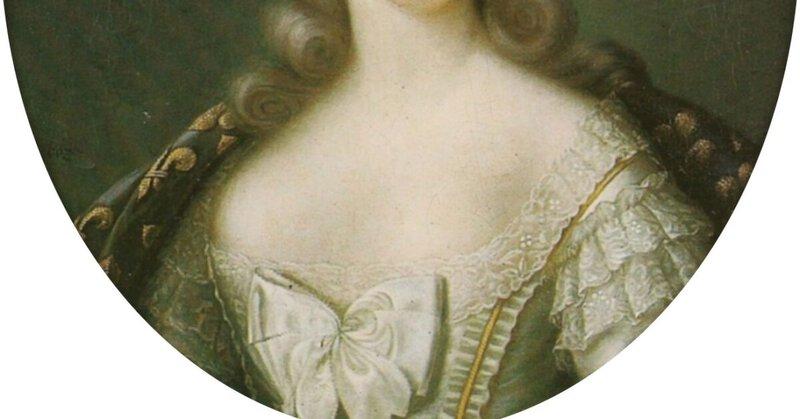
The bread had run out. Across France in the winter of 1788 and into the revolutionary spring of 1789, ordinary people were spending the majority of their wages just to eat — and still going hungry. Into that desperate silence, history inserted six words, pinned them to a teenage queen who almost certainly never spoke them, and let the myth run for two and a half centuries.
The Most Famous Thing She Never Said

Versailles, 1789. The Hall of Mirrors still blazes with candlelight, but the crowds gathering outside are not there to admire the architecture. They are starving, furious, and marching toward a palace that has come to represent everything wrong with France. And somewhere in the telling of that story — in pamphlets, in schoolbooks, in a thousand lazy historical shortcuts — a young queen opens her mouth and says, “Let them eat cake.”
She almost certainly said no such thing. The line is arguably the most famous quote in revolutionary history, and it is almost certainly a myth. Yet it has defined Marie Antoinette more completely than any documented fact about her life, her genuine acts of charity, or the political machinery that ground her down. It is a quote that tells us everything about the revolution’s hunger for a villain and almost nothing about the woman herself.
Sofia Coppola’s 2006 film Marie Antoinette, starring Kirsten Dunst in the title role, reignited mass fascination with Antoinette when it arrived — and with it, fresh urgency around the question of what she did or didn’t say, who she really was, and whether history has been catastrophically unfair to her. The film, based on Lady Antonia Fraser’s 2001 biography Marie Antoinette: The Journey, is not a documentary. But it makes a pointed argument. And on the question of the cake, it is — quietly, without fanfare — more honest than most history textbooks.
Where the Quote Actually Comes From
The phrase Qu’ils mangent de la brioche — “Let them eat brioche,” more precisely — appears in Jean-Jacques Rousseau’s autobiography Confessions, written around 1765. At that moment, Marie Antoinette was approximately nine years old and living in Vienna, the fifteenth child of the Habsburg Empress Maria Theresa, blissfully unaware that France even needed a queen, let alone a scapegoat.
Rousseau attributes the remark vaguely to “a great princess,” and he does not name her. Historians have proposed various candidates over the years, but no single attribution has ever been proven. What is clear is that Rousseau was not writing about Marie Antoinette. The timeline makes it impossible.
The quote was retrofitted onto Antoinette decades later, turbocharged by revolutionary pamphleteers who needed a human face for aristocratic indifference. Facts were inconvenient to that narrative. The pamphleteers circulated grotesque caricatures and invented scandals with equal energy — and the “cake” line was too perfectly damning to leave unattributed to the most visible symbol of royal excess.
Here is the irony worth savoring: the actual historical record suggests that during the famine of 1788, Marie Antoinette donated substantial sums to the poor and worked to reduce the royal household budget. That is not the behavior of a woman who considered bread a luxury problem to be solved with pastry. But nuance rarely outruns a good slogan.
The Real Marie Antoinette — Before the Crown Fit
She was born Maria Antonia Josefa Johanna in Vienna in 1755, the youngest daughter of Empress Maria Theresa and Holy Roman Emperor Francis I. By the time she was a young teenager, she had been selected for a role she had little say in: bride to the French dauphin, political cement for an alliance between two ancient rivals.
At fourteen, she crossed the Rhine in a ritual “handover” ceremony designed to erase her Austrian identity as thoroughly as possible. She surrendered her clothes, her household staff, and even her pet dog at the border — a small, devastating detail that Coppola captures with quiet precision in the film. The ceremony was meant to produce a French queen. What it produced was a frightened girl, stripped of everything familiar, deposited into a court that regarded her as both a foreign interloper and a performing object.
Coppola’s film frames this arrival with real historical honesty. Kirsten Dunst plays Antoinette not as a villain or a fool, but as a bewildered young woman thrust into an impossible role, surrounded by courtiers who watched her every move — including, notoriously, her morning dressing ritual, which required the highest-ranking noblewoman present to hand the queen each article of clothing in strict hierarchical order. Privacy was not a concept Versailles offered its queen. Small wonder she retreated into fashion, gambling, and the gardens of the Petit Trianon when she could.
That emotional portrait — the loneliness, the pressure, the coping mechanisms that looked like decadence from the outside — is where the film earns its historical credibility. The psychological truth of Antoinette’s situation is well-supported by the evidence, including her own candid letters to her mother. The film’s depiction of her as profoundly isolated within the royal court is not artistic license. It is the record.
Louis XVI: Fact or Film Shorthand?
Jason Schwartzman’s Louis XVI in the film is gentle, awkward, and politically inert — a young king far more comfortable tinkering with locks than navigating the catastrophic fiscal crisis he inherited. It is a portrait that is partly accurate and partly a simplification the film never fully corrects.
Historically, Louis XVI was indeed indecisive and ultimately ineffective as a ruler. But the fuller picture is more complicated. He abolished judicial torture. He provided crucial support to the American Revolution. He attempted financial reforms that the entrenched French nobility repeatedly blocked. He was not simply a man who failed to notice that his country was on fire. He was a man who lacked the political ruthlessness to push through the changes that might have prevented the revolution.
The film’s depiction of the royal couple’s early marriage — years without consummation, mutual awkwardness, and a genuine eventual warmth — is supported by historical correspondence. Their letters suggest a real affection that grew from an unpromising beginning. Where the film falls short is in its treatment of Louis’s policy failures and the structural fiscal catastrophe he inherited. By soft-pedaling these elements, Coppola risks leaving audiences with the impression that the revolution was primarily about Marie Antoinette’s shoe budget — which is exactly the misreading that two centuries of myth-making have already encouraged.
How Accurate Is Coppola’s Film, Really?
The film received a divided critical reception — booed by some journalists at Cannes, admired by others — and the debate often centered on what it chose not to show. Coppola ends the film at the moment the royal family is forced to leave Versailles in 1789, deliberately excluding the imprisonment, the revolutionary trial, and the guillotine. For some critics, this felt like an evasion. For others, it felt like a statement: this is a film about a young woman’s inner life, not a political tragedy.
The anachronistic soundtrack — tracks by New Order, Siouxsie and the Banshees, Gang of Four, and others — and the deliberately modern sensibility, including a pair of Converse sneakers visible in one costume scene, were not continuity errors. They were Coppola’s explicit signal that she was making a film about the psychology of youth, constraint, and identity, using eighteenth-century material as a lens. Whether that trade-off works is a matter of taste. What is harder to dispute is that the film’s emotional core is grounded in genuine historical understanding of Antoinette’s situation.
On the “let them eat cake” question, the film makes its quietest and most pointed editorial choice: the line never appears. Not as a joke, not as a whispered rumor, not as a moment of royal obliviousness. Coppola simply leaves it out — which, given how thoroughly the myth saturates popular memory, is itself a kind of argument about where historical responsibility lies.
What the film also omits, and where it deserves criticism, is any meaningful treatment of France’s structural crisis. The ruinous cost of the Seven Years’ War, the debt accumulated through support of the American Revolution, the fundamentally broken tax system that exempted the nobility and clergy while crushing the Third Estate — these forces made the revolution not just possible but arguably inevitable regardless of who sat on the throne. A film willing to sit with those complexities alongside its visual pleasures would have been both more honest and more useful. Coppola chose mood over mechanism, and the film is diminished for it.
Why the Myth Stuck — and What It Cost Her
Revolutionary movements need villains, and the more human-sized those villains, the better. Abstract causes — war debt accumulated from decades of conflict, catastrophic crop failures, a tax system that exempted the wealthy and crushed everyone else — are difficult to march against. A foreign queen who allegedly sneered at the poor while eating pastry is not.
Marie Antoinette was foreign, female, visibly fond of fashion, and possessed of the particular misfortune of being the most visible face of a regime that had become indefensible. Revolutionary pamphleteers called her “Madame Deficit” and circulated slanders that escalated from the merely unfair to the genuinely obscene. The “cake” quote crystallized a real injustice — bread prices had catastrophically spiked, and people were dying — and gave it a human face. The fact that the face was almost certainly the wrong one was irrelevant. The story needed her.
There is an uncomfortable dimension to the myth’s durability. The alleged careless words of a woman who probably never spoke them became more historically famous than the actual fiscal and political decisions of the men who drove France to bankruptcy. Marie Antoinette’s fashion expenses, endlessly cited, were a rounding error against France’s war debts. But she was easier to vilify, easier to picture, easier to guillotine in the public imagination — and eventually, in the Place de la Révolution, in fact.
Historians including Fraser and the American historian Lynn Hunt have argued persuasively that Antoinette was a scapegoat for systemic failures that preceded her arrival in France and would have destabilized any monarch. More to the point, they argue that obsessing over the false quote actively distracts from understanding how the French Revolution really happened — what structural forces made it not just possible but arguably inevitable long before she ever bought a pair of shoes at Versailles.
What the Movie Gets Right That History Forgot
Coppola’s film restores something the propaganda machine stole: the interiority of a real young woman. Her loneliness at Versailles. Her genuine, documented love for her children. Her gradual, reluctant political awakening as the world outside the palace gates grew louder and more dangerous. These are not invented details. They are recoverable from the historical record, and they have been consistently flattened by two centuries of myth-making into the shape of a woman who deserved what happened to her.
The film is not a perfect historical document. It simplifies, it omits, and it chooses psychology over politics in ways that leave important questions unanswered. But its central argument — that Marie Antoinette was a person shaped by a system she didn’t design and couldn’t escape, rather than a monster who laughed at the poor — is where serious scholarship has landed. Watching the film today, nearly twenty years after its release, what strikes you is not the anachronisms or the omissions but how clearly Coppola understood the central historical injustice: that a real woman was buried under a six-word lie, and that the lie said everything about the revolution’s needs and nothing at all about her.
You can also explore the full cast and production detail on IMDB, or pick up the Blu-ray to watch the film’s famously lush cinematography at its best. For context before or after viewing, the film’s Wikipedia entry provides a thorough breakdown of production history and critical reception, and the original theatrical trailer still captures the film’s sensibility more accurately than almost any review written about it.
“Let them eat cake” is a perfect villain’s line. It is economical, contemptuous, and unforgettable. It is also, almost certainly, fiction — borrowed from a philosopher’s memoir, attached to a girl who was still learning French when it was written, and hammered into historical fact by the force of repetition alone. The woman it was attached to was complicated, constrained, and ultimately destroyed by forces far larger than herself. Sofia Coppola’s film, for all its pink frosting and punk rock, understood that. And two centuries after the guillotine fell, that understanding still feels like a small act of justice.

 English
 Arabic
 French
 Spanish
 Portuguese
 Deutsch
 Turkish
 Dutch
Dutch
 Italiano
 Romaian
 Portuguese (Brazil)
 Greek
Greek