


NataliaPopova/Shutterstock
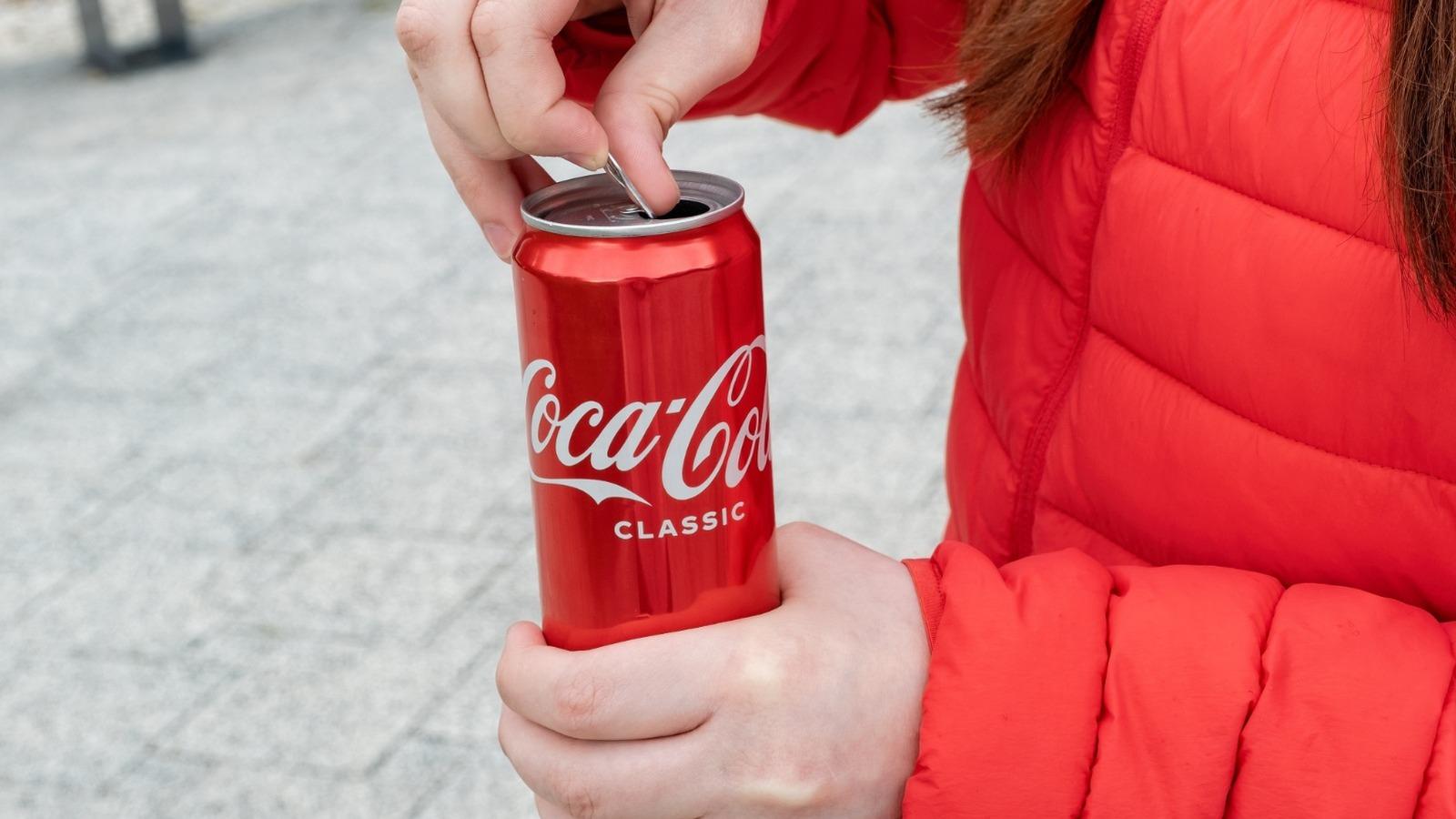
You've just ordered pizza and are eyeing the drink selection while you wait for your pie. It's an age-old debate: Diet Coke vs. regular Coke. One delivers more caffeine and sugar substitutes, while the other has the classic flavor you crave and added sugar. Before you decide, you should know the facts about how much sugar is in a can of Coke. And just so you don't get lost in the numbers, we'll break it down into sugar cubes for a striking visual.
According to the brand, there are 39 grams of sugar in a 12-ounce Coke can. The same goes for the caffeine-free version. Given that one sugar cube contains about 4 grams of sugar, there are nearly 10 sugar cubes in a can of Coke. Alternatively, a sugar cube is equal to about 1 teaspoon of granulated sugar, so you can visualize 10 teaspoons of sugar in your soda instead of sugar cubes, if that's more helpful.
It turns out this high amount isn't uncommon when it comes to sugar-sweetened drinks. Sodas, fruit drinks, and sport or energy drinks make up the bulk — about 24% — of how Americans consume added sugar (via American Heart Association). In second place is assorted desserts and sweets, like cookies and ice cream. Additional sources include coffee and tea, candy, sandwiches, sugary cereals, and sweetened yogurt.
A can of Coke contains more sugar than the daily recommended amount
Bymuratdeniz/Getty Images
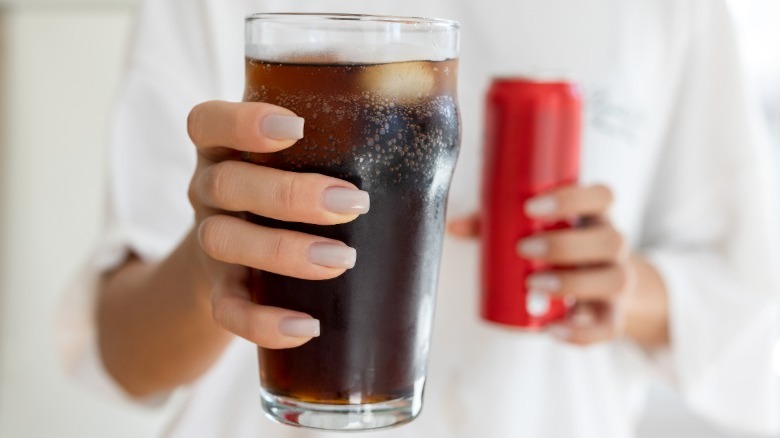
Ten sugar cubes (or 10 teaspoons of sugar) per 12-ounce can of Coca-Cola is significant. According to the American Heart Association, men should limit themselves to nine teaspoons of added sugar per day, while women should have six teaspoons or less, so a can of classic Coke instantly puts one over the daily recommended amount. The average American adult consumes more, about 17 teaspoons per day.
The sugar content is even higher for bottled Coke, the standard size being 20 fluid ounces. It contains 65 grams of sugar, or 130% of the average person's daily recommended amount. Like canned Coke, it gets its sugar from high fructose corn syrup. Coca-Cola Mexico, which is famously sweetened with cane sugar instead, has 39 grams per 12-ounce bottle, like the Classic can.
To savor your favorite cola without the sugar, there's Diet Coke and Coke Zero. Instead of added sugar, Diet Coke is sweetened with aspartame, and Coke Zero with aspartame, acesulfame potassium, and stevia extract. Another main difference between Diet Coke and Coke Zero is the caffeine; Diet Coke contains 46 milligrams in a 12-ounce can, while Coke Zero has 34 milligrams, like full-sugar Coke. Coke Zero also has potassium citrate to regulate acidity. Diet Coke contains citric acid instead. Despite its sugar-free formula, you should still only drink one serving of Diet Coke each day to avoid negative health impacts (via New York Times).

 English
 Arabic
 French
 Spanish
 Portuguese
 Deutsch
 Turkish
 Dutch
Dutch
 Italiano
 Russian
 Romaian
 Portuguese (Brazil)