


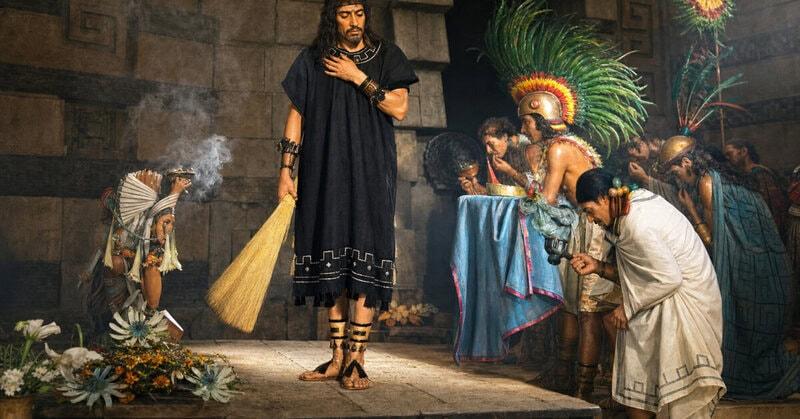
When Hernán Cortés and his small band of soldiers crested the mountains ringing the Valley of Mexico in November 1519, they looked down on something none of them had ever imagined: a glittering island city rising from a vast lake, larger than any metropolis they had ever seen in Europe. What they were witnessing was the apex of Aztec civilization — a world built in under two centuries by a people who had started with nothing but a swampy patch of land and an iron determination to endure. The ten facts below reveal just how extraordinary that world really was, and why it continues to demand serious attention.
1. Tenochtitlán Was One of the Largest Cities on Earth in 1519

When Cortés arrived, Tenochtitlán held an estimated 200,000 to 300,000 people — a population that dwarfed London, Paris, and Seville at the time. Built on an island in Lake Texcoco, the city was connected to the mainland by massive causeways wide enough for ten horsemen to ride abreast. Its center was dominated by towering temples and palaces arranged around broad ceremonial plazas. Aqueducts carried fresh water from mainland springs, markets drew thousands of traders daily, and an intricate canal system served as an aquatic road network through the city’s neighborhoods.
The spectacle overwhelmed men who were no strangers to hard campaigning. Bernal Díaz del Castillo, a soldier in Cortés’s army, wrote in his True History of the Conquest of New Spain that some men asked whether they were dreaming when they first saw the city’s towers and temples rising from the water. Crucially, this was not the ruin of a fallen people — it was a civilization at the absolute height of its power, a fact that makes the story of what followed all the more sobering.
2. A Scorned Nomadic Tribe Became the Dominant Power in Mesoamerica in Under a Century

The Aztecs did not begin as conquerors. They arrived in central Mexico as wandering outsiders around the early 13th century, scorned by the established city-states of the region, who considered them little better than barbarians. They were passed from place to place, forced into servitude by more powerful neighbors, and eventually left with nothing but an unwanted island in a brackish lake. Around 1345, they founded Tenochtitlán there — on the only land no one else had bothered to claim.
What happened next stands as one of the most dramatic reversals in pre-industrial history. Within roughly one century of that founding, the Aztecs had built an empire spanning most of northern Mesoamerica, transforming from landless outcasts into the dominant military and political force in the region. The speed of that rise — driven by military innovation, strategic marriage alliances, and an unrelenting appetite for expansion — has few parallels in the ancient world.
3. Chinampas: The Aztec Engineering Solution That Turned a Lake Into Farmland

Feeding a metropolis of hundreds of thousands on a lake island presented a logistical challenge that would have stopped most civilizations cold. The Aztecs solved it with one of the most ingenious agricultural inventions of the pre-Columbian world: chinampas, often called “floating gardens.” These were artificial plots built up from layers of lake mud, aquatic vegetation, and organic debris, anchored in place by the deep root systems of willow trees planted along their edges. The resulting soil was extraordinarily fertile, capable of yielding multiple harvests each year, effectively converting shallow lake beds into some of the most productive farmland in Mesoamerica.
The chinampa system was also a feat of sustained ecological management maintained across generations. Canals between the plots allowed canoes to carry harvests directly to market, cutting transport time and reducing spoilage. This ancient technology has never entirely disappeared: remnants of chinampa agriculture still exist today in Xochimilco, on the southern edge of Mexico City, where farmers continue to work plots in ways their Aztec predecessors would readily recognize.
4. The Aztec ‘Empire’ Was Formally a Triple Alliance, Not a Single State

The word “empire” conjures an image of a single dominant power radiating outward from a capital, but the Aztec political structure was considerably more nuanced. The empire was formally constituted as the Triple Alliance, a partnership between three city-states: Tenochtitlán, Texcoco, and the smaller Tlacopan. Each contributed to military campaigns and shared in tribute, though not equally. Texcoco, on the eastern shore of Lake Texcoco, served as the intellectual and artistic heart of the alliance — home to the philosopher-ruler Nezahualcoyotl, whose poetry survives to this day and remains read and studied in Mexico.
Over time, Tenochtitlán’s military dominance tilted the balance of power, making it the senior partner in everything but name. Yet the confederate structure remained the legal and political foundation of Aztec power right up to the Spanish conquest. Understanding this helps explain one of the central dynamics of 1521: Cortés did not defeat a monolithic empire so much as he unraveled a coalition whose junior and subject partners nursed serious grievances, and he was shrewd enough to exploit every one of them.
5. Aztec Long-Distance Merchants Doubled as an Intelligence Network

The Aztecs had institutionalized commercial espionage inside their merchant class long before European states formalized similar practices. A specialized guild called the pochteca traveled to distant regions carrying luxury goods — cacao, quetzal feathers, jade, and fine textiles — but their journeys served a dual purpose. Alongside trading, they gathered military intelligence about the territories they passed through, reporting back to Tenochtitlán on political tensions, troop dispositions, and potential targets for future conquest. They operated under their own legal codes, their own courts, and the patronage of a dedicated deity, Yacatecuhtli, functioning almost as a sovereign institution within the broader state apparatus.
Their social position was deliberately ambiguous. The rigid Aztec social hierarchy placed merchants formally below the warrior nobility, yet a sufficiently successful pochteca merchant could accumulate enough wealth to host elaborate feasts that mimicked rituals reserved for the elite, effectively blurring the boundary between commoner and noble. The empire needed their intelligence and their goods, so it rewarded them quietly while keeping them formally subordinate — a careful and calculated tension.
6. The Famous ‘Aztec Calendar Stone’ Is Not a Calendar

Few objects from the ancient Americas are more instantly recognizable than the great carved disk known popularly as the “Aztec Calendar Stone” — and few are more persistently misunderstood. The massive basalt monument, weighing approximately 24 tons, was not a functional calendar but a cosmological declaration dedicated to the sun deity Tonatiuh, whose face occupies its center. What the stone actually depicts is the Aztec conception of cosmic time: the belief that the current world is the fifth “sun,” with four previous worlds having been created and then catastrophically destroyed. Each prior age is encoded in the stone’s imagery, accompanied by the implicit warning that the current world faces the same eventual fate.
The stone’s history after the conquest is nearly as dramatic as its content. Spanish colonial authorities ordered it buried face-down — suppressing the religious symbolism it embodied — and it remained beneath the main plaza of Mexico City for more than two centuries, until workers rediscovered it in 1790. Today it is housed in the National Museum of Anthropology in Mexico City, where it remains one of the most visited pre-Columbian objects in the world, though it is still occasionally mislabeled as a calendar by exhibition signage that should know better.
7. The Aztecs Built a Compulsory Public Education System Centuries Before Europe Did
In the 15th century, while most of the world left children’s education to family circumstance or religious charity, the Aztecs had already constructed something genuinely radical: a mandatory public schooling system. Children of commoners attended schools called telpochcalli, receiving physical training, civic instruction, and moral education. Children of the nobility and those destined for the priesthood attended the more demanding calmecac, where the curriculum spanned astronomy, law, rhetoric, history, and the interpretation of sacred texts. Critically, both boys and girls were required to attend — a breadth of inclusion that was exceptional for the era by any standard.
The calmecac functioned as a rigorous training ground for the empire’s administrative, religious, and military elite, producing the lawyers, astronomers, and commanders that kept the Aztec state functioning. Among the many achievements of Aztec civilization, this universal schooling system stands out as one of the most forward-looking — a civic infrastructure that most European nations would not fully replicate for several centuries to come.
8. The Aztecs Ruled Through Tribute Rather Than Direct Administration
The Aztec model of imperial control looked nothing like Rome’s, or like the Spanish system that eventually replaced it. Rather than installing governors, building garrison roads, or stationing armies in conquered towns, the Aztecs generally allowed defeated rulers to remain on their thrones. The price of that arrangement was tribute — regular deliveries of cacao, cotton cloth, warriors’ costumes, jade, live eagles, and scores of other commodities, all meticulously recorded in documents such as the Codex Mendoza. As long as those payments arrived on schedule, the empire largely left local governance alone.
It was an efficient system that kept administrative costs low and allowed the empire to expand far faster than a more hands-on approach would have permitted. But the model carried a structural weakness that would prove fatal. Because loyalty was always transactional rather than ideological, resentment accumulated in subject states that had been stripped of prestige and resources without gaining any compensating sense of shared Aztec identity. When Cortés arrived offering an alternative, those resentments required very little encouragement to become open military rebellion — and it was that rebellion, as much as Spanish steel, that brought Tenochtitlán down.
9. Aztec Medicine Was Sophisticated Enough to Influence Colonial Spanish Practice
European observers who assumed they were bringing medicine to a primitive people encountered an uncomfortable surprise when they examined Aztec healing knowledge. Aztec physicians had classified hundreds of medicinal plants with documented therapeutic applications, knowledge compiled most famously in the 1552 Badianus Manuscript — the earliest known medical text written in the Americas, produced by indigenous scholar Martín de la Cruz and translated into Latin by Juan Badiano. Aztec practitioners provided obstetric care, carried out dental procedures, and performed battlefield surgery shaped by centuries of accumulated clinical observation. Among their treatments was the application of honey to infected wounds, a practice that modern research has since confirmed for its genuine antimicrobial properties.
The Spanish colonial response was telling. Rather than dismissing indigenous medical knowledge as superstition, colonial authorities were sufficiently impressed to commission translations and systematic studies of Aztec herbal remedies, incorporating a range of them into European pharmacology. The sophistication of Aztec botanical and medical knowledge is one of the clearest answers to how advanced the civilization truly was — and in this domain, the answer is considerably more advanced than its conquerors initially cared to admit.
10. The Conquest Ended a Civilization That Was Still at Its Peak
There is a particular tragedy in the timing of the Spanish conquest. When the siege of Tenochtitlán began in 1521, the Aztec Empire was not in decline — it was at its greatest territorial extent, stretching across most of what is now Mexico. The city that Cortés’s allies helped him dismantle was the same city that had astonished his soldiers two years earlier. The siege ended on August 13, 1521, when the last emperor, Cuauhtémoc, was captured while attempting to escape across the lake by canoe, and the great causeways that had seemed so miraculous lay broken and choked with rubble.
But the military siege alone does not account for the scale of the collapse. Smallpox, introduced by the Spanish expedition and spreading through a population with no prior immunity, had already killed tens of thousands — including the emperor Cuitláhuac — before the final battle was even fought. The epidemic devastated the city’s capacity to mount a sustained defense and demoralized survivors in ways no army could have achieved so rapidly. The fall of the Aztec Empire remains one of history’s most sobering demonstrations of how epidemic disease, far more than battlefield tactics, can erase a civilization that stood at the absolute height of its power.
From a nameless nomadic band to the builders of the largest city in the Western Hemisphere, the Aztecs compressed into barely two centuries an arc of achievement — in engineering, governance, agriculture, education, and medicine — that most civilizations required far longer to approach. What they built, and how quickly they built it, continues to reshape our understanding of the full breadth of human ingenuity.

 English
 Arabic
 French
 Spanish
 Portuguese
 Deutsch
 Turkish
 Italiano
 Russian
 Romaian
 Portuguese (Brazil)
 Greek
Greek